Bird-eat-bird world

Post by Jen Berlinghof

I remember the first time I saw it happen. It was a frigid Sunday in February, sixteen years ago. I had just started working for the Lake County Forest Preserves. The deep cold, the kind that temporarily freezes your eyelashes together every time you blink, kept potential hikers away from Ryerson Conservation Area that day. I ventured out only to fill the bird feeders, and the chickadees, juncos, cardinals, and woodpeckers quickly gathered around for a feast. I thought they would be my only visitors of the day. Then, a cacophony of bird wings ruptured the quiet. Bird visitors fled from the feeders in all directions. In a low hanging branch of a nearby oak, one bird remained: a Cooper’s hawk. It was devouring a mourning dove that had just been pecking around under the feeders only moments before.

Cooper's hawk eating bird Continue reading

Hordes of hummingbirds

Post by Jen Berlinghof

hummingbirds 003

For me, most days on the job consist of time in my “office” outdoors—a woodland, prairie or wetland in the Lake County Forest Preserves—with my “clients”—students, teachers, and families interested in learning more about local nature. On those rare days spent plunking away at a computer indoors, the photo above is my view. Recently, this view is bustling with activity, as hordes of ruby-throated hummingbirds buzz around the feeders, bulking up for a long flight south.

Screen Shot 2016-08-22 at 11.46.50 AM

Continue reading

Bluebirds are back!

Post by Jen Berlinghof

Last week while I was out checking our sap collection buckets at Ryerson Conservation Area, everything in the woods seemed a bleak brown and gray. It didn’t look much like spring was on our doorstep, but it sure sounded like it with the “plink plink” of sap dripping into aluminum buckets on the sugar maple trees and the slow “peep peep” of cold, little spring peeper frogs. Then, a male eastern bluebird landed on the branch above my head. He was a vivid blue exclamation point that seemed to shout, “Spring has arrived!”

ISTOCK-EABL-001 Continue reading

Nature at night

Post by Jen Berlinghof

This winter’s lack of snow has made enjoying the winter woods a little more difficult for me. So, when a scant few inches of snow fell last week I made my way to Old School Forest Preserve at dusk to explore one of the Lake County Forest Preserves solar-lit trails.

Inky black branches of old oaks played in contrast to the white-washed sky before the blush of an orange sherbet sunset took over. The woods were still and quiet as I searched for any signs of crepuscular creatures that capitalize on the twilight. Continue reading

April Fools’ bird

Post by Jen Berlinghof

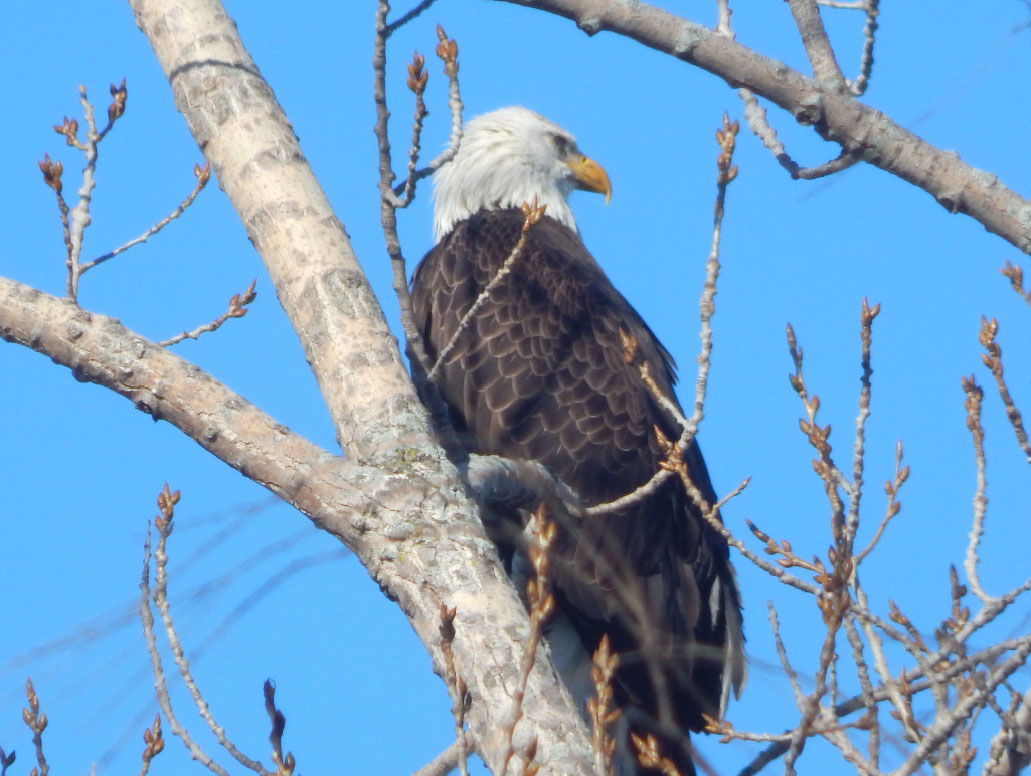
It was a windy, but bright, April 1 this year. I was on a trail at Ryerson Woods with a group of volunteers. Most of our heads were focused downward, inspecting the minutiae of a bloodroot bloom. Then, someone shouted, “EAGLES!” I truly thought the next thing shouted would be “APRIL FOOLS’!” but when we snapped our heads skyward, we saw two ivory-headed eagles swooping back and forth above the trees. No joke!

Continue reading

The real Thanksgiving turkey

Post by Jen Berlinghof

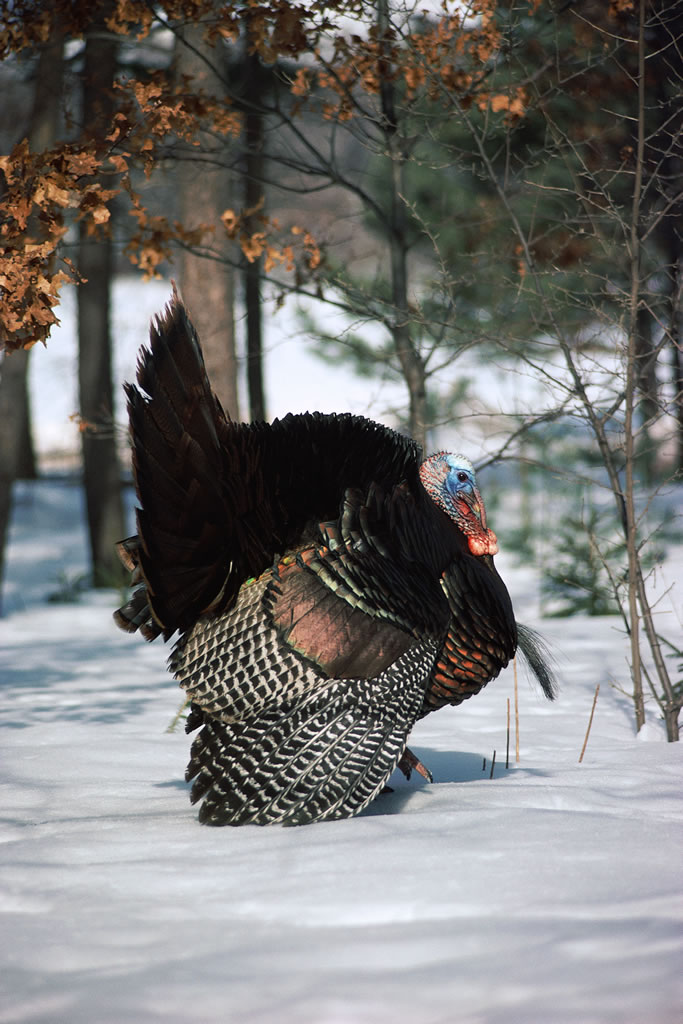
There is a lot of turkey talk in my house lately—from handprint turkey crafts to gobbling impersonations and heated discussions of who gets the wishbone this year. Come November, most of us think of turkeys as the centerpiece of a delicious feast. You might be surprised to learn that this symbol of our American heritage is not only found on platters but also resides in Lake County, Illinois woodlands; and their gobbling is growing!

eastern wild turkey

Continue reading

A beautiful invasion

Post by Kelsey Roehrich

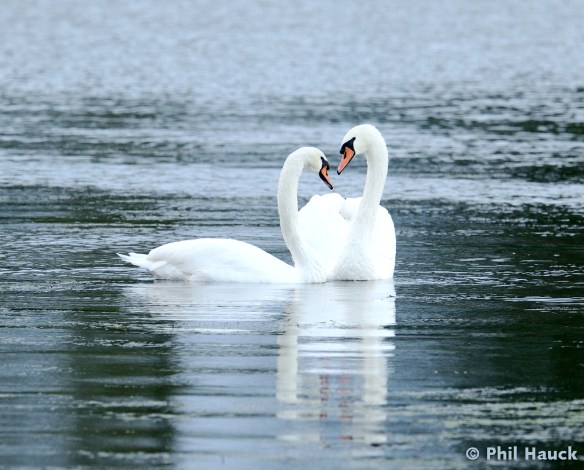
I am a student at Iowa State University, and traditions are an important part of school life. One long-standing tradition centers around two swans, Lancelot and Elaine, which float on a small campus lake. Legend has it, walk around the lake three times with your significant other and you will be together forever, since it is said that swan pairs mate for life.

Continue reading

Spring songs

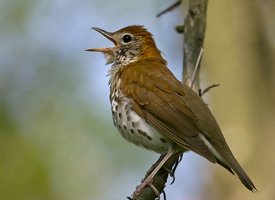
In May the natural world of Lake County, Illinois clamors for attention. Frogs peep, toads trill, insects buzz and chirp, but the all-stars of the show are birds. Perching songbirds, referred to scientifically as oscine passerines, are known for their amazing and extremely varied sounds. For many small and secretive species, their calls and songs are often the only way to identify individual birds within the chorus.

wood_thrush_glamor

Shorter, non-musical bird calls are heard year-round. Calls are used in social interactions and as alarms. They are considered innate. However, scientists have determined that birds’ longer, melodic songs are learned in the first year of life. Birds use these spring songs, some containing several melodies, primarily in establishing territory and breeding. Continue reading

Crane chronicles

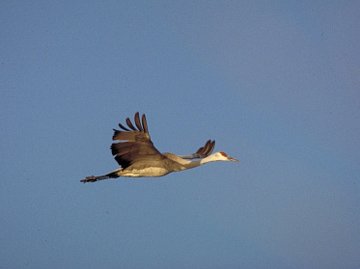
I am part of a volunteer group for the Annual Midwest Crane Count, monitoring the wetlands and fields in Lake County, Illinois each year for sandhill cranes. In the pre-dawn hours, our eyes scan for any hint of movement. Our ears listen for a bugling sound. Our mission: Determine the abundance and distribution of sandhill cranes (Grus canadensis) in the Upper-Midwest United States.

The arrival of these large elegant birds in Lake County is a harbinger of spring. More migrate through this region every year, and an increasing number are deciding to nest here as well. We know this thanks to the early-rising volunteers who help with the Annual Midwest Crane Count held each spring. This year, some of the first sandhill cranes returning to Lake County, Illinois were spotted in mid-March at Rollins Savanna Forest Preserve. Continue reading

A snowy spark

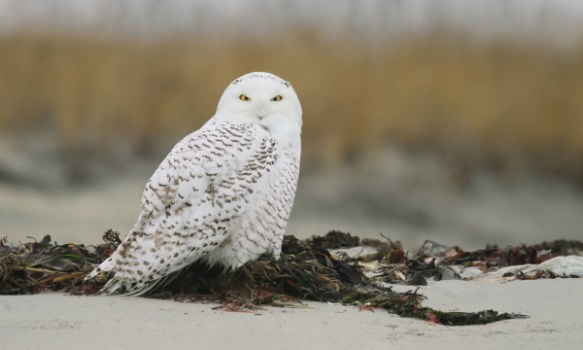
Many years ago, while running along the Lake Michigan shoreline late on an evening in January, a feathered ghost appeared on top of a flag pole. It was the first time I had ever seen a snowy owl (Bubo scandiacus) and it stopped me in my tracks. This was the spark on that frozen night that lighted my fire of curiosity about birds. This winter, snowy owls have left their Arctic homes in record numbers, causing one of the largest irruptions (sudden increase) in northern Illinois in decades.

Although it seems natural to correlate the arrival of these boreal birds with the extremely cold, snowy winter northern Illinois is having, experts say the motivator is more likely linked to food. On their Arctic breeding grounds, snowy owls feast under 24-hour sunshine. Their food of choice is lemmings, small mammals with an extremely cyclical population. Bird expert Kenn Kaufman explains in a recent Audubon magazine article, that when the lemming population explodes, like it did last summer in northern Quebec, snowy owls have great breeding success, producing large broods of up to 11 chicks. As these chicks quickly grow into juvenile birds, the competition grows for the now dwindling numbers of lemmings. Thus, the young birds get nudged further and further away to find a meal, resulting in them moving to areas that mimic their treeless tundra home, such as the Lake Michigan shoreline. Continue reading