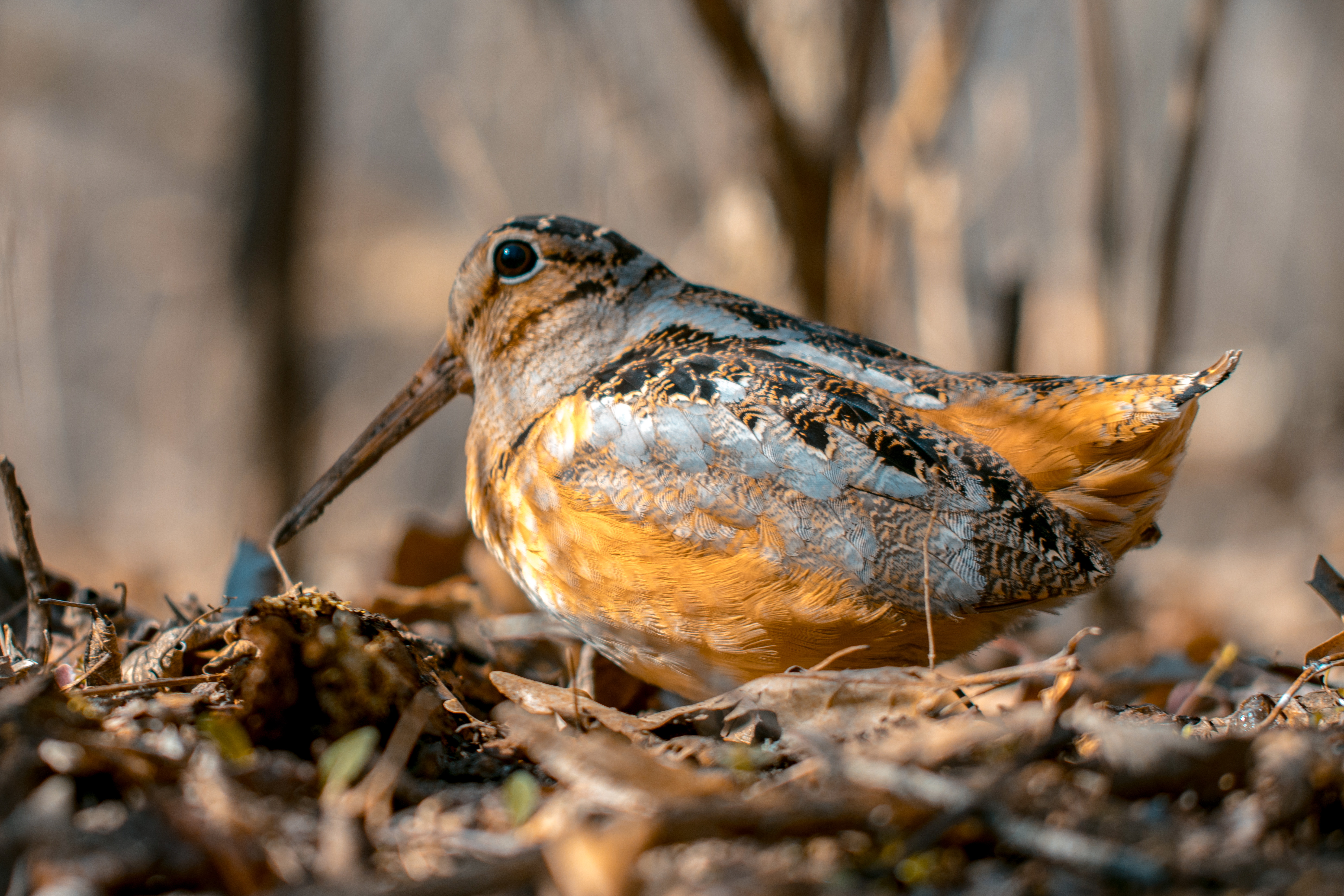
March is the demarcation of spring. This new season is brewing now as snowmelt percolates through the thick mats of leaves on the forest floor into swollen creeks. Sap is rising in the sugar maples (Acer saccharum), with its promise of sweetness after a harsh winter. The purple, mottled crowns of skunk cabbage (Symplocarpus foetidus) peek out of the thawing mud, surging toward the sun. And the quiet of winter is replaced with the cacophony of western chorus frogs (Pseudacris triseriata) accompanied by the “peent” and “whir” of American woodcocks (Scolopax minor) in the Lake County Forest Preserves in northern Illinois.
The American woodcock (Scolopax minor) is a curious species to study. Stock photo.Continue reading →
Fall bird migration is happening now at the Lake County Forest Preserves in northern Illinois, and each day (and night) brings tens of thousands of newly arrived birds. Yet finding fall migrants can be challenging. Their subdued palettes of brown, tan, and olive feathers hide in sharp contrast to their resplendent springtime colors.
Unlike spring migration, most birds travel quietly in the fall, barely whispering a note to indicate their presence. In Lake County, fall migration starts in July, when our forests and prairies are green and full of blooming flowers. It’s a five-month-long period involving more than 200 species that rest and feed in our nearly 31,000 acres of preserves.
Spotting a bird can be difficult when vegetation conceals fleeting glimpses, making observations tricky and identification nearly impossible. Besides, who’s thinking of fall migration in July’s summer vacation mindset?
Either way, here are some of my favorite fall birding observations by month, over my past five decades of birdwatching.
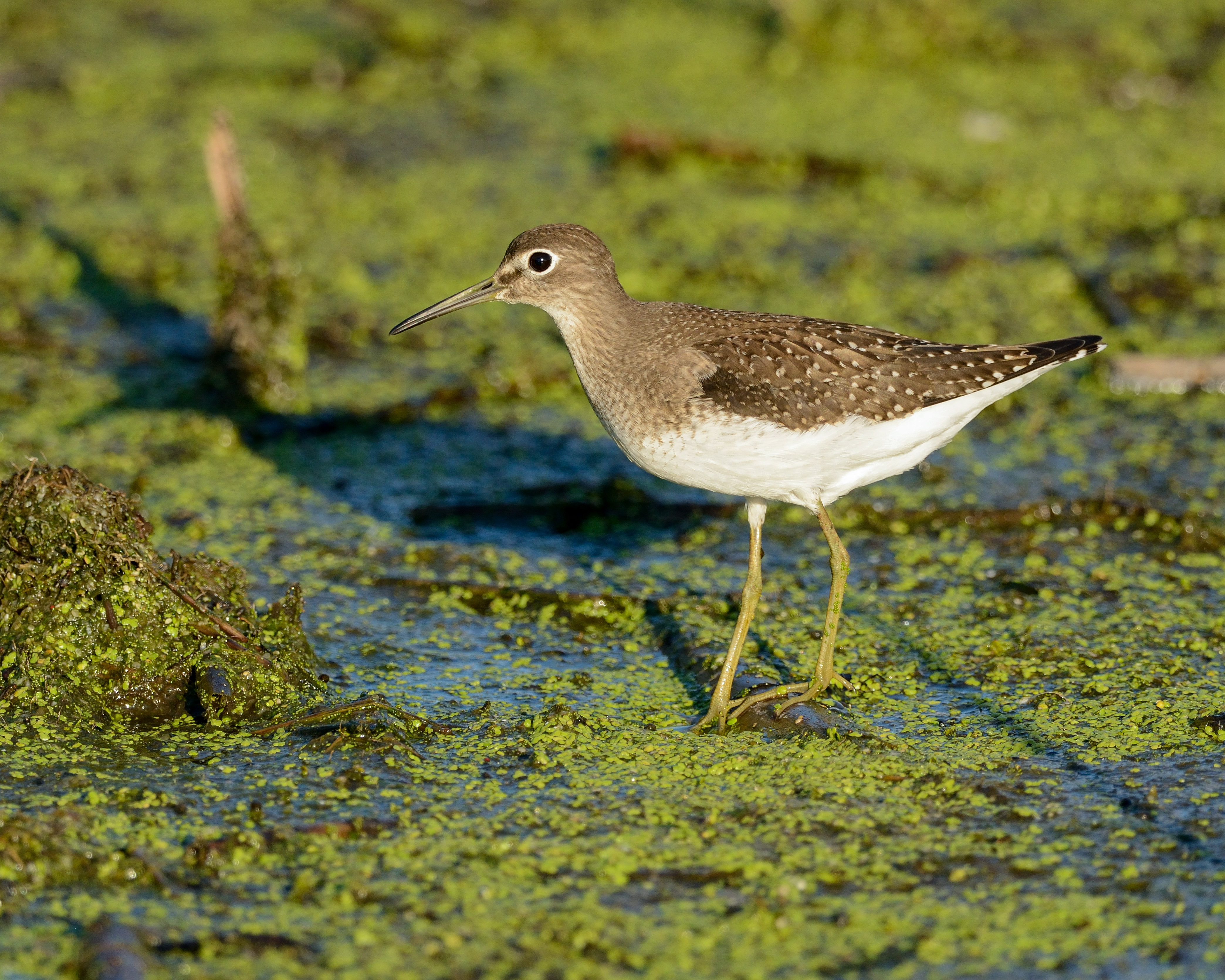
July brings our first fall migrants: shorebirds. A visit to the Lake Michigan shoreline at Fort Sheridan in Lake Forest finds sanderlings (Calidris alba), sandpipers (Scolopacidae family), and yellowlegs (Tringa spp.) avoiding people and surf while searching for food. Many migrating shorebirds have just finished raising young in the tundra’s perpetual daylight and have embarked on a 6,000-mile round trip journey.
I found a feather today and it stopped me in my tracks. There it was, tucked into the dewy grass—a single, beautiful feather just lying next to my sidewalk.
It’s not uncommon to come across feathers in my work at the Lake County Forest Preserves in northern Illinois. My naturalist brain immediately started to assess the discovery, analyzing it on a few key points.
There’s solace to be found in the fact that the rhythms of nature march on. This spring, the sun still rises. The wild leek (Allium tricoccum) still pulses its verdant green arms through the pulpy leaf litter of the forest floor. The birds still surge through the skies as they migrate to and through the Lake County Forest Preserves in northern Illinois. Like us, some of these birds are inclined to congregate in large communities. Over the years, the colonies of a particular species, the purple martin (Progne subis), have become largely reliant on people to provide shelter for their nesting flocks.
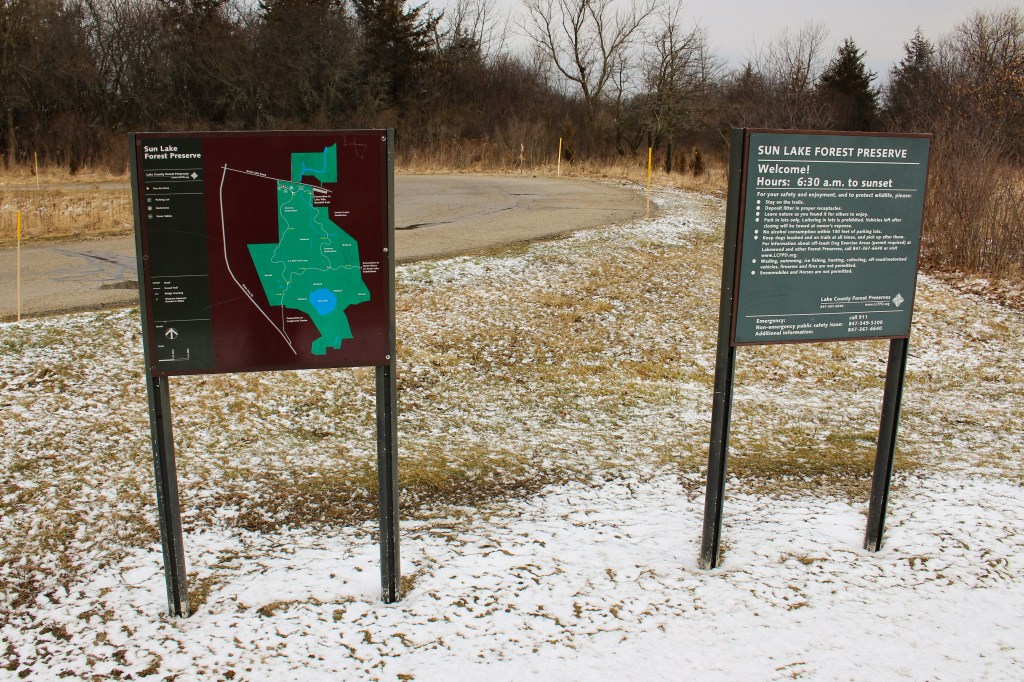
The sky to the west was robin’s egg blue, a clearing in the day’s dose of clouds. They had just sneezed a handful of snow, already melting. I drove with the radio off. I didn’t know whether to wear my regular hiking boots or a pair of Wellington boots I’d packed at the last moment. The trail could be soggy, or maybe not. I was on my way to Sun Lake in Lake Villa, part of the Lake County Forest Preserves in northern Illinois.
For this month, I decided to revisit the idea behind my February 2019 post, when I explored a new-to-me preserve and wrote up my observations as a virtual tour. Readers seemed to enjoy it, and I enjoyed circling another name on the map I keep at my desk. So, here I was, about a year later, ready to chronicle another tour. Find a comfy chair and a warm mug. Here’s a snapshot of Sun Lake as I saw it.
I keep thinking about angles. Not the kind you measure with a protractor, but those you measure with your mind. The angle of a story, a conversation, or a project. Photography, of course, uses physical angles—where’s the camera pointed? is the sun directly overhead or is it the sweet time of golden hour?—but the best photos make you want to see even more. They make you want to break open the frame and soak in every bit of the Lake County Forest Preserves in northern Illinois.
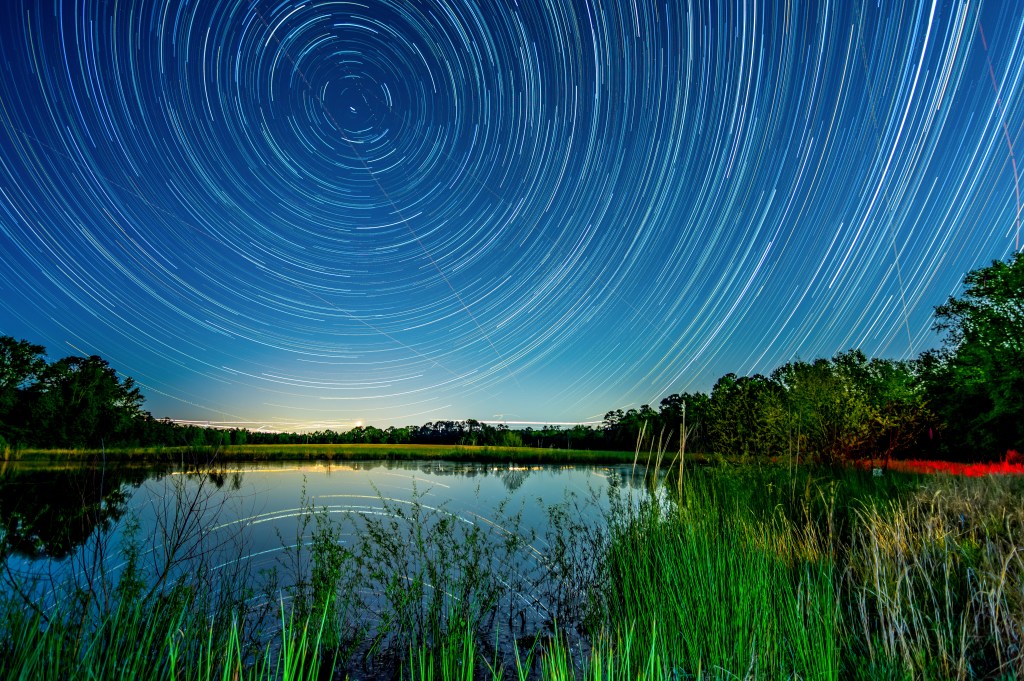
Since it’s nearly the end of 2019, I thought I’d turn 180 degrees and peruse the photos uploaded to our group Flickr pool since January 1. Suffice to say: we’re spoiled. Spoiled with the beauty of Lake County’s flora, fauna, and natural areas, and the talent of the photographers who capture it for everyone to see. Trees and shrubs in their bright fall wardrobes on either side of a trail draining into a vanishing point. A sandhill crane (Grus canadensis) with both wings up like a paper airplane as it dashes to take off. A whirlpool of stars spun around a rich blue sky over a tranquil wetland.
I’ve gathered these moments plus seven more below, but that’s only a small taste. I encourage you to browse the rest of the visual buffet as we make the turn out of the 2010s into the 2020s. And, hey! You might become inclined to upload that shot living on your phone, camera, or computer.
Come late November, most of us have turkeys on the brain. But a different type of turkey is taking to the skies at this time of year on its annual migration south: the turkey vulture (Cathartes aura). You can spot them in the sky or on the ground in the Lake County Forest Preserves in northern Illinois.
In my early twenties, I believed adventure was found in the tallest mountain, the deepest ocean, the largest cavern. I chased whales, orca, brown bears, bald eagles, and other charismatic megafauna. It took decades to realize I didn’t need to seek these animals or climb these mountains to find adventure. Some of the best adventure awaited me in my own backyard. This led me to join the Education Department at the Lake County Forest Preserves in northern Illinois in October 2018. What an adventure it’s been!
Anyone who’s attended a program taught by our staff or volunteers knows these educators are knowledgeable and passionate. This group ignited my latest adventure—birding—though I can’t point to a single component that sparked my newest hobby. It could have been my awe for the birders in this group, their love for birds and their impressive ability to bird by ear. It might have been my draw to a new challenge. The patience, attention to detail, and dedication it takes to be an effective birder. It may have been the rush of excitement, getting a glimpse of a rare species for a brief moment as it makes its annual migration. Perhaps all of these were feathery factors. Regardless, I’m hooked.
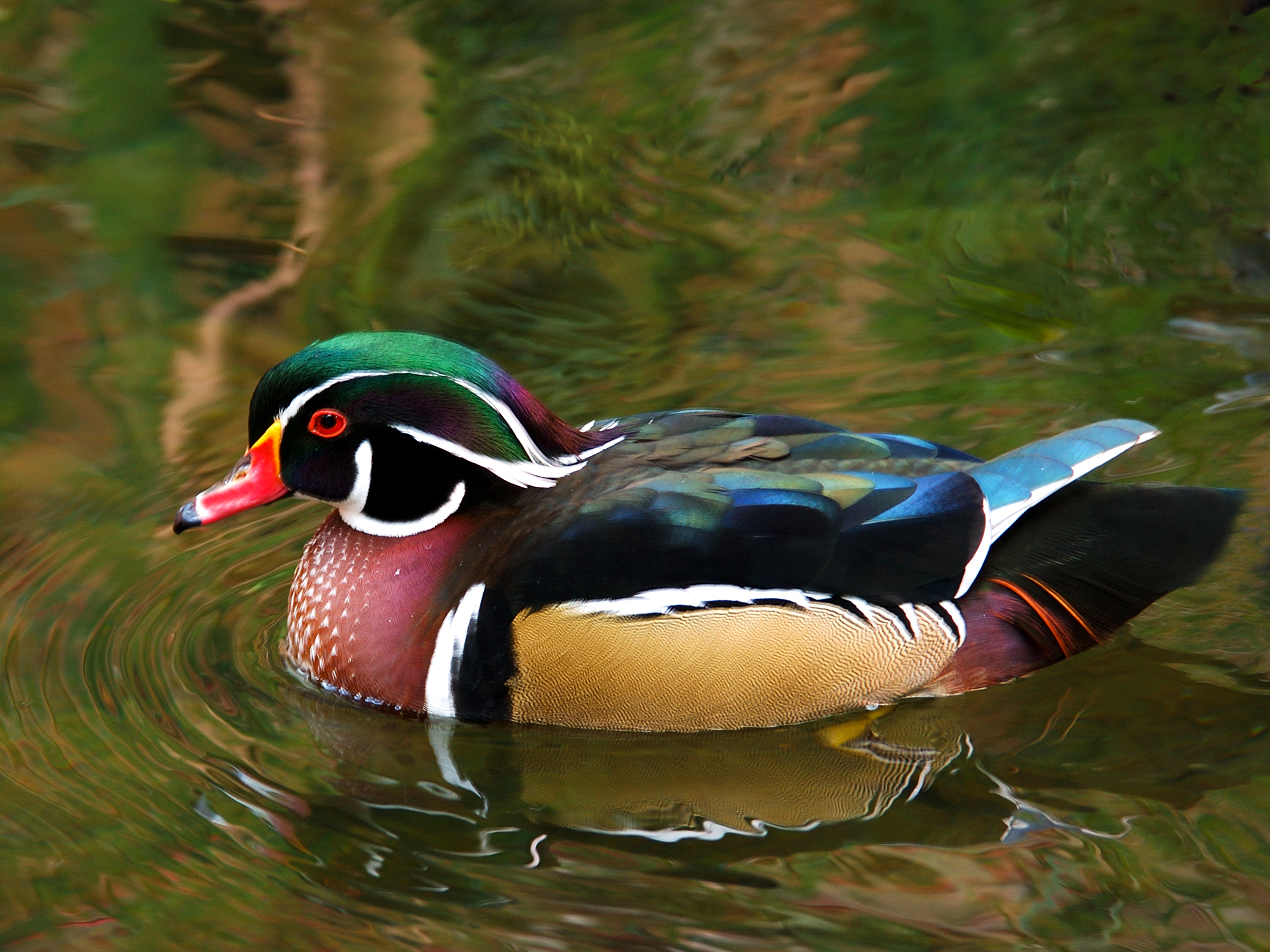
Spring is the starting block for wildlife in the race to find suitable mates and nesting sites. With the increased flurry in wildlife activity, staff at the Lake County Forest Preserves in northern Illinois also get an increased flurry of phone calls with questions from the public. One recent call came from a gentleman in disbelief upon seeing ducks perched in his trees. He was utterly transfixed by the phenomenon. The call brought back a flash of memory for me of the first time I saw a wood duck (Aix sponsa) as a child, on my maternal grandfather’s property in northern Illinois. Grandpa “Duck,” as we affectionately called him, was an avid outdoorsman. He spent a few moments that spring day pointing out the distinct, vibrantly hued male and the more muted female near a nest hole in an old maple tree. The pair then took off into the woods to the soundtrack of their high-pitched whistling calls.
Time can never be stopped, sped up, or slowed down. It started long before now and will continue far after. But with photographs, we can pause time, pin it in front of us, and study reality. It’s like kneeling at a riverbank and scooping a handful of water. The current stops in your palm, but just a foot beneath it carries on. Photos take time to make a moment.
With nearly 31,000 acres to explore, many moments are possible in the Lake County Forest Preserves in northern Illinois. An eastern bluebird (Sialia sialis) landing with one foot, wings at sharp angles. A cluster of milkweed seeds hanging on to their pod by threads of floss. Sunflowers and sunbeams, two shades of honey mixing in the air. I’ve collected these special moments and more in a gallery below.
All photos featured were taken by the truly skillful photographers in our group Flickr pool. Each of these images, these presses of the pause button and scoops out of the river, were captured in 2018. Our sincere thanks go to every photographer who shares their time and talent documenting the flora, fauna, and natural areas of Lake County.