Unknown's avatar

About lakecountynature

Jen Berlinghof is a graduate of Loyola University Chicago and The National Outdoor Leadership School, as well as a Certified Interpretive Guide through The National Association of Interpretation. Her work as an outdoor guide and naturalist has taken her from the canyonlands of Utah to the shores of Lake Superior. Since 2003, she has been rediscovering nature near her hometown and working as an Environmental Educator for the Lake County Forest Preserves in northern Illinois.

Spring songs

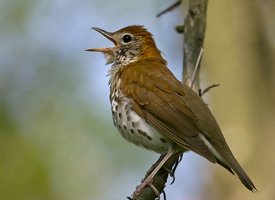
In May the natural world of Lake County, Illinois clamors for attention. Frogs peep, toads trill, insects buzz and chirp, but the all-stars of the show are birds. Perching songbirds, referred to scientifically as oscine passerines, are known for their amazing and extremely varied sounds. For many small and secretive species, their calls and songs are often the only way to identify individual birds within the chorus.
wood_thrush_glamor

Shorter, non-musical bird calls are heard year-round. Calls are used in social interactions and as alarms. They are considered innate. However, scientists have determined that birds’ longer, melodic songs are learned in the first year of life. Birds use these spring songs, some containing several melodies, primarily in establishing territory and breeding. Continue reading
Wood frogs found!

Discovery is often about being in the right place at the right time. This is exactly what happened recently when a wildlife biologist for the Lake County Forest Preserves was in the right woodland on the right spring day. While monitoring wildlife, a biologist heard sounds from the elusive wood frog (Rana sylvatica). The duck-like breeding calls made by male wood frogs had not been heard in Lake County, Illinois since the late 1980s. This discovery is the first sign of victory following extensive habitat restoration and recent species reintroduction efforts.

Continue reading

Crane chronicles

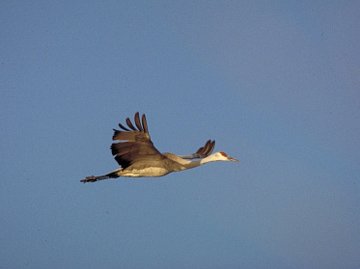
I am part of a volunteer group for the Annual Midwest Crane Count, monitoring the wetlands and fields in Lake County, Illinois each year for sandhill cranes. In the pre-dawn hours, our eyes scan for any hint of movement. Our ears listen for a bugling sound. Our mission: Determine the abundance and distribution of sandhill cranes (Grus canadensis) in the Upper-Midwest United States.

The arrival of these large elegant birds in Lake County is a harbinger of spring. More migrate through this region every year, and an increasing number are deciding to nest here as well. We know this thanks to the early-rising volunteers who help with the Annual Midwest Crane Count held each spring. This year, some of the first sandhill cranes returning to Lake County, Illinois were spotted in mid-March at Rollins Savanna Forest Preserve. Continue reading

Surviving in the subnivean

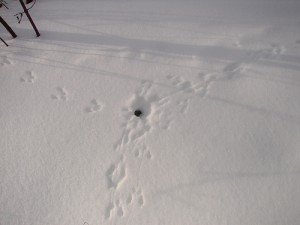
This winter has been harsh in Lake County, Illinois, causing many of us to wish we could migrate to South America like some birds do, or hibernate in a cozy underground den like the groundhog.  Alas, most of us just stick it out in the cold. It may offer consolation to know we are not the only animals active during these record-breaking cold, snowy days. It turns out there is a whole ecosystem teeming with life right under the snow.

Recently, scientists having been taking a closer look at life in the subnivean, which literally translates to “a place under the snow.” The space between the snow and the ground acts as a seasonal refuge for invertebrates, birds, and small mammals. Snow affords these small critters with remarkable insulation, and temperatures around 32 F regardless of the temperature above the snow. Biologist Bernd Heinrich explains the science underlying these insulating properties in the book Winter World: The Ingenuity of Animal Survival. “As long as both ice and water exist side by side, they constitute a thermostat keeping temperatures constant.” When water converts to ice crystals, heat releases. When ice turns into water, the process uses up heat.

Continue reading

A snowy spark

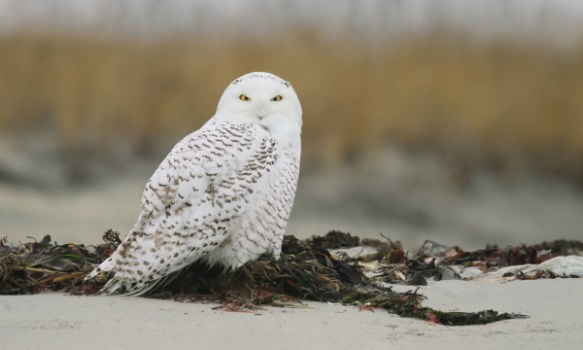
Many years ago, while running along the Lake Michigan shoreline late on an evening in January, a feathered ghost appeared on top of a flag pole. It was the first time I had ever seen a snowy owl (Bubo scandiacus) and it stopped me in my tracks. This was the spark on that frozen night that lighted my fire of curiosity about birds. This winter, snowy owls have left their Arctic homes in record numbers, causing one of the largest irruptions (sudden increase) in northern Illinois in decades.

Although it seems natural to correlate the arrival of these boreal birds with the extremely cold, snowy winter northern Illinois is having, experts say the motivator is more likely linked to food. On their Arctic breeding grounds, snowy owls feast under 24-hour sunshine. Their food of choice is lemmings, small mammals with an extremely cyclical population. Bird expert Kenn Kaufman explains in a recent Audubon magazine article, that when the lemming population explodes, like it did last summer in northern Quebec, snowy owls have great breeding success, producing large broods of up to 11 chicks. As these chicks quickly grow into juvenile birds, the competition grows for the now dwindling numbers of lemmings. Thus, the young birds get nudged further and further away to find a meal, resulting in them moving to areas that mimic their treeless tundra home, such as the Lake Michigan shoreline. Continue reading

Virtual camouflage hike

Leaves throughout the forest glowed gold against a backdrop of graying sky as I left Ryerson Conservation Area yesterday afternoon. This morning—as I entered the same preserve along the same road—the dark, skeletal branches were completely visible, stripped of their vibrant leaves that now lay in muddied piles on the forest floor.

These days of November mark a change from crisp colors to muted tones, which offer the perfect backdrop for animals to hide using camouflage. Lake County Forest Preserve educators often teach the concept of camouflage during environmental programs, where students hike in search of animal hides and mounts that have been hidden along the trail. Teachers and scout leaders, peruse our variety of school and scout programs to find a great fit for your group this year. Following is a virtual version of our camouflage hike. Continue reading

Arachnid architecture

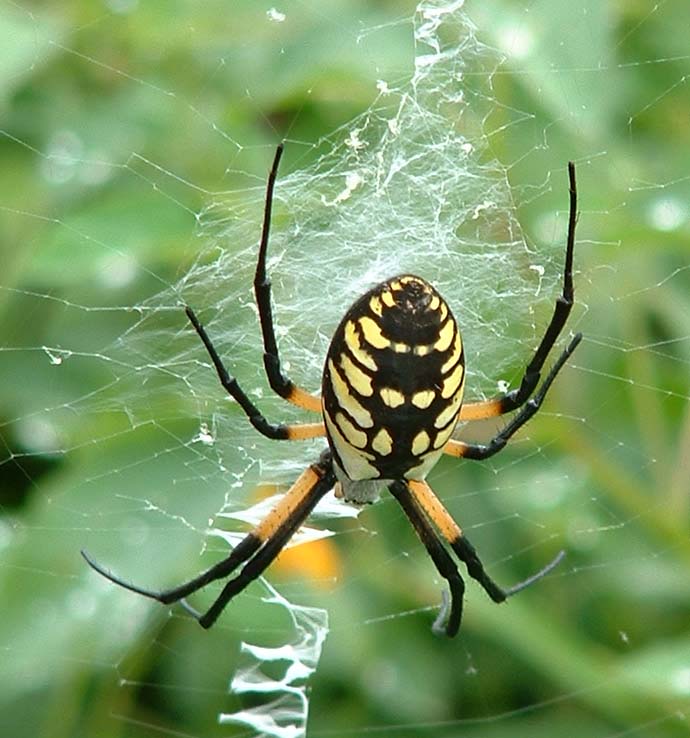
With the warmth we’ve experienced this October, I have spent many mornings drinking my coffee outside, watching the early sunlight glint off strands of spider silk that have encased my tiny porch overnight. While I’m enchanted by this maze of webs, my next door neighbor is not. I’m quickly called next door to clear a web-free path as she rushes down the stairs and off to work. I feel a bit of guilt as it takes me seconds to paw through a huge orb web that I know took the spider hours to intricately create.

Continue reading

Goldenrod galls

September in Lake County, Illinois is a month of big sky punctuated by tips of tall prairie plants in an array of autumnal colors. Before the trees really get going with their own colorful show, sparks of bright yellow from the many varieties of goldenrod (Solidago spp.) dominate the open spaces. Most of the summer these plants go unnoticed, adding merely another green hue to the lush surroundings, but September is their time to shine. What may also go unnoticed, even now as goldenrod demands our attention, is the hidden world inside each plant in the form of a gall.

Continue reading

Crayfish tales

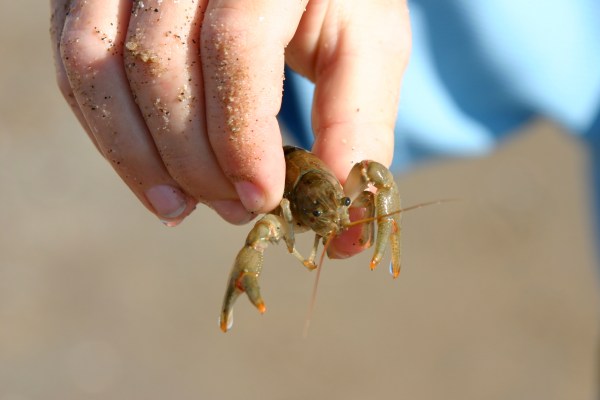
When most adults hear someone mention crayfish, what most likely comes to mind is a culinary dish rooted in the South. However, mention crayfish to a group of Summer Campers at the Lake County Forest Preserves, and you will see eyes light up and hands reach for pond-scooping nets and buckets while their minds contemplate questions of “how big?” and “how many?” During our hikes to the edge of a pond the campers exchange crayfish stories about the best techniques for catching these crustaceans, the size of earlier catches growing the closer we get to the water.

Continue reading

Campfire serenade

One hallmark of a good camping trip in my family is an evening spent huddled around a crackling campfire as the sun and moon exchange places and dusk settles around us. The smell of the fire, the taste of gooey marshmallows smashed into S’mores, the silhouettes of bats and moths in their nightly chase—all create a moment completed only by the haunting calls of whip-poor-wills (Antrostomus vociferus). These elusive nocturnal birds, although rarely seen, announce themselves boldly by calling their own name over and over again in a seemingly endless serenade.

The eastern whip-poor-will is part of the Caprimulgidae family of nocturnal birds commonly called nighthawks and nightjars. Robin-sized and cloaked in impressive camouflage, whip-poor-wills breed in open woodlands and nest on the ground. Their nest is a shallow area among the leaf litter that is carved out by the weight of the incubating parent and two eggs. Whip-poor-wills have been known to lay their eggs in phase with the lunar cycle, so that the chicks hatch about 10 days before a full moon. Thus, the parents can take advantage of the longer and brighter light of a waxing moon to forage an abundance of flying insects when the chicks are at their hungriest. Continue reading