At first light, a wetland at Rollins Savanna Forest Preserve (Grayslake) stirs to life. Red-winged blackbirds trumpet conk-la-REE-look-at-ME songs from swaying cattails. Wood ducks tip forward to eat plants below the water’s surface, rear ends bobbing in the air.
A great blue heron stands motionless onshore, amber-yellow eyes searching the shallows for tasty fish. The fresh smells of spring drift on a casual breeze as the landscape comes alive. Birdwatching gives you front-row seats to these compelling scenes, especially in Lake County.
With nearly 400 species documented, Lake County’s bird diversity is second only to Cook County in the Chicago region. Why do millions of birds live and visit here? Location, location, location.
The county’s position at the border between cooler, northern climates and warmer, southern climates attracts a blend of species. Lake Michigan creates unique shoreline habitats and milder microclimates.
Nearly 200 inland lakes, the Des Plaines and Fox rivers, prairies, savannas, woodlands and wetlands—such as those at Rollins Savanna—provide food and shelter for birds. Large tracts of land, like those in your forest preserves, are needed to support certain species.
Some feathered friends, like northern cardinals, stay put year-round. Resident birds eat seeds, nuts, insect larvae, mammals or other birds. Most of these food sources are available all year. Birds that eat seasonal foods—fruit, nectar or flying insects—typically head south for winter.
Many migrants pass through along the Mississippi Flyway, a major north-south flight path that brings incredible bird variety and abundance to Chicagoland each spring and fall.
Though less common, you may spot a vagrant, a bird that’s strayed far from its normal range. A Mexican violetear hummingbird, usually found in Mexican and Central American forests, visited a Mundelein home in 2021. Just one other observation of the species in Illinois was recorded in 2009.
In 2022, about 96 million Americans watched birds, according to the most recent data available from the U.S. Fish & Wildlife Service. Spending on birding-related equipment and travel surpassed $107 billion. That’s more revenue than pet stores, movie theaters and all of book publishing combined.
During the pandemic, when many people’s worlds contracted to the boundaries of their homes, birdwatching was a soothing pursuit. In 2020, the Cornell Lab of Ornithology received a record-breaking 2.1 million observations on Global Big Day, a birdwatching event held every May.
Retailers reported shortages of birdseed, feeders and baths. It’s easy to see why. Birds are active, colorful and captivating. Their variety and abundance make them more accessible than other animals.
The fact that birds aren’t constrained to the ground adds to their charm. A bird can be there one moment, gone the next. In eras defined by limits, birds represent limitlessness.
Experiencing that sense of freedom for yourself starts with simple tools.
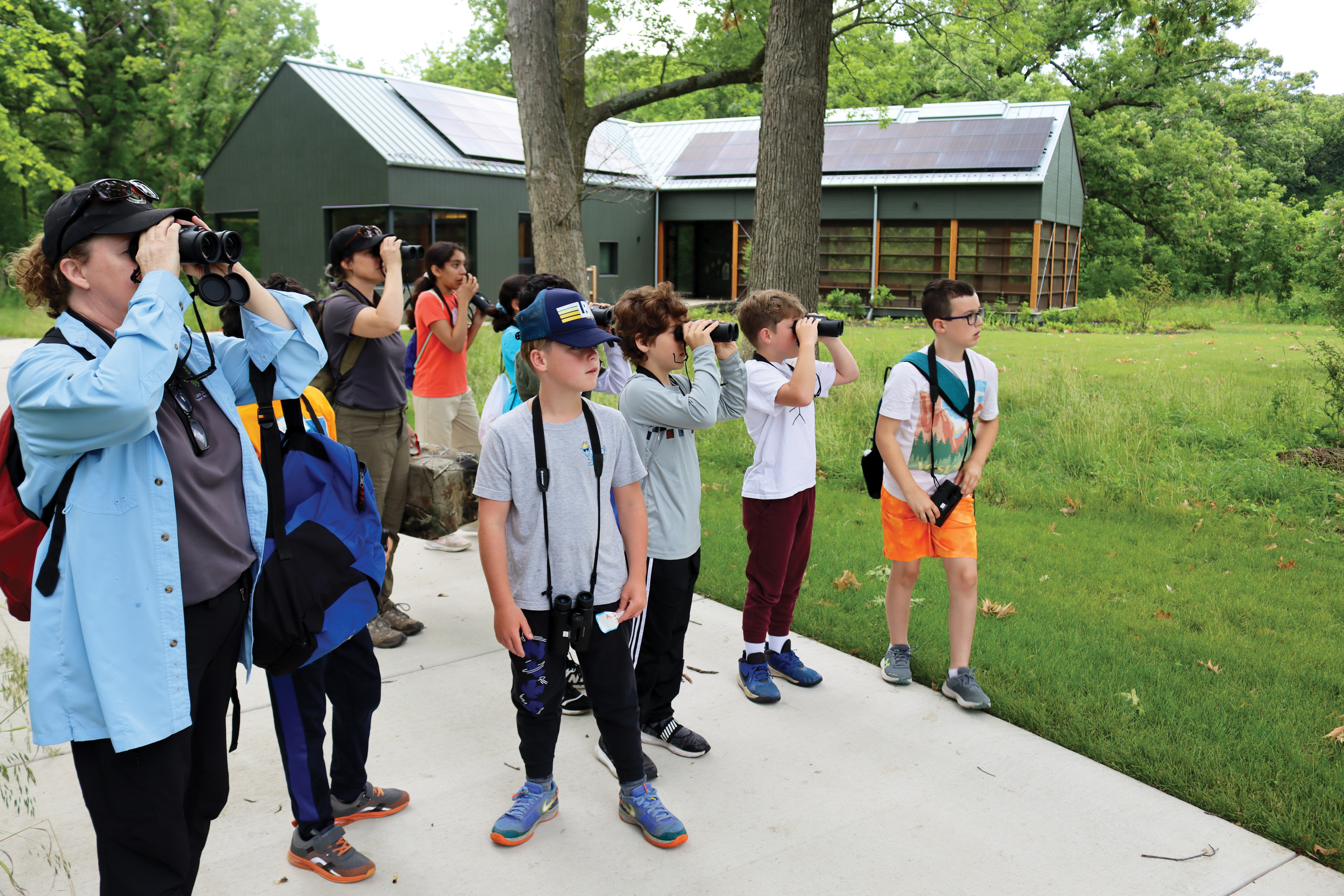
Ready to take flight with birdwatching? Bring a notebook or mobile device to take notes; a field guide to birds of the eastern U.S.; and a pair of 7 or 8-power binoculars. These make objects appear seven or eight times closer.
Purchase or borrow them from a friend, family member or library. Binoculars are available to borrow at the Ryerson Welcome Center (Riverwoods) during your visit.
To identify birds, focus first on GISS—General Impression, Size and Shape. Some birds are round. Others are sleek. Raptors can be 2–3 feet tall, hummingbirds 2–3 inches.
Think of recognizing a friend or family member at a distance. How do you pick them out from a crowd?
Listen, too. Birds produce two kinds of sounds: songs and calls.
Songs are longer, complex vocalizations used by adult males in breeding season to attract mates or defend territory. Calls are shorter, simpler sounds used year-round by both sexes to communicate other messages.
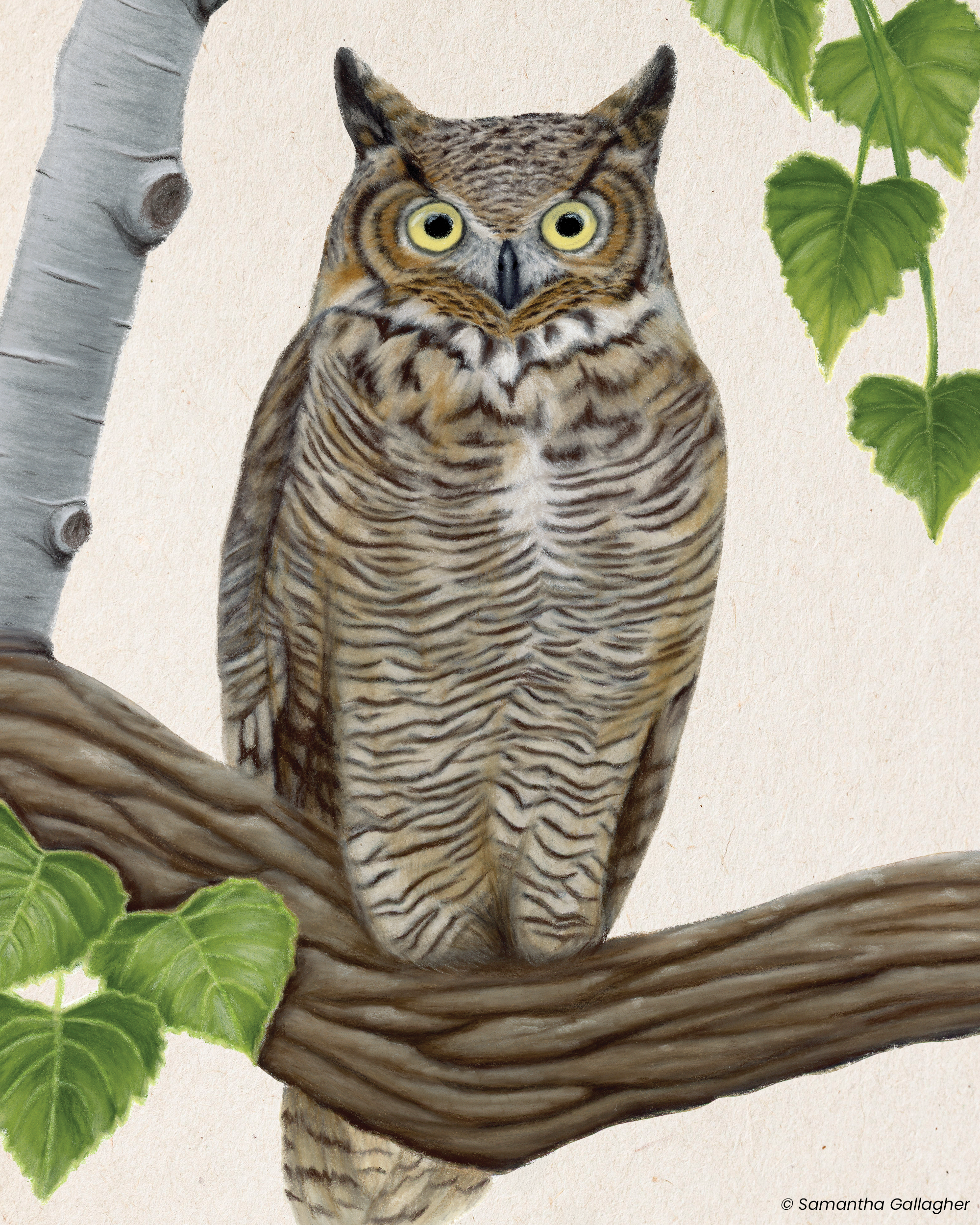
Combining sounds and GISS can guide you to solid identifications. The great horned owl’shoo, hoo-hoo, hoo, hoo song is common, but the barred owl’swho-cooks-for-you call is distinct and heard less often.
Ear tufts are prominent on the great horned, while the barred has none.
Now, some tips to help you practice better birdwatching.
Avoid disturbing birds and their habitats. Stay on trails. Keep your distance from active nests, roosts, colonies and food sources. Use binoculars or scopes to look from afar. Be quiet, move slowly and limit flash photography. Don’t play recorded calls (playbacks) to lure birds.
Keep domestic cats indoors. Roaming cats are estimated to kill over 1 million birds per year in Chicagoland.
Prevent window strikes. Birds can’t distinguish between a reflection of a tree and the real thing. Window strikes often result in injury or death. Stickers, tape, poster paint or soap applied in grids or dots reduces collisions. Learn more here.
Think twice before broadcasting news about the location of a rare bird. Crowds can unintentionally stress or scare away the animal. Wait to share until after the bird has left the area.
Consider weather. On very hot or cold days, many birds rest to save energy. If disturbed, they’ll use precious calories to fly away.
Support bird conservation. Don’t collect eggs, nests and feathers; it’s against federal law. Plant native plants. Clean birdfeeders regularly. Upload notes, photos and videos to eBird or iNaturalist.
Effective birdwatching requires just a few simple tools, including binoculars.
Flock to These Resources
In time for spring bird migration, we’ve published a new Birdwatching Guide and accompanying Birdwatching Checklist. Both pieces are offered in English and Spanish and highlight hundreds of bird species seen in Lake County.
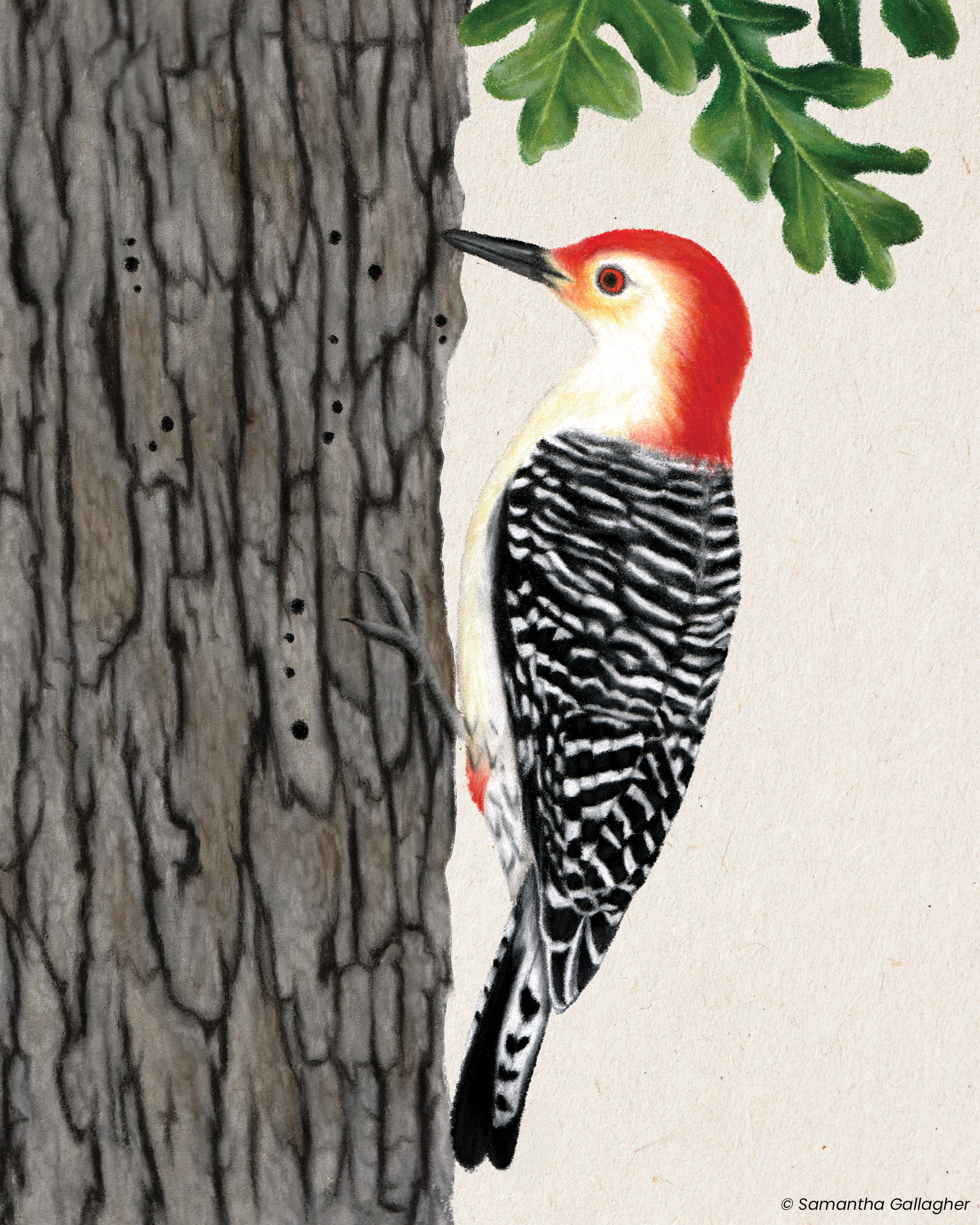
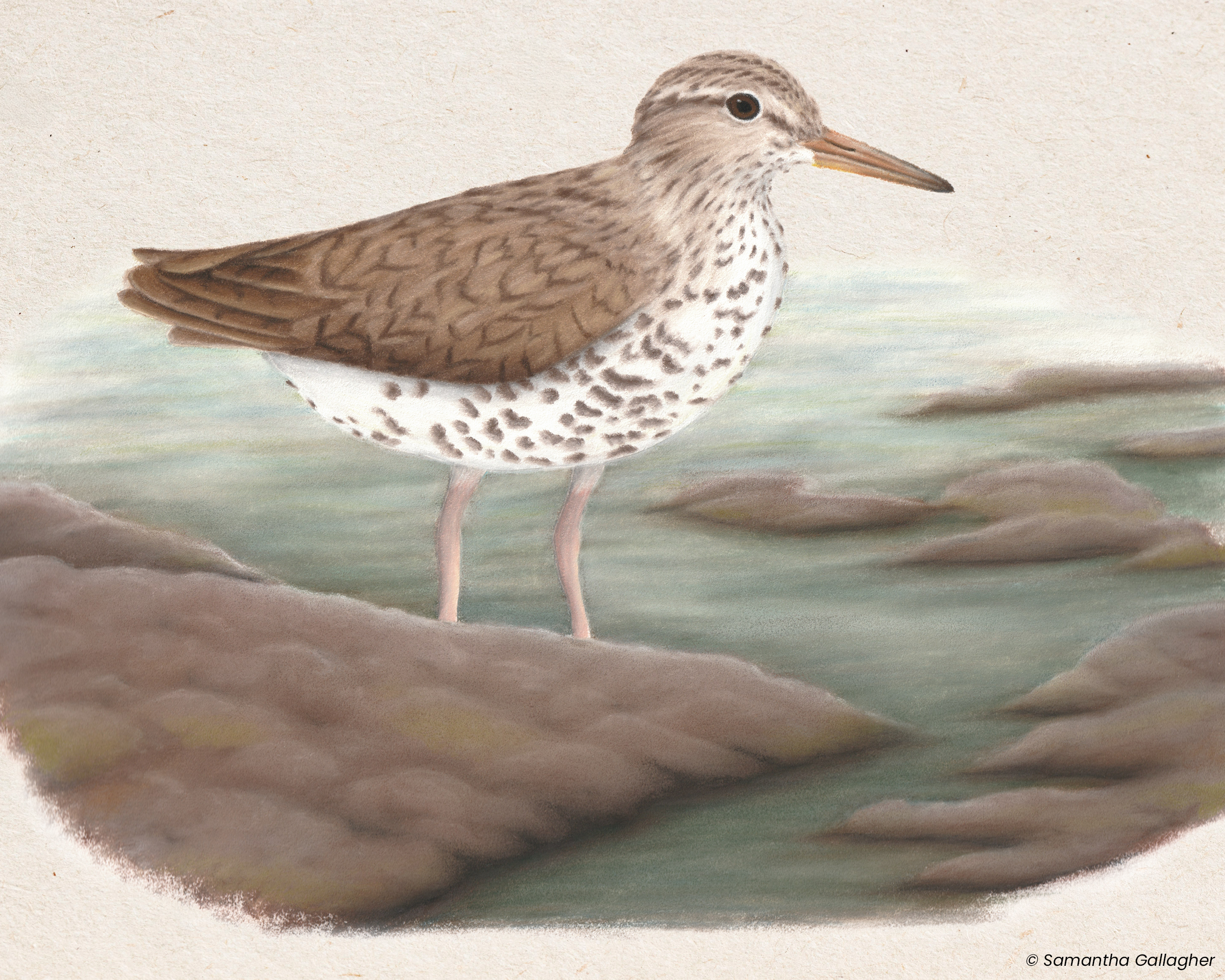
Written and designed by me over the course of two years, the in-depth, 40-page guide and the streamlined, 4-page checklist teach the basics of birdwatching techniques, equipment and etiquette. The checklist and guide come complete with original bird illustrations by a local artist.
Read both pieces at LCFPD.org/birds or pick up free copies at our facilities:
Have a question about a bird sighting? Email our educators at AskAnEducator@LCFPD.org. The same folks also teach birdwatching methods at programs. Visit LCFPD.org/birding to see the calendar.
Birdwatching in Your Preserves
You can birdwatch in every preserve from 6:30 am–sunset, daily. Timing matters. Many birds are most active around sunrise and sunset. There’s often a lull in the afternoon as birds digest morning meals. Nocturnal birds such as owls and night herons awaken after dark.
Seasons shape what you see. Breeding season and spring and fall migration are prime birdwatching windows. Winter offers less activity, but certain northern-breeding species are only visible in Lake County then, such as dark-eyed juncos and short-eared owls.
Location also matters. Learning a species’ typical habitat and geographic range improves your chances of spotting it. For example, the Lake Michigan shoreline at Fort Sheridan Forest Preserve (Lake Forest) is a magnet for migrating raptors like ospreys and hawks.
Meanwhile, wide-open grasslands at Rollins Savanna entice nesting sparrows, ducks, blackbirds and shorebirds.
For the best bang for your birding buck, start with these preserves.
And now for something related but a little different.
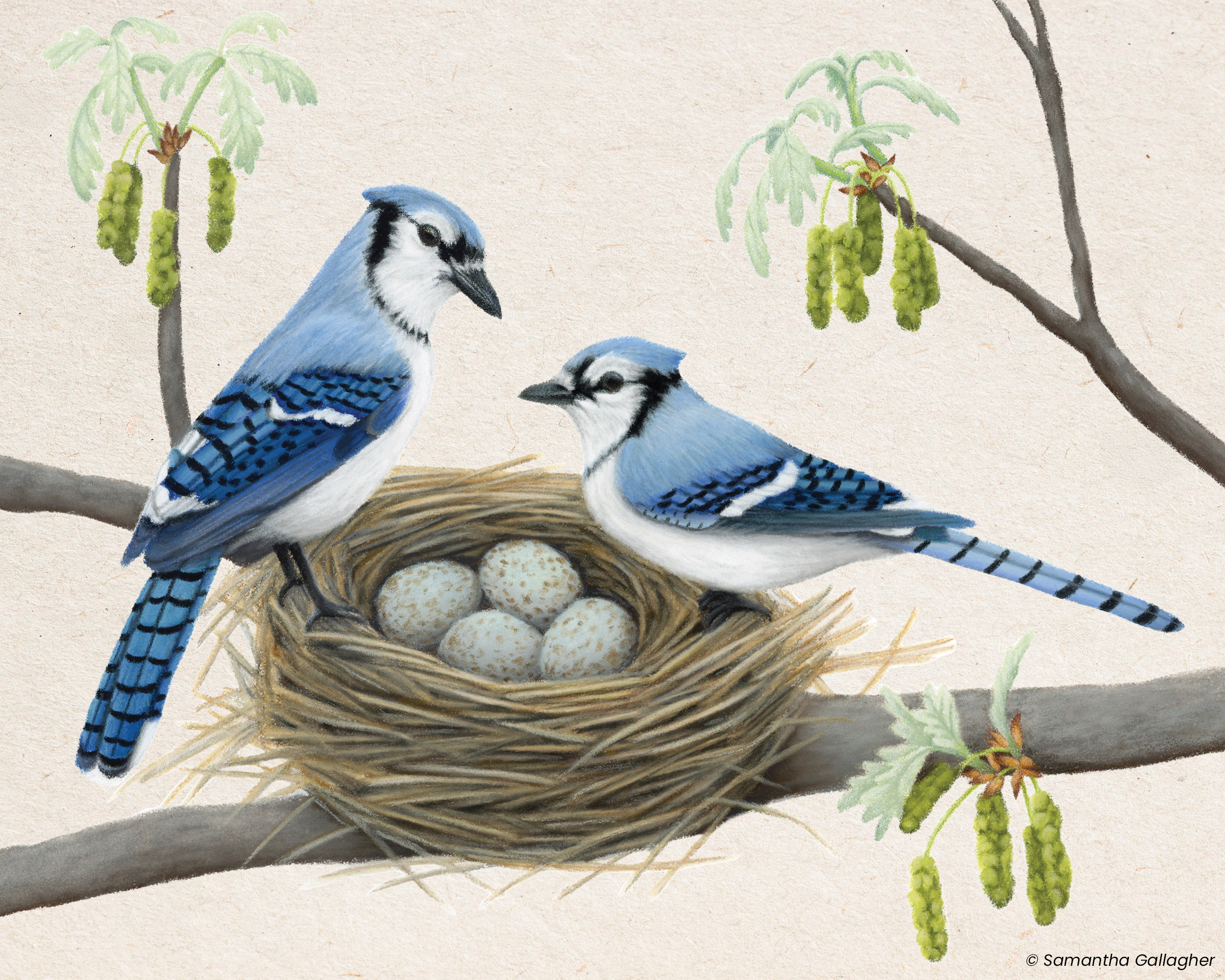
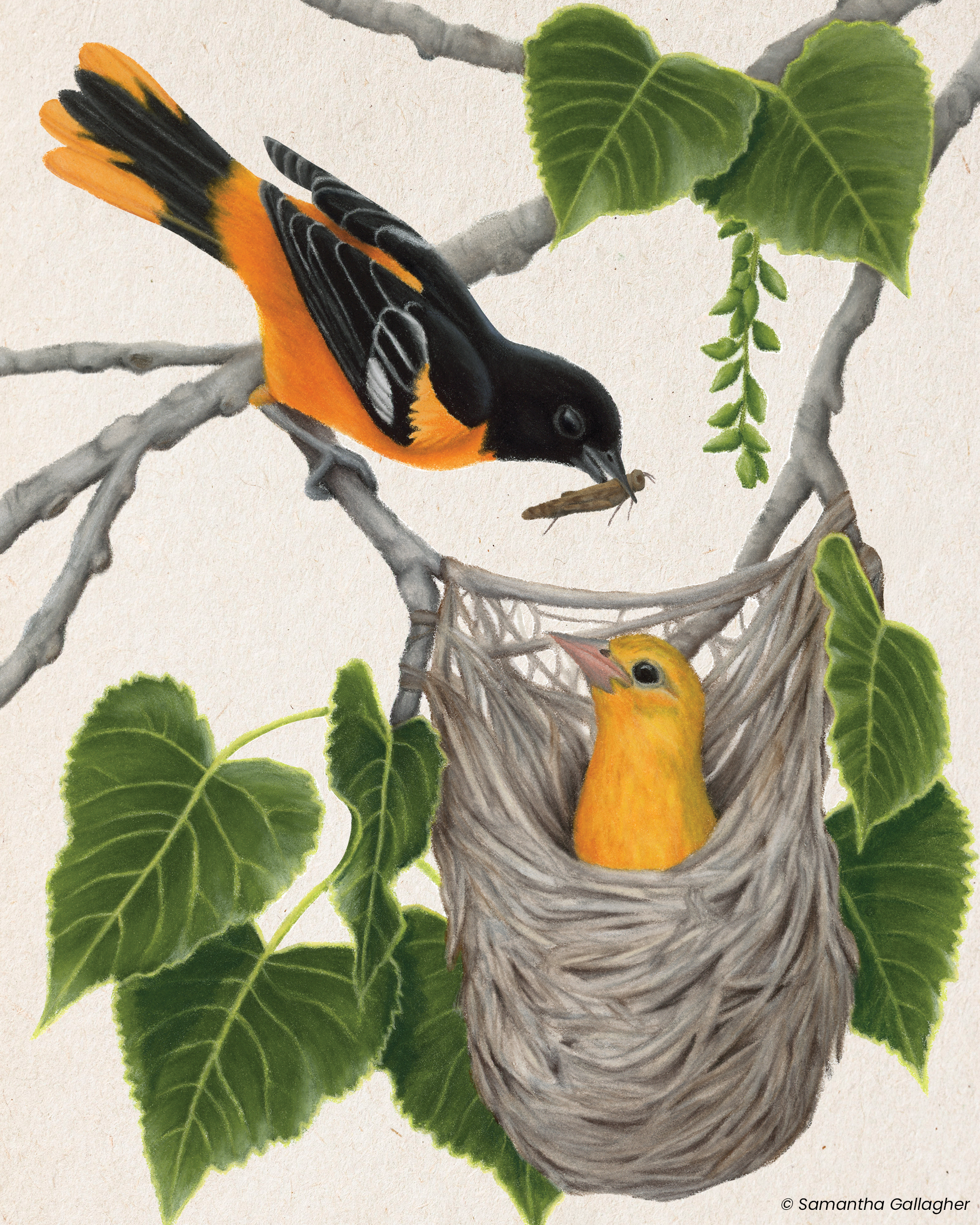
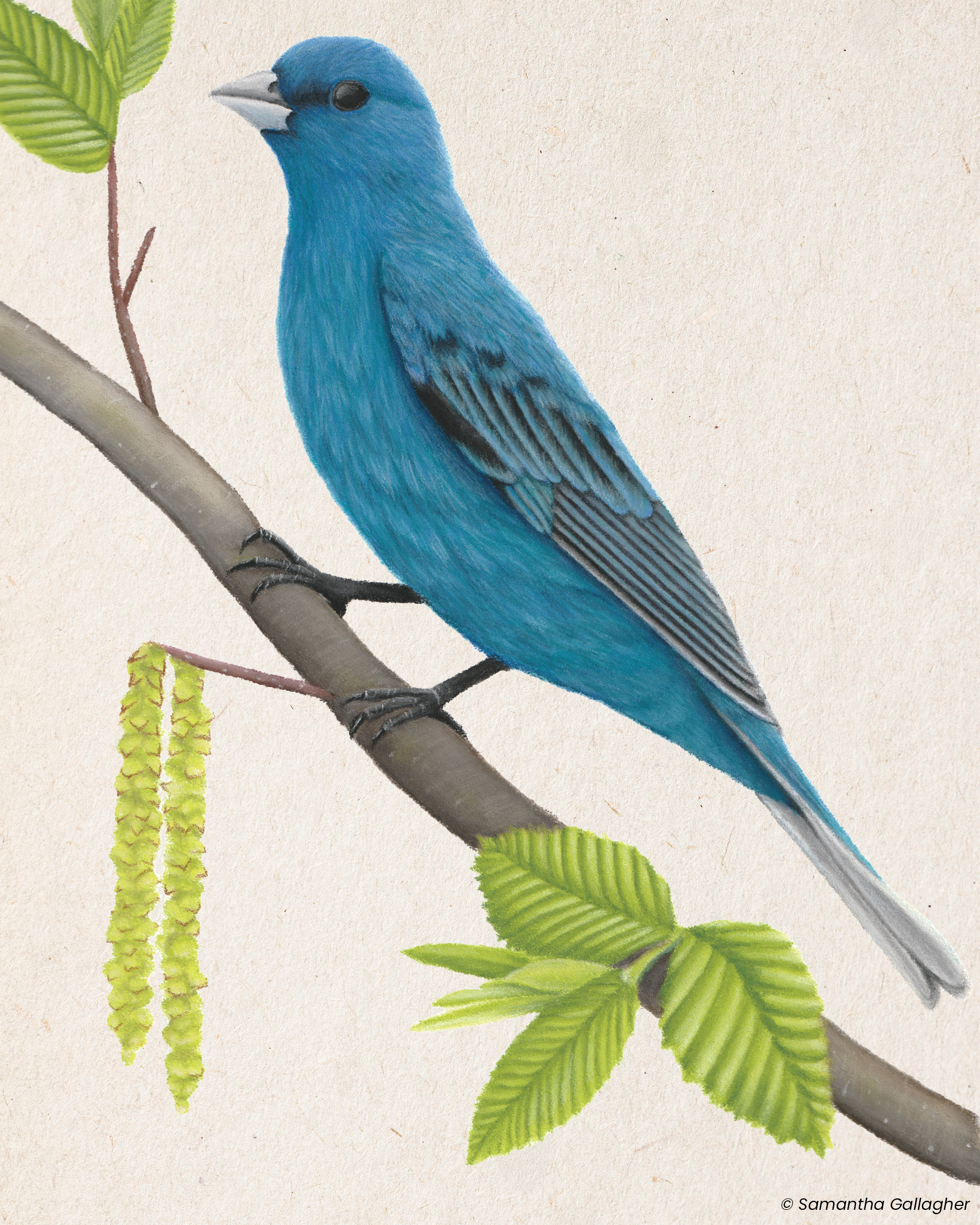
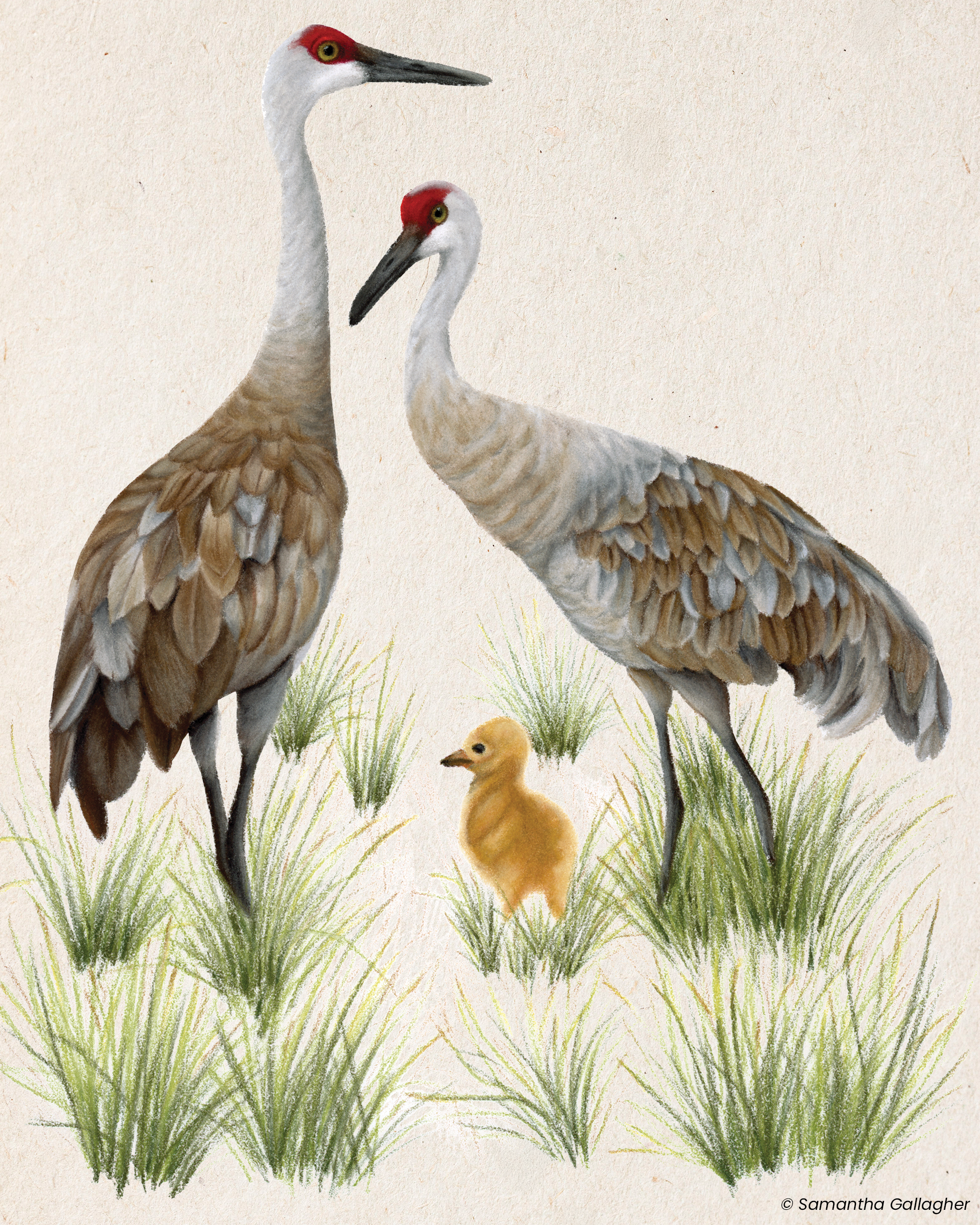
If you pick up the Birdwatching Guide and/or Checklist—which, of course, I recommend you do—you’ll see 20 beautiful, scientifically accurate bird illustrations gracing their pages. These aren’t stock images. No, they’re some of the first birds that Samantha Gallagher has ever drawn.
Based in Lake County, the freelance scientific illustrator usually focuses on insects and plants.
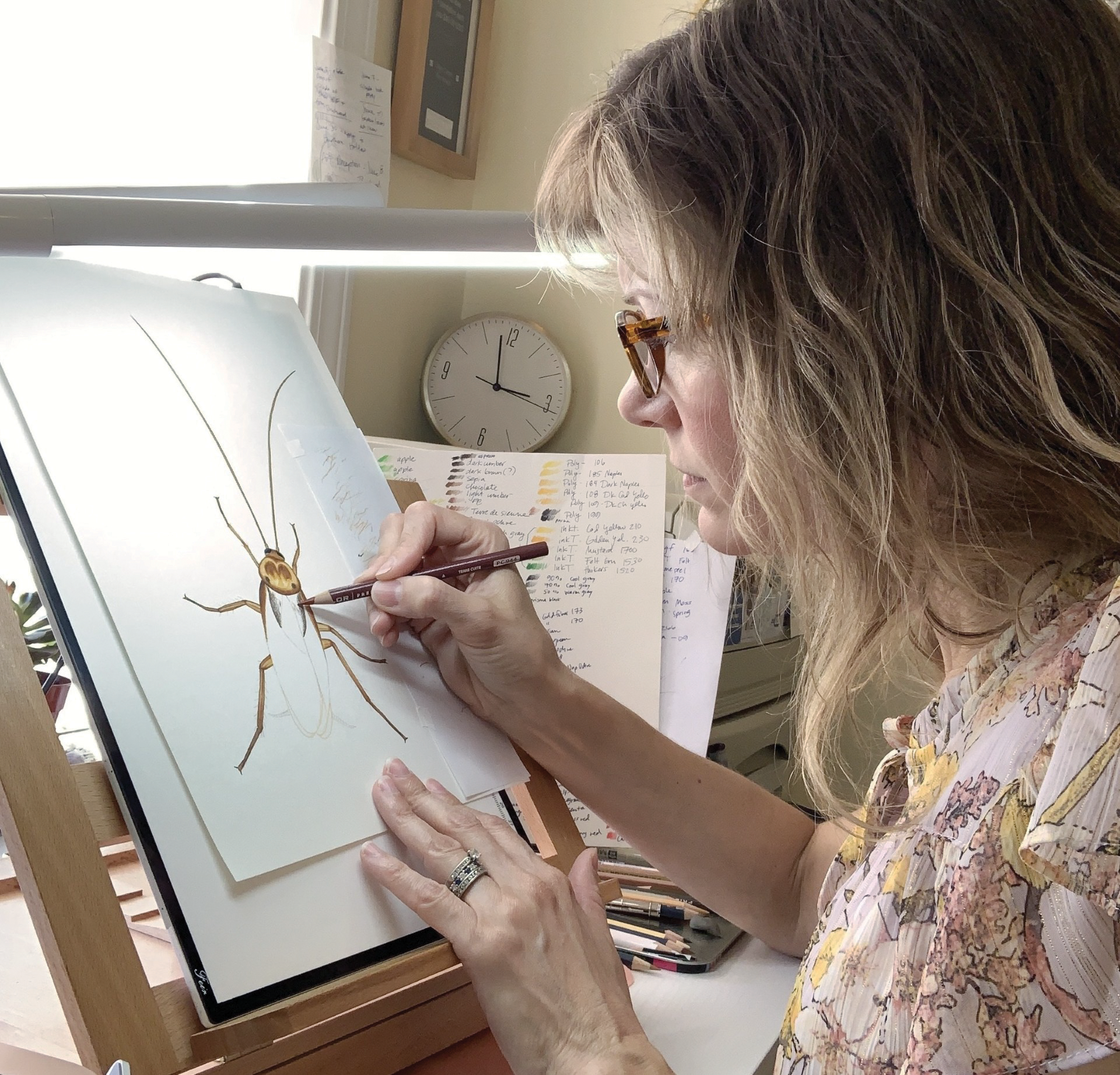
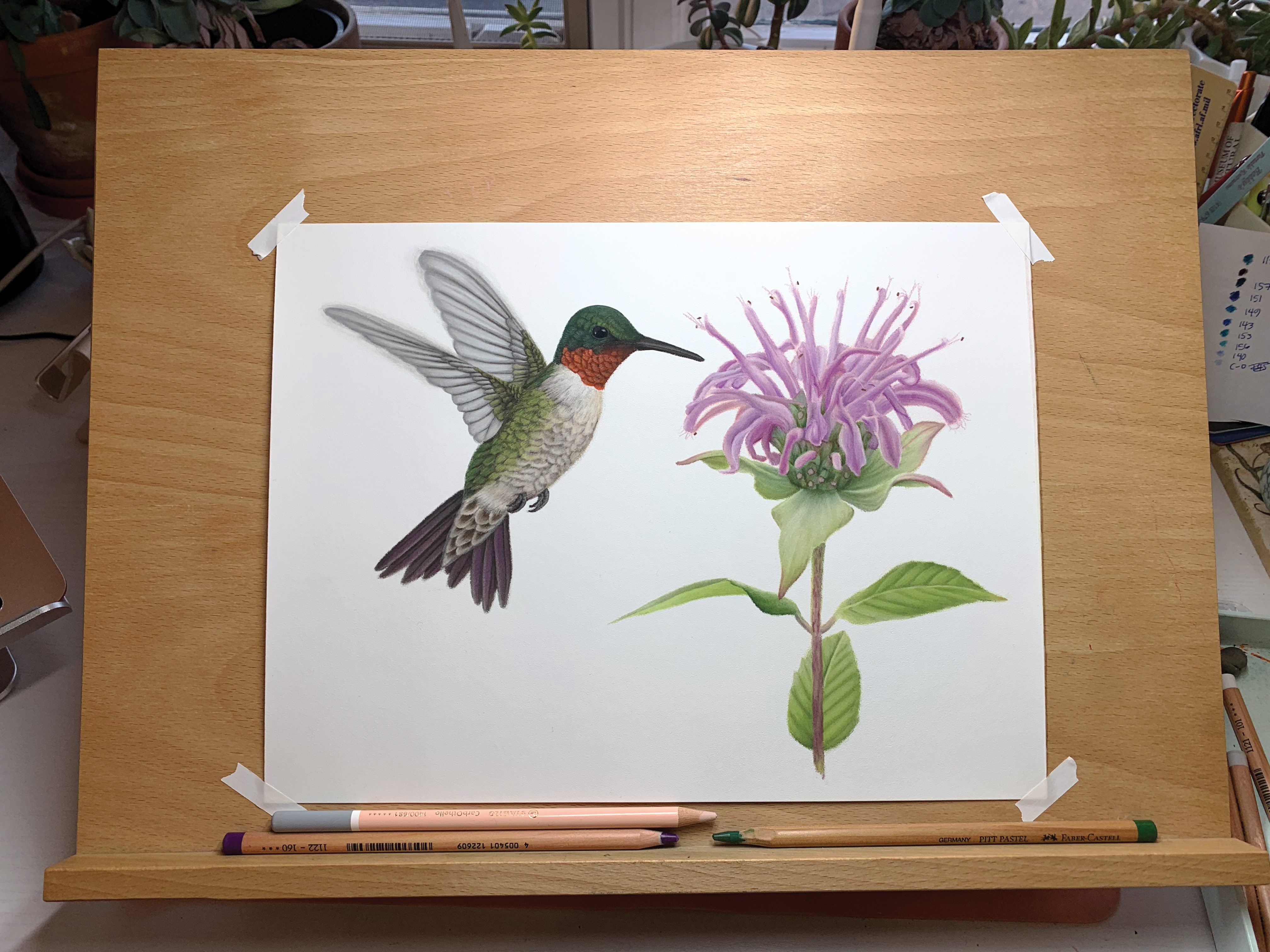
But in 2024, she accepted a commission from the Forest Preserves to venture into the avian realm. Gallagher took the opportunity to experiment with pastel pencils. These are a blend between painting and pencils. “That medium seemed like it would be great for drawing birds,” Gallagher said.
She was also ready to move beyond the staged poses typically seen in insect illustrations—think of a top-down view of a butterfly with its wings spread flat at a 90-degree angle.
“You’d almost never see that in the wild,” according to Gallagher.
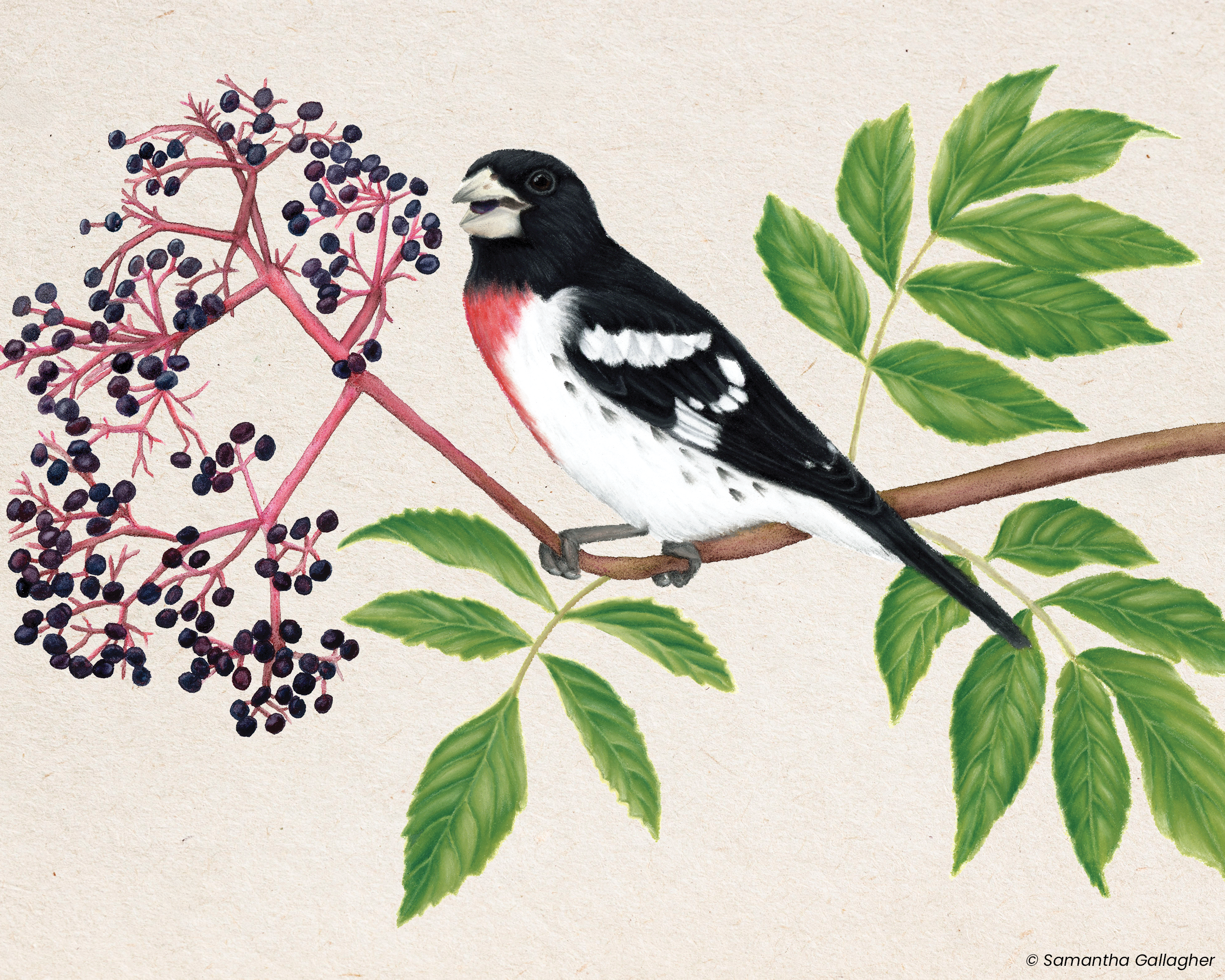
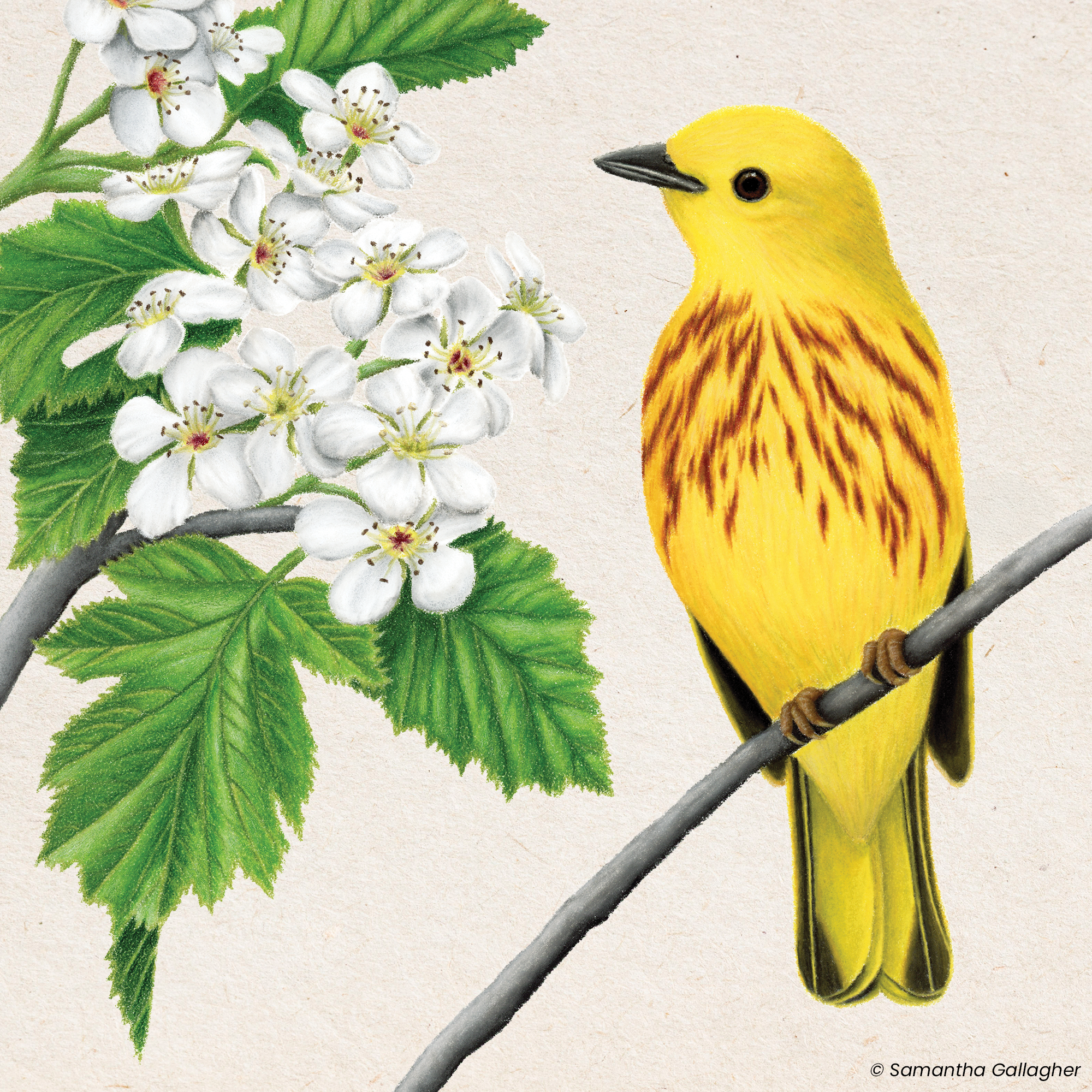
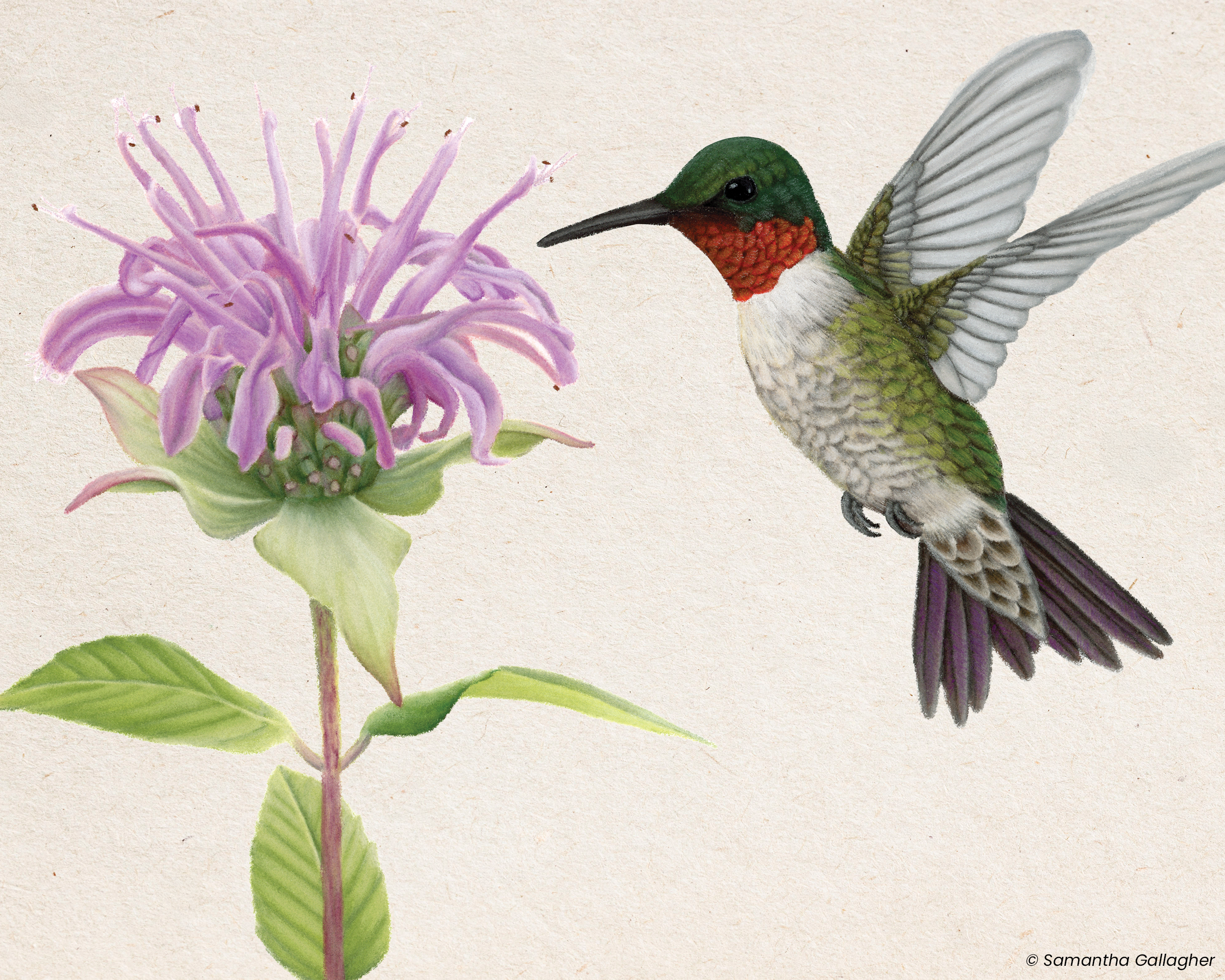
Local artist Samantha Gallagher drew the birds in this post and our new Birdwatching Guide.
For the bird illustrations, we asked her to depict lifelike poses and scenes. Two blue jays watching over a clutch of eggs nestled among oak leaves. A yellow warbler eyeing some downy hawthorn flowers as if hunting for insects to eat. A pair of purple martins perching at the entrance to their human-made house.
To achieve this authenticity, Gallagher consulted various sources. Her first stop was visiting our environmental educators at Ryerson Conservation Area.
“I looked at bird specimens in person and held them. I took pictures of different angles and saw how bright the colors are. That gave me a sense of scale,” she said.
YouTube was a reliable resource to understand how birds naturally move. Gallagher watched many videos there and studied photos in public databases such as iNaturalist and eBird.
Gallagher spent 8–20 hours perfecting each piece using many artistic tools.
Soon, it was time to draw. Each species demanded a careful strategy to avoid smudging the art.
For example, a rose-breasted grosbeak drawing—showing the bird perched with an elderberry in its beak—required something called frisket. Frisket is a stenciling material artists use to protect finished parts of a piece.
“It’s like a sticky note in that it doesn’t leave residue. I used watercolor for the berries and branches, then laid frisket on top and drew the bird. It was simple to peel the frisket off at the end.”
Feathers were another fork in the road. Smaller birds often have closely packed feathers that can be depicted as blended patches of plumage. However, individual feathers tend to be visible on larger birds. “Wings are not just random feathers,” said Gallagher. “They’re very specific.”
“Drawing these birds increased my awareness. It connected me to the sense of place and Lake County’s uniqueness.”
Samantha gallagher, artist
It’s tempting for many artists to endlessly tweak their work. But natural stopping points appeared here. Pastel pencils pair best with pastel paper, “which is like sandpaper. It wears down the pencils, and you can build up layers. Eventually, it gets to a point where the paper physically can’t take more pastel.”
Representing several bird families, creating the illustrations brought Gallagher closer to Lake County’s wildlife. “Drawing these birds gave me more awareness. ‘Oh, I didn’t know we had that here. I’ve never seen one of those.’ It made me feel more connected to the sense of place and how unique Lake County really is.”
She hopes readers of the guide will feel inspired to look for birds—and support them. “If I see a bird on an elderberry shrub, maybe I can plant elderberries and see it at home, too.”
The finished ruby-throated hummingbird illustration, resting on the drawing board.




The article work is amazing.
Thank you for reading, Ellen! Glad you enjoyed the post.