
Take flight: try birdwatching in your preserves

Post by Brett Peto

This article appears in the spring 2026 issue of Horizons, the award-winning quarterly magazine of the Lake County Forest Preserves in northern Illinois.

It’s also available as an episode of our Words of the Woods podcast.
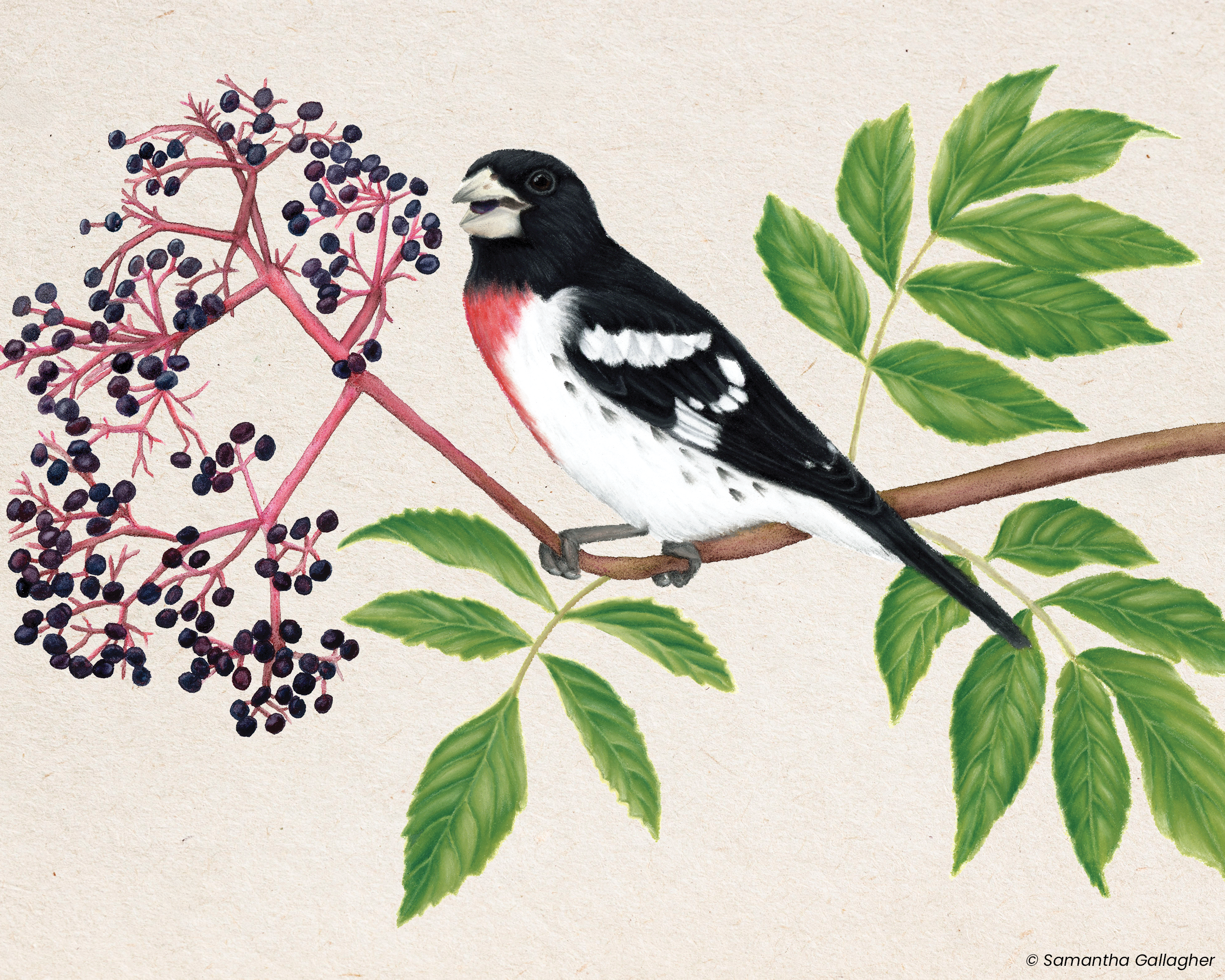

Rose-breasted grosbeak: This 8-inch-tall migratory bird is named for the male's triangular, rose-red chest patch. Illustration © Samantha Gallagher.
Rose-breasted grosbeak: This 8-inch-tall migratory bird is named for the male’s triangular, rose-red chest patch. Illustration © Samantha Gallagher.

At first light, a wetland at Rollins Savanna Forest Preserve (Grayslake) stirs to life. Red-winged blackbirds trumpet conk-la-REE-look-at-ME songs from swaying cattails. Wood ducks tip forward to eat plants below the water’s surface, rear ends bobbing in the air.

A great blue heron stands motionless onshore, amber-yellow eyes searching the shallows for tasty fish. The fresh smells of spring drift on a casual breeze as the landscape comes alive. Birdwatching gives you front-row seats to these compelling scenes, especially in Lake County.

Continue reading
The wonder of wood ducks

Post by Jen Berlinghof

Spring is the starting block for wildlife in the race to find suitable mates and nesting sites. With the increased flurry in wildlife activity, staff at the Lake County Forest Preserves in northern Illinois also get an increased flurry of phone calls with questions from the public. One recent call came from a gentleman in disbelief upon seeing ducks perched in his trees. He was utterly transfixed by the phenomenon. The call brought back a flash of memory for me of the first time I saw a wood duck (Aix sponsa) as a child, on my maternal grandfather’s property in northern Illinois. Grandpa “Duck,” as we affectionately called him, was an avid outdoorsman. He spent a few moments that spring day pointing out the distinct, vibrantly hued male and the more muted female near a nest hole in an old maple tree. The pair then took off into the woods to the soundtrack of their high-pitched whistling calls.

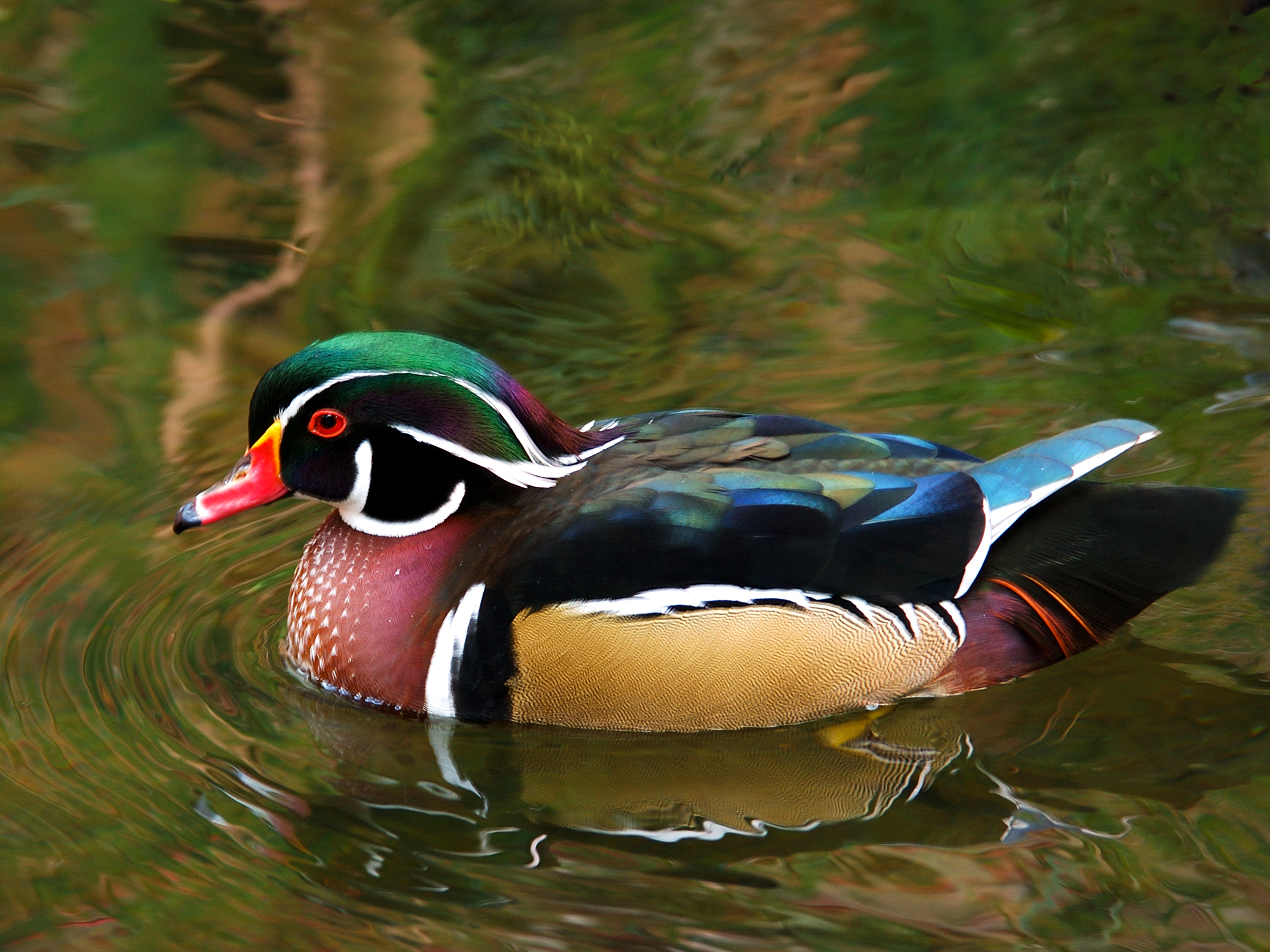
Male wood ducks are easily identifiable by their glossy green head, chestnut breast, and other vibrant colors. Stock photo © Lake County Forest Preserves.

Continue reading