Step into serenity with forest bathing

Guest post by Kim Mikus

This article appears in the summer 2025 issue of Horizons, the award-winning quarterly magazine of the Lake County Forest Preserves in northern Illinois.
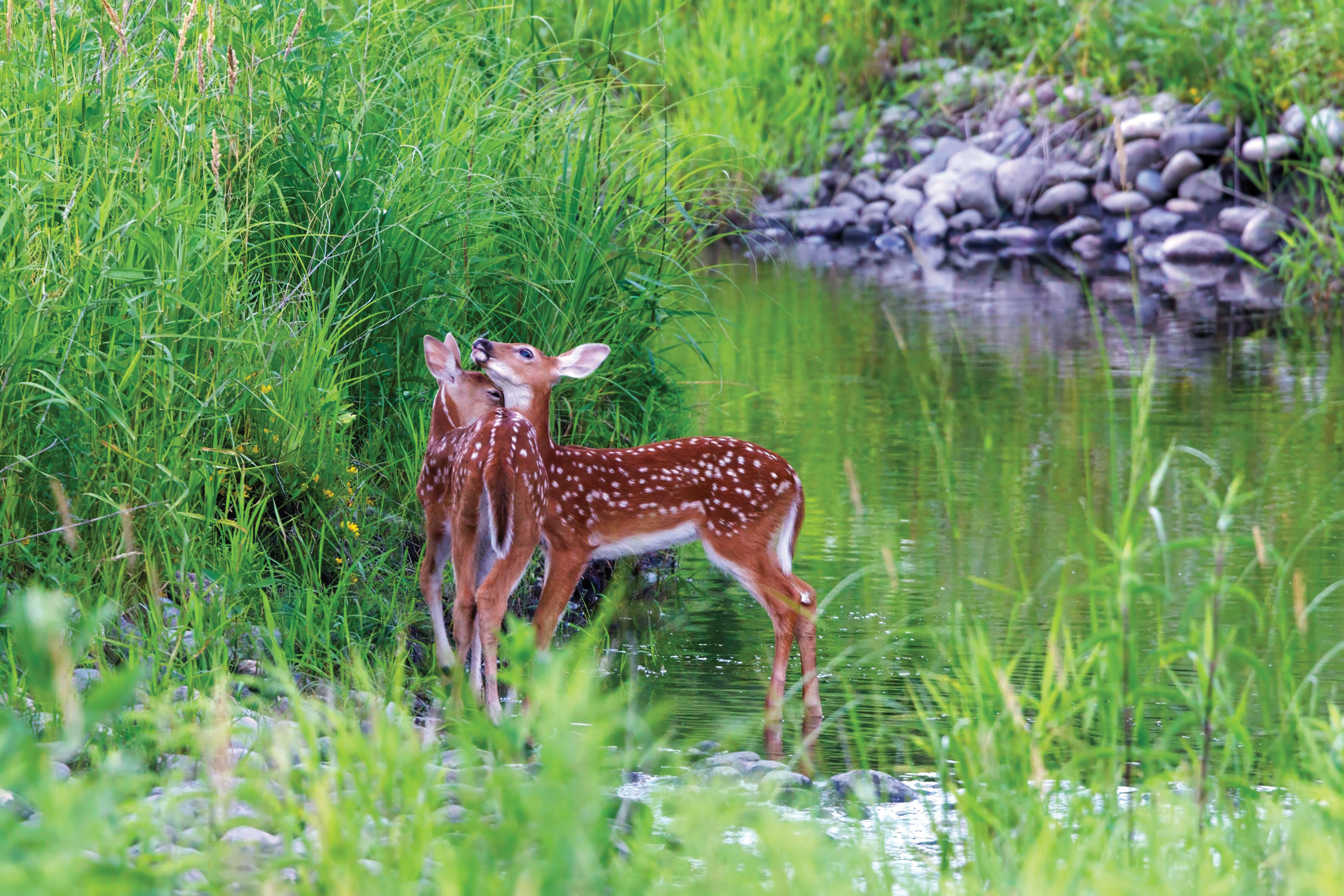

Photographer Dahai Zang snapped a fairytale scene at Buffalo Creek in Long Grove. These two white-tailed deer (Odocoileus virginianus) fawns sport hundreds of white spots on their rusty-brown coats. The markings help them blend into sun-dappled forests and meadows.

Imagine stepping into the woods, leaving behind the noise and stress of daily life. As you pause and breathe, a sense of calm takes over. There’s no rush or destination, only the soothing quiet of the woodland. Welcome to forest bathing, a practice that invites you to reconnect with yourself and nature.

Forest bathing, also called shinrin-yoku or forest therapy, involves immersing yourself in the outdoors—not through exercise or hiking, but by simply being present in the natural world. Its roots stretch back to a 1980s-era effort launched by Japan’s Ministry of Agriculture to help the country’s population reduce stress and improve health.
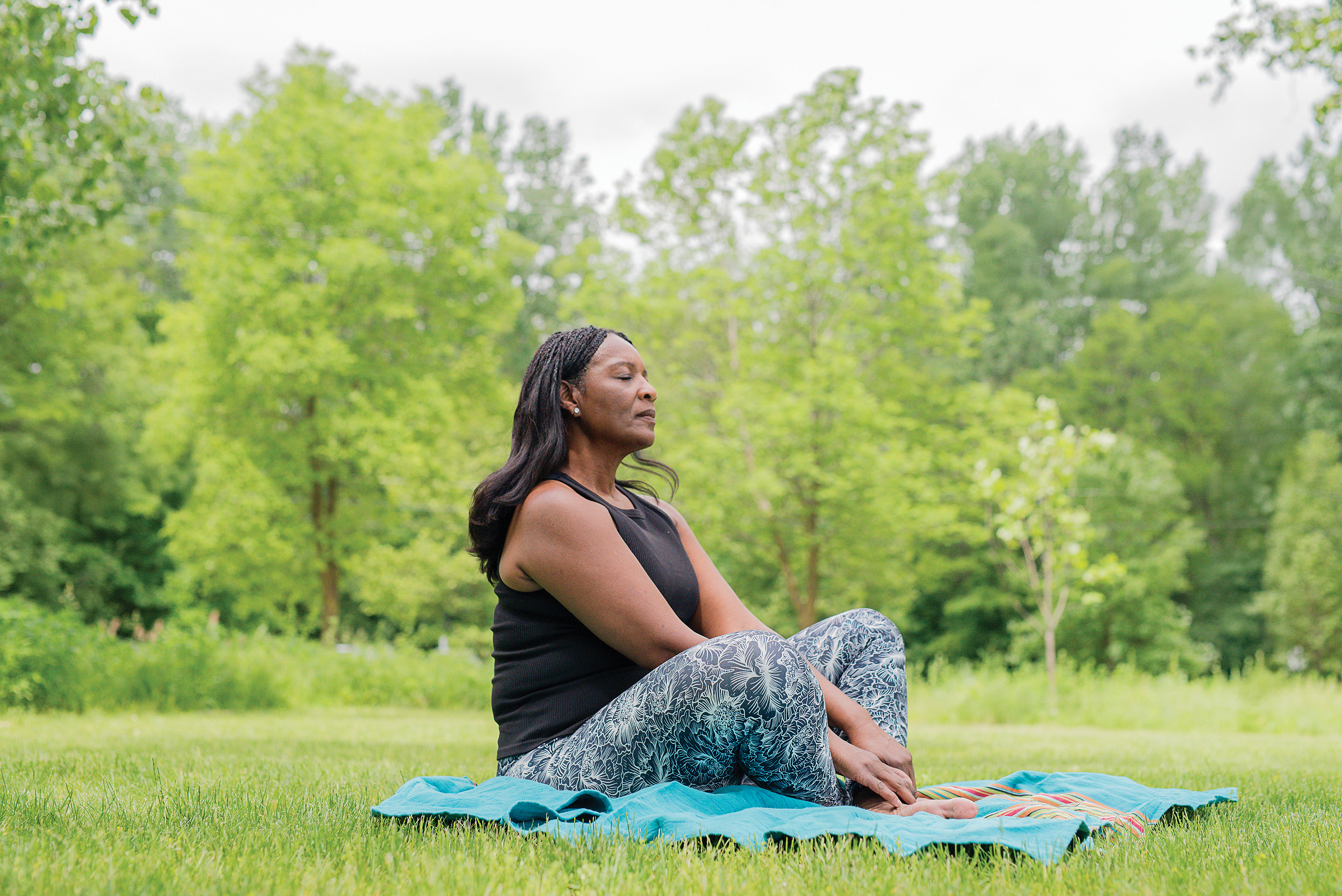
Forest bathing doesn't require equipment. Just a picnic blanket will do.
Forest bathing doesn’t require equipment. Just a picnic blanket will do.
Continue reading

Every acre strong: The Community Campaign for Lake County Forest Preserves

Post by Brett Peto

This article appears in the spring 2025 issue of Horizons, the award-winning quarterly magazine of the Lake County Forest Preserves in northern Illinois.


every acre is ESSENTIAL

Since 1958, the Lake County Forest Preserves has stewarded public funds to protect, manage and restore more than 31,200 acres across 65 sites to provide a healthy, resilient home for 28,850 native plant, animal and insect species as well as miles of trails and countless experiences for all to enjoy.

The Forest Preserves is an essential part of our community. Every acre of restored forest preserve land provides cleaner air, improved water quality, enhanced recreational and health benefits, habitat for pollinators, increased carbon storage and greater flood reduction.

But our restored lands face ongoing threats from invasive species, exotic pests and unpredictable weather. Today’s changing climate requires forward-thinking solutions and innovative, high-quality stewardship of the forest preserves to ensure they remain resilient in an uncertain future.

Continue reading

Unraveling the science of habitat restoration

Guest post by Kim Mikus

This article appears in the summer 2024 issue of Horizons, the award-winning quarterly magazine of the Lake County Forest Preserves in northern Illinois.


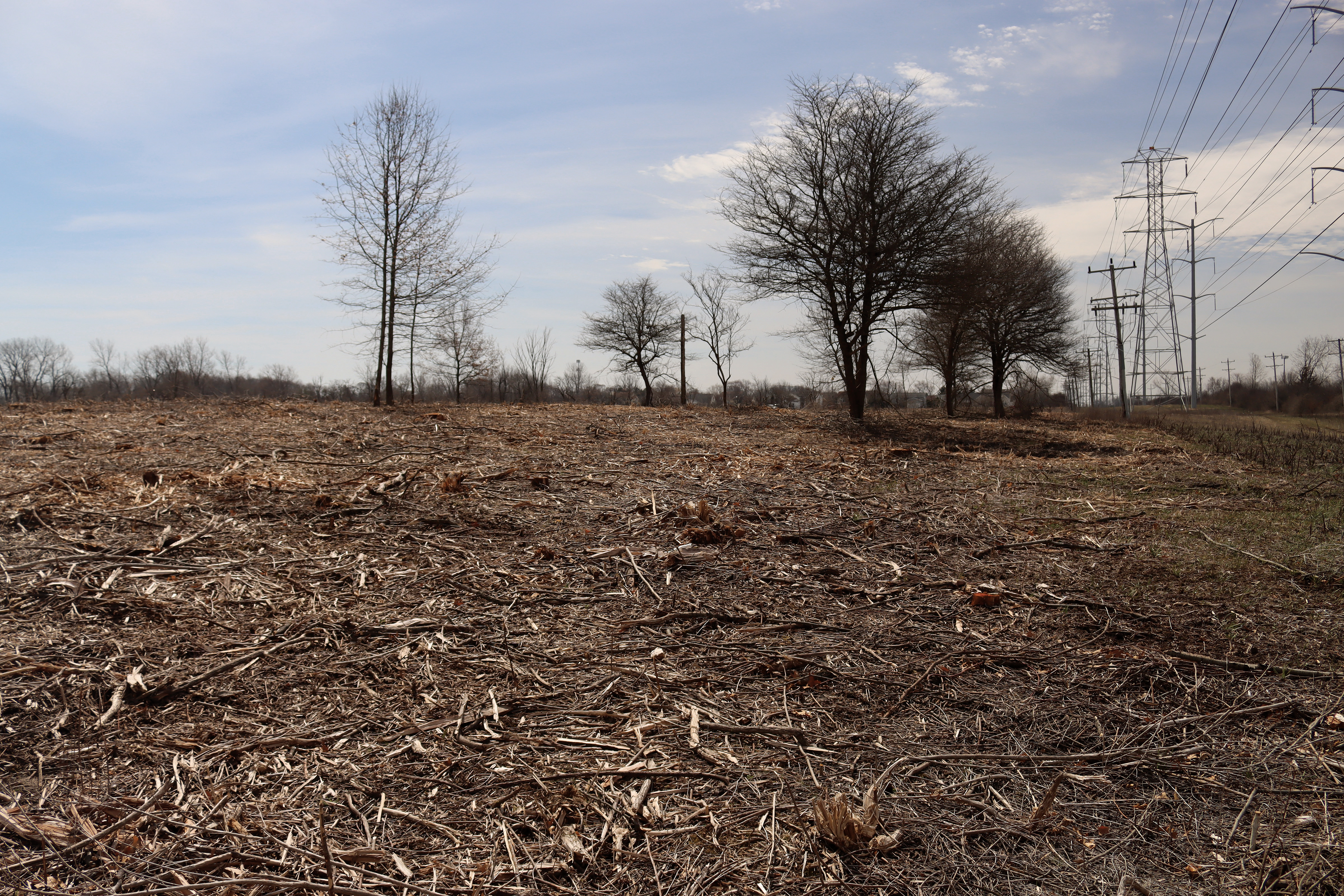
From a young age, we’re often taught that planting trees is good for the environment. So, why do we see large areas of trees sometimes removed from your forest preserves, leaving the land temporarily ragged and brown?

The answer is habitat restoration, a sequence of land management activities that improve the health, ecological function and diversity of species at a particular site, according to ecologists at the Lake County Forest Preserves. Sometimes that process involves removing non-native, invasive trees and other species.

During restoration efforts, you may see dramatic visual differences.

Two images showing a 40-acre area at Greenbelt Forest Preserve (North Chicago) during and after restoration.
Continue reading

Monitoring for the future

Post by Jen Berlinghof

It was a bone-chilling winter’s day at Captain Daniel Wright Woods in Mettawa—part of the Lake County Forest Preserves in northern Illinois—when a group of five gathered to monitor for the future. Our crew consisted of Restoration Ecologists Ken Klick and Dan Sandacz, Environmental Educator Eileen Davis, Environmental Communications Specialist Brett Peto and myself.

It’s all hands on deck for an ambitious new tree monitoring program with the lofty goal of sampling every woodland, upland forest and flatwoods habitat within the Forest Preserves every 10–15 years. Ken and Dan are spearheading this project.

In the field, the pair are like bookends. Ken has served 25 years at the agency, while Dan is fresh to the Forest Preserves, starting his tenure this past fall. The two have opted to take a collaborative approach, inviting volunteers from our Natural Resources and Education Departments to help with this significant undertaking.

A leisurely stream flows through Wright Woods in Mettawa. Photo © Lake County Forest Preserves.
Continue reading

Planting for pollinators

Guest post by Eileen Davis

It’s a sunny July afternoon at a Lake County Forest Preserve in northern Illinois. The humidity is low and the breeze is just right. I’m poised over a patch of wild bergamot (Monarda fistulosa), furiously clicking away with my camera, hoping to get at least one image that will be clear enough for me to identify the native bumble bee feeding on the flower. If there’s a better way to spend a Saturday afternoon, I haven’t found it.

A two-spotted bumble bee (Bombus bimaculatus) feeds on wild bergamot. Photo © Eileen Davis.
Continue reading

What’s wrong with this picture?

Editor’s note: hey readers, Brett Peto here. This month, guest author Pati Vitt, Manager of Restoration Ecology at the Lake County Forest Preserves in northern Illinois, returns with the third part of her series about our research project to restore 180 acres of former farmland within Grant Woods Forest Preserve in Ingleside using a climate-adapted, regionally sourced native seed mix.

This past winter, we planted 800 pounds of native grass seed from southern Illinois and Kentucky in the project area. The goal was (and still is) to help us understand whether we should source native seeds from further south to make our future restoration projects more resilient to climate change.

Unfortunately, as you can probably tell from the photo below, even the best-laid plans can go awry. And so they did, when an unseasonable early drought struck. Pati will pick it up from here.

The author's boot atop a drought-parched patch of soil at Grant Woods in Ingleside. Photo © Lake County Forest Preserves.
The author’s boot atop a drought-parched patch of soil at Grant Woods in Ingleside. Photo © Lake County Forest Preserves.
Continue reading

Become a community scientist

Post by Jen Berlinghof

While the past year and a half has kept many of us mostly at home, nature in our backyards and beyond has provided a balm for these trying times. General use of the Lake County Forest Preserves in northern Illinois is trending 30% higher in 2021 than a typical pre-pandemic year. And in 2020, there was an astounding 70% surge in visitation. The number of folks delving into home gardening and backyard birding has skyrocketed as well, making headlines by leaving store shelves bare of birdseed and bird feeders. The COVID-19 pandemic has amplified our desire to connect to nature closer to home, and it has created space and time for local, daily observations. All of this translates to an environment ripe for community science, also called citizen science.

Community scientists flip over a cover board during a BioBlitz event held at Middlefork Savanna in Lake Forest in 2008. Photo © Carol Freeman.
Continue reading

A native garden to call your own

Guest post by Eileen Davis

What is your earliest gardening memory? Was it planting a seed in a paper cup at school, and watching it sprout and grow on the classroom windowsill? Perhaps you gathered dandelion flowers and presented your mom with a beautiful, yellow bouquet. Or did you rake up a giant pile of leaves to jump in on a crisp fall day? You might even have visited the native garden at Independence Grove in Libertyville, part of the Lake County Forest Preserves in northern Illinois.

My earliest gardening memory is helping my aunt and uncle in their garden. I was only about four or five years old, but I clearly remember the prickly feeling of the cucumber vines scratching my forearm as I helped pull weeds. No matter the memory, we are all doing the same thing—tending to our little piece of the Earth. It’s something humans have done for thousands and thousands of years. We are and always have been dependent on our environment for survival.

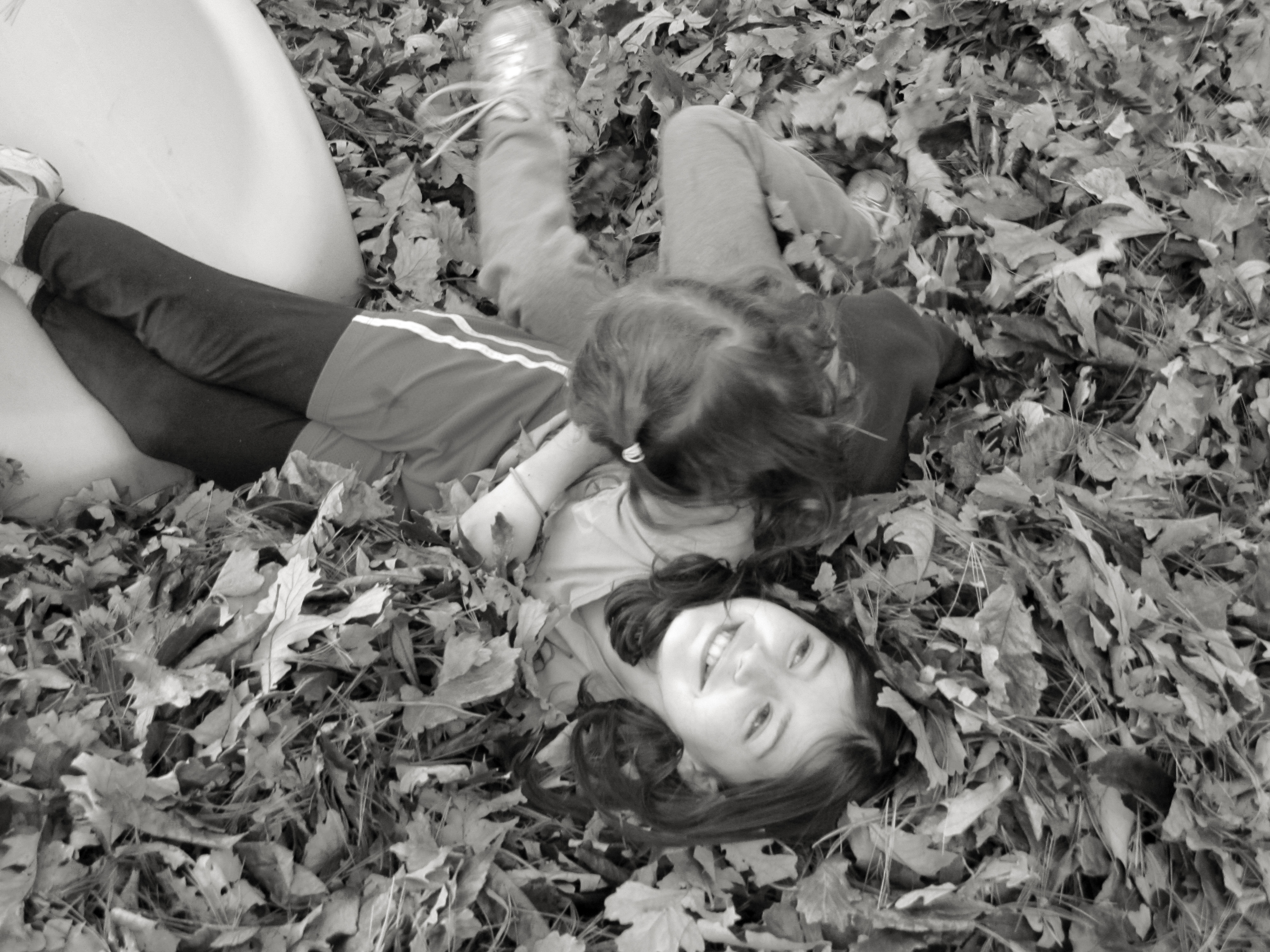
The author's daughters playing in a backyard leaf pile. Photo © Eileen Davis.
The author’s daughters playing in a backyard leaf pile. Photo © Eileen Davis.
Continue reading

On the path to recovery

Editor’s note: hello readers, Brett Peto here. Guest author Pati Vitt, Manager of Restoration Ecology at the Lake County Forest Preserves in northern Illinois, is back with the second of her three-part series about our research project to restore 180 acres of former farmland within Grant Woods Forest Preserve using a climate-adapted, regionally sourced native seed mix.

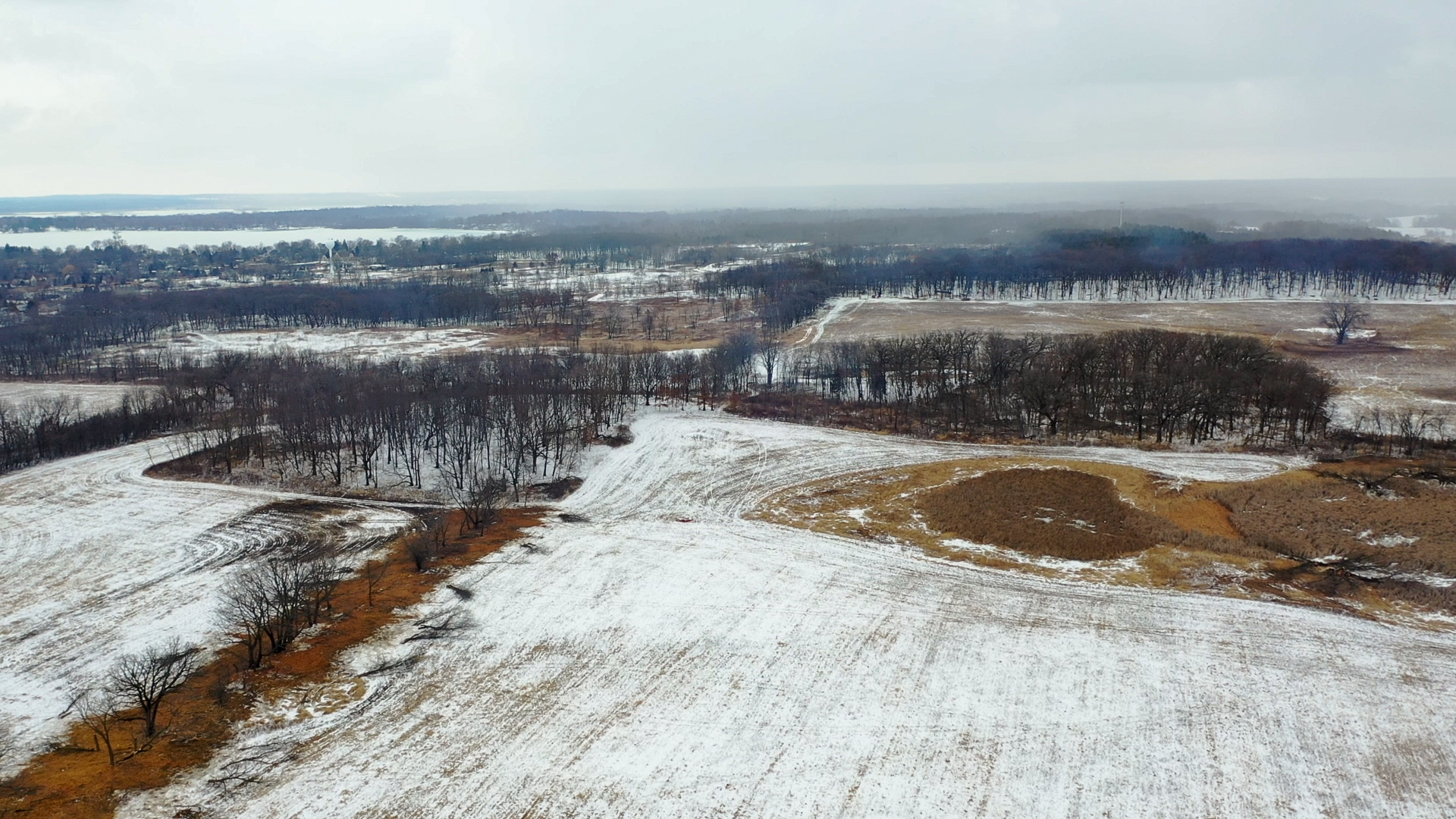
An aerial view of the 180-acre research project area at Grant Woods in Ingleside. Photo © Mike Borkowski.
Continue reading

Flicking through the Flickr pool

This gallery contains 10 photos.

Post by Brett Peto

You don’t need me to tell you that 2020 has been a long year. In a pandemic, separated from routines, sometimes days go slow but months go fast, and vice versa. There are fewer anchors around which to pin our schedules like so many pieces of laundry on a clothesline. Some people have started baking homemade bread, assembling model kits, binging movies and podcasts, devouring piles of books, or playing long-distance board games over Zoom. Our strategies may vary, but I think it’s helpful to have as many coping mechanisms as we can gather this year.

One adopted or continued by many folks is spending more time outdoors. Whether in yards, neighborhoods, parks, or the Lake County Forest Preserves in northern Illinois, people are discovering or rediscovering the value of nature, even as the thermometer dips. Fresh air; sunshine; wide horizons; the sounds of wind in trees and water over rocks; birds and squirrels and foxes living their private lives; the calm curiosity to find out where a trail goes and the confidence that it’s designed to go somewhere.

"Ice Ice Baby." Photo © Michelle Wendling.
“Ice Ice Baby.” Photo © Michelle Wendling.
Continue reading