
Virtual camouflage hike

Leaves throughout the forest glowed gold against a backdrop of graying sky as I left Ryerson Conservation Area yesterday afternoon. This morning—as I entered the same preserve along the same road—the dark, skeletal branches were completely visible, stripped of their vibrant leaves that now lay in muddied piles on the forest floor.

These days of November mark a change from crisp colors to muted tones, which offer the perfect backdrop for animals to hide using camouflage. Lake County Forest Preserve educators often teach the concept of camouflage during environmental programs, where students hike in search of animal hides and mounts that have been hidden along the trail. Teachers and scout leaders, peruse our variety of school and scout programs to find a great fit for your group this year. Following is a virtual version of our camouflage hike. Continue reading
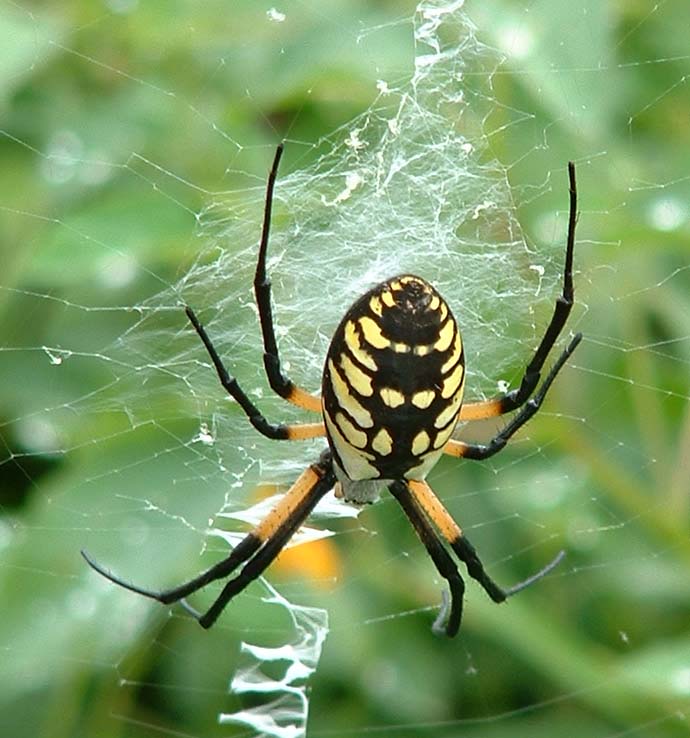
Arachnid architecture

With the warmth we’ve experienced this October, I have spent many mornings drinking my coffee outside, watching the early sunlight glint off strands of spider silk that have encased my tiny porch overnight. While I’m enchanted by this maze of webs, my next door neighbor is not. I’m quickly called next door to clear a web-free path as she rushes down the stairs and off to work. I feel a bit of guilt as it takes me seconds to paw through a huge orb web that I know took the spider hours to intricately create.

Continue reading

Goldenrod galls

September in Lake County, Illinois is a month of big sky punctuated by tips of tall prairie plants in an array of autumnal colors. Before the trees really get going with their own colorful show, sparks of bright yellow from the many varieties of goldenrod (Solidago spp.) dominate the open spaces. Most of the summer these plants go unnoticed, adding merely another green hue to the lush surroundings, but September is their time to shine. What may also go unnoticed, even now as goldenrod demands our attention, is the hidden world inside each plant in the form of a gall.

Continue reading

Ant parade

With June comes the arrival of many eagerly awaited events. It’s the end of the school year and the beginning of a season of bare feet, beaches, camping trips and baseball games. In my house, one thing we are not excited about is the return of ants that parade around our kitchen. We know these ants are not going to cause us any harm. But, when a horde of them begins an organized march around the rim of my sons’ cereal bowls, it starts to bug me. At the same time, I realize they are just doing their job. It is a highly evolved social structure that allows these ants such precision in the tasks at hand—carrying away crushed Cheerios from the kitchen floor for their own pantries, taking to the air for a ritualized mating flight, deciding which eggs will be fertilized, or starting a new colony from the ground up.

Marching ants

Continue reading

Water Connects Lake County

It comes as no surprise that in a place named “Lake County” you are never more than a stone’s throw away from water. Lake County, Illinois is scattered with thousands of acres of wetlands, dotted with over 170 lakes and rivers, crisscrossed with 400 miles of streams, and bordered by massive Lake Michigan. This year at the Lake County Forest Preserves, we are celebrating this wealth of water by exploring how Water Connects Lake County through educational programs and recreational opportunities.

One way water connects the critters of Lake County is through the magic of metamorphosis. Ponds, streams and other wetlands host and hide well-known animals in surprising forms. Take a look at the picture below. This is a type of insect found in most local bodies of water. Can you identify this creature?

Continue reading

Freshwater shrimp?!

Post by Allison

What is clear and looks more like dancing water than an animal? Freshwater shrimp! Well, that’s one answer at least—and local ecologists have had their first encounter. During stream monitoring this past summer, restoration ecologists of the Lake County Forest Preserves discovered several dozen Mississippi grass shrimp, Palaemonetes kadiakensis, in a forest preserve along the Des Plaines River in southern Lake County. Due to the fact that you can see right through them, this species is also commonly called glass shrimp. At first sight, the ecologists did not recognize the inch-long crustaceans. It was clear that this find was something rare and exciting.

Continue reading

Where do insects go in the winter?

Post by Allison

Earlier this week, my husband came in from the yard with a mosquito on his forehead. Had it been summer, that little tag-along would never have made it so far—but not in December. In the colder months, critters that are commonplace during the Midwestern summer are often the farthest things from our minds. It always amazes me when the weather has been cold for an extended period, then, at the first sign of warmth, insects seem to magically reappear. Where have they been hiding? How did they survive the frigid air that makes me shiver in my sweater when I’m outdoors longer than a few minutes?

Where do insects go in the winter?

Continue reading

The benefits of “creepy” creatures

It’s Halloween! This is the time of the year so-called “scary” animals seem to creep their way into our consciousness. Everywhere—from the grocery store to the car wash, even the dentist’s office—seems inundated with gauzy cotton spider webs, vampire bats with over-sized fangs, and neon rubber snakes. Although these decorations can be fun, they also seem to play into human fears of these often misunderstood and beneficial animals.

Continue reading

Camouflage revealed

Early fall finds most naturalists outside in fields of waist-high wildflowers. This was the case recently when a few Lake County Forest Preserves Environmental Educators stumbled across a miniscule critter with mighty camouflage capabilities. So small and inconspicuous, it was almost dismissed entirely as merely a part of the black-eyed susan flower (Rudbeckia hirta)—until it started to move.

Continue reading

Shrew crossing

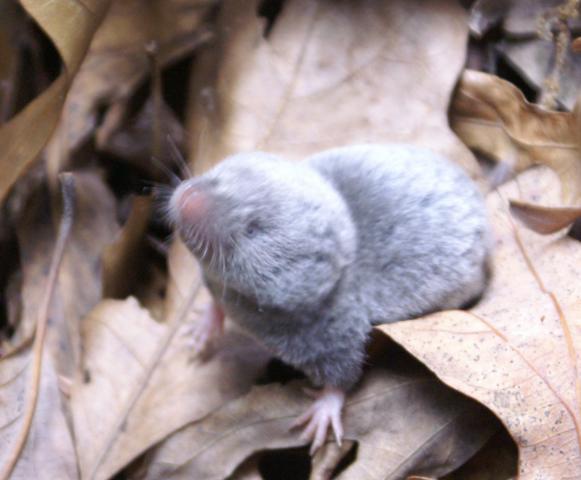
While we revel in the slow pace of these last dog days of summer, sipping one last lemonade on the porch or wandering down one last stretch of beach, there is another mammal pulsing with life that has no such concept of slowing down. One of the most abundant mammals in Illinois, the shrew lives its life entirely in the fast lane—tunneling about a foot below the ground’s surface.

There are three species of shrews that live in Lake County, Illinois. The most common species, and largest at about 4 inches long with a 1-inch tail, is the lead-colored short-tailed shrew (Blarina brevicauda). The short-tailed shrew lives in a variety of habitats from forests to grasslands and typically only lives 1-2 years.

The least shrew (Cryptotis parva), at about 3 inches long, can be distinguished by its cinnamon-colored fur and extremely short tail. Least shrews are most commonly found in open grassy areas. About the same size as the least shrew, the masked shrew (Sorex cinereus), appears grayish-brown with a longer tail and prefers low wet areas such as floodplains.

Continue reading