Now that the icy days of January have arrived, everyone in my house has that cooped up feeling and needs to get outside for a view of the expansive winter sky. We need to breathe a bit of fresh air, regardless of how cold it might be. At dusk, my sons and I have been hiking a nearby trail that takes us through scrubby meadows and thickets. During these forays, the boys are often loud and boisterous—until they flush out a cottontail rabbit. They quickly hush. We spend the rest of the hike searching for “our” rabbit (or signs of it) as we crisscross the worn network of trails trodden with tracks.
Tag Archives: Lake County Forest Preserves
“Kwirr, churr, cha-cha-cha”
Walking through the woods in late fall, everything seems to be settling in—the colors calming to variations of brown, the dull roar of the wind the only sound. That is, until the staccato “cha-cha-cha” call of a red-bellied woodpecker breaks the lull of the wind, and a tiny black and white tuxedo (complete with a red cap) flashes past me, announcing the bird’s entrance into the woods.
Red-bellied woodpeckers (Melanerpes carolinus) are year-round residents of Lake County, Illinois. The sounds and sights of these birds in the woodlands and at backyard feeders command attention, especially against the bland backdrop of late autumn and early winter. Like its six fellow species of woodpeckers in Illinois, the red-bellied woodpecker excavates holes, commonly called cavities, in trees for nesting and shelter—all the while snacking away on the tiny critters crawling under the bark. Continue reading
The benefits of “creepy” creatures
It’s Halloween! This is the time of the year so-called “scary” animals seem to creep their way into our consciousness. Everywhere—from the grocery store to the car wash, even the dentist’s office—seems inundated with gauzy cotton spider webs, vampire bats with over-sized fangs, and neon rubber snakes. Although these decorations can be fun, they also seem to play into human fears of these often misunderstood and beneficial animals.
Chipmunk song
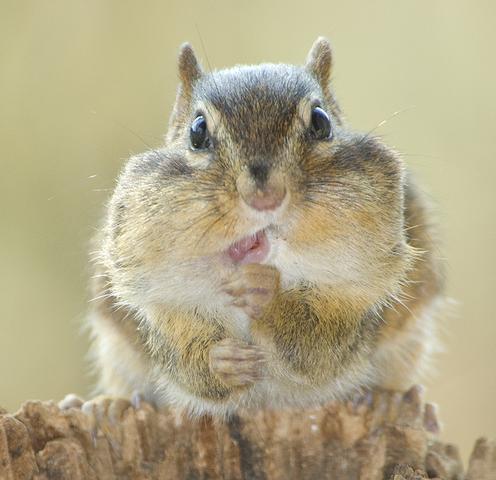
Last week as I was leading a group of adults on a fall color hike, our collective gaze turned quickly from the canopy of coppers and golds to the forest floor as we watched the flurry of chipmunk mischief unfold. We huddled around, marveling at the energy of these charming rodents.
Fast-forward fall
Even though Illinois recently received a break from this summer’s heat and drought, the precipitation deficit that remains statewide has kicked off autumn with atypical natural events. Thus far, the year 2012 has been the fourth driest on Illinois record. However, it has been raining acorns and fall colors have been peeking through the greenery since late August—three weeks earlier than usual. This fast-forward to fall is a tree’s way of protecting itself when water is in short supply. The vibrant color displays of autumn, which seem so lively, are actually a sign that a tree is entering dormancy.
These flashes of fall colors are a result of changes in pigments. The dominant green pigment in leaves is chlorophyll. The leaves in a tree are like little factories, mixing together a recipe of specific ingredients (sunlight, carbon dioxide and water) to make food for the tree’s growth. Chlorophyll acts as the “chef” in this process, called photosynthesis; its presence is necessary in bringing everything together.
Typically, autumn’s cool nights and shortening days trigger photosynthesis to slow down. The scarcity of one key ingredient, water, is triggering this earlier-than-average dormancy. As the work of the leaves comes to an end for the year, chlorophyll breaks down and reveals yellow and orange pigments that have hidden behind its green cloak all summer. Leaves that contain the pigments xanthophyll and carotene—as do hickories, cottonwoods, elms and some maples—will change to vivid shades of yellow and orange as the green fades. Continue reading
Camouflage revealed
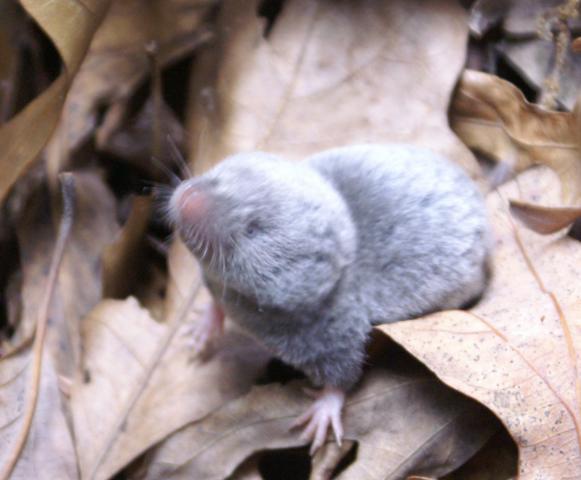
Early fall finds most naturalists outside in fields of waist-high wildflowers. This was the case recently when a few Lake County Forest Preserves Environmental Educators stumbled across a miniscule critter with mighty camouflage capabilities. So small and inconspicuous, it was almost dismissed entirely as merely a part of the black-eyed susan flower (Rudbeckia hirta)—until it started to move.
Shrew crossing
While we revel in the slow pace of these last dog days of summer, sipping one last lemonade on the porch or wandering down one last stretch of beach, there is another mammal pulsing with life that has no such concept of slowing down. One of the most abundant mammals in Illinois, the shrew lives its life entirely in the fast lane—tunneling about a foot below the ground’s surface.
There are three species of shrews that live in Lake County, Illinois. The most common species, and largest at about 4 inches long with a 1-inch tail, is the lead-colored short-tailed shrew (Blarina brevicauda). The short-tailed shrew lives in a variety of habitats from forests to grasslands and typically only lives 1-2 years.
The least shrew (Cryptotis parva), at about 3 inches long, can be distinguished by its cinnamon-colored fur and extremely short tail. Least shrews are most commonly found in open grassy areas. About the same size as the least shrew, the masked shrew (Sorex cinereus), appears grayish-brown with a longer tail and prefers low wet areas such as floodplains.
Nature’s fireworks
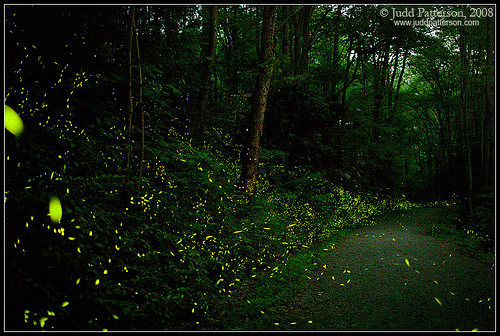
This time of the year brings dazzling firework shows high in the sky. But, look closer to the ground in grassy yards and woodlands, and you will catch that same sense of awe as a myriad of lights burst, creating nature’s very own fireworks display. Watching and catching fireflies is one of the most quintessential summer experiences in the Midwest. There is a giddiness in holding a creature in your hand and watching it glow before it flies away to join the show. Continue reading
Year of the Bat
Post by Allison
Amazing. Fascinating. Adorable. Essential. These are the first words that come to mind when I think about bats. Would you use the same descriptors? 
Bats are highly beneficial and play a vital role in maintaining the balance of nature. They help control insect pests and are vital pollinators and seed-dispersers for countless plants worldwide. Yet the world’s only flying mammal is still among the most feared and misunderstood of animal groups. Continue reading
Muskrat musings
It was the calm before the storm. The pond was the calm, sheer and smooth. The bus that was due with over 100 middle school students for a field trip was the impending storm. Although students are always a good storm, filling the forest preserve with energy, it is inside these few moments of quiet before the bus arrives that nature seems to poke its head out to see if the coast is clear. This particular morning, the glassy water became rippled in V-shapes like geese migrating in the sky. A lone muskrat (Ondatra zibethicus) slid through the water towards a clump of cattail, its snake-like tail slithering behind him.