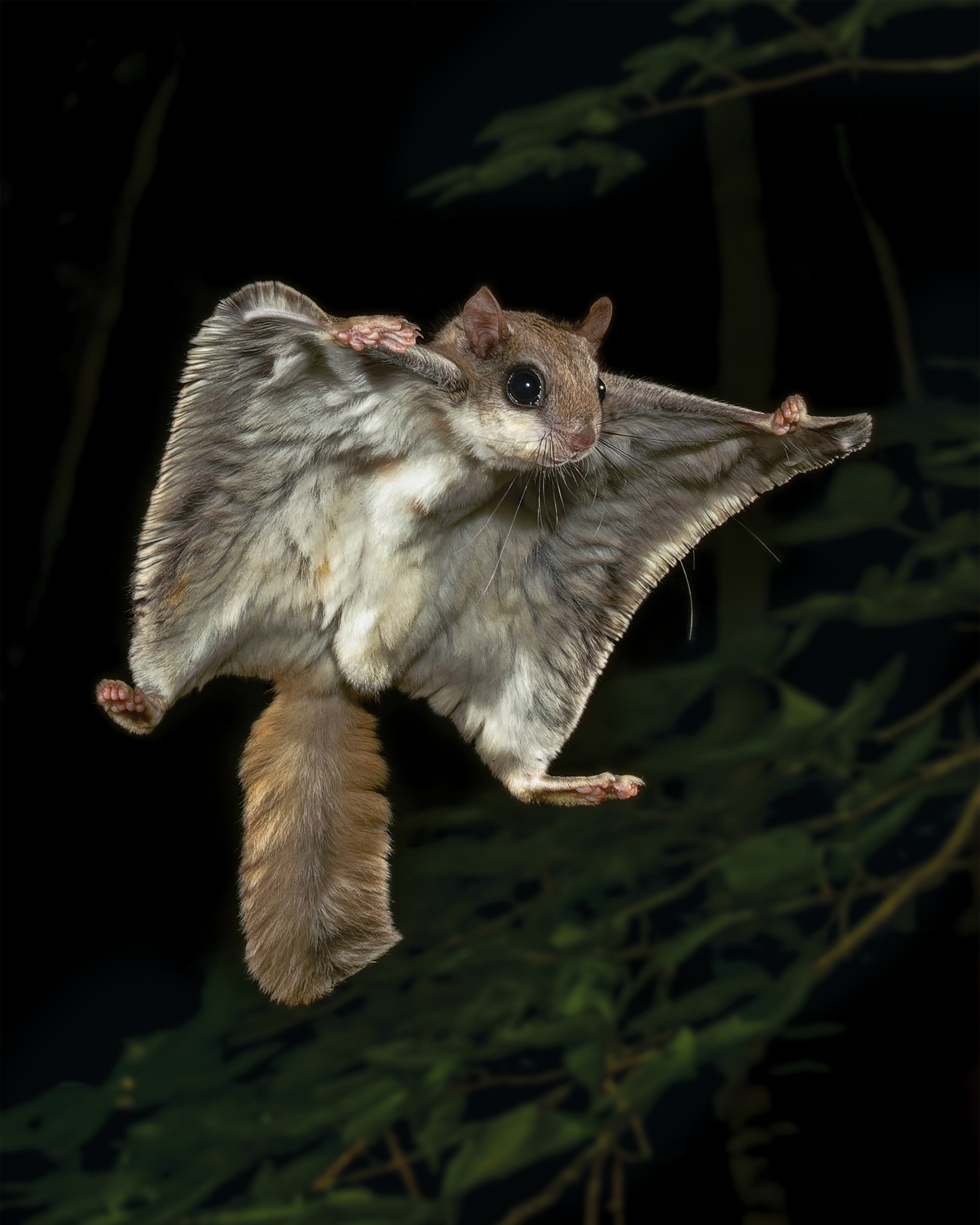
A southern flying squirrel (Glaucomys volans) glides gracefully across the nighttime sky. Weighing only 1–3 ounces, this small, nocturnal mammal uses loose skin like a wing-suit to stay aloft. The species is native to North America—including Lake County—and Central America.
When you settle into bed for the evening, another world awakens. Flying squirrels launch between trees, bats emerge from roosts and owls begin their silent hunts.
Your forest preserves provide the food, water, shelter and darkness these animals need during their night shifts. Despite their abundance and proximity, our nocturnal neighbors can seem mysterious. The dark obscures their unique activities.
The back-to-school season in early fall brings restlessness and routine to my house. I’m struck by how it parallels the flurry of fall migration across the natural world: a return to the patterns of movement ingrained over generations.
Green darner (Anax junius) dragonflies skim the skies by the dozens along the lakefront at Fort Sheridan in Lake Forest, their wings glittering. Fields of bee balm (Monarda didyma) along the 31.4-mile Des Plaines River Trail quiver with monarch butterflies (Danaus plexippus) nectaring to gear up for their epic journey. And, sporting less vibrant feathers than in the spring, migratory birds take flight in muted autumnal tones, heading south. As the sun sets in September and the harvest moon rises, this silent surge of fall migration commences.
One May many years ago, I was biking the Millennium Trail and Greenway from Lakewood in Wauconda to Singing Hills in Round Lake—two sites of the Lake County Forest Preserves in northern Illinois—to time out an activity for summer camp. That’s when I first noticed a distinctive blackbird magically appear from within the tall grasses.
This happened at least 30 times as I cycled the winding 1.62-mile trail section from Gilmer Road to the Singing Hills parking lot. As I coasted by these birds, I detected a “chunk” call and noticed their color pattern, which has been described as a classic black tuxedo worn backwards.
I wondered who this dapper fellow was and why there were so many along this route, emerging from this habitat. I would soon learn this pop-up-from-the-grasses blackbird was none other than the bobolink (Dolichonyx oryzivorus). It’s eastern North America’s only songbird whose feathers are black below and mostly white above, with a buttery, cream-yellow nape. Keep watch for a white rump, too, as he takes flight.
In February, sensational sunrises and sunsets break up the stark days and cold, dark nights of a waning winter. Dawn and dusk not only bring the thrill of color to a monochrome landscape, but also the best chance of hearing and seeing nocturnal raptors. As the mercury drops, owl courtship heats up. While many other birds head south for winter, owls pair up and hunker down. At night, the soundtrack of our resident species’ hoots and hollers fills the Lake County Forest Preserves in northern Illinois, offering us a glimpse into an otherwise hidden world.
Bird migration is well underway, and the nesting season is upon us at the Lake County Forest Preserves in northern Illinois. I watched last week as an American robin (Turdus migratorius) plucked dried grasses from the yard, nudging them into place with her beak and wings, readying her cup-shaped nest for the azure eggs that are synonymous with spring. From the nearby American sycamore (Platanus occidentalis) tree, I heard the gurgling chatter of a flock of brown-headed cowbirds (Molothrus ater).
I thought about how while the robin might’ve seemed completely absorbed in her nest building, she was probably wearily listening to the cowbirds, too. Brown-headed cowbirds are North America’s most common avian brood parasite, forgoing nest building altogether. Instead, they lay their eggs in the nests of more than 200 other species of birds, leaving the incubation and rearing of their young to these unwitting foster parents.
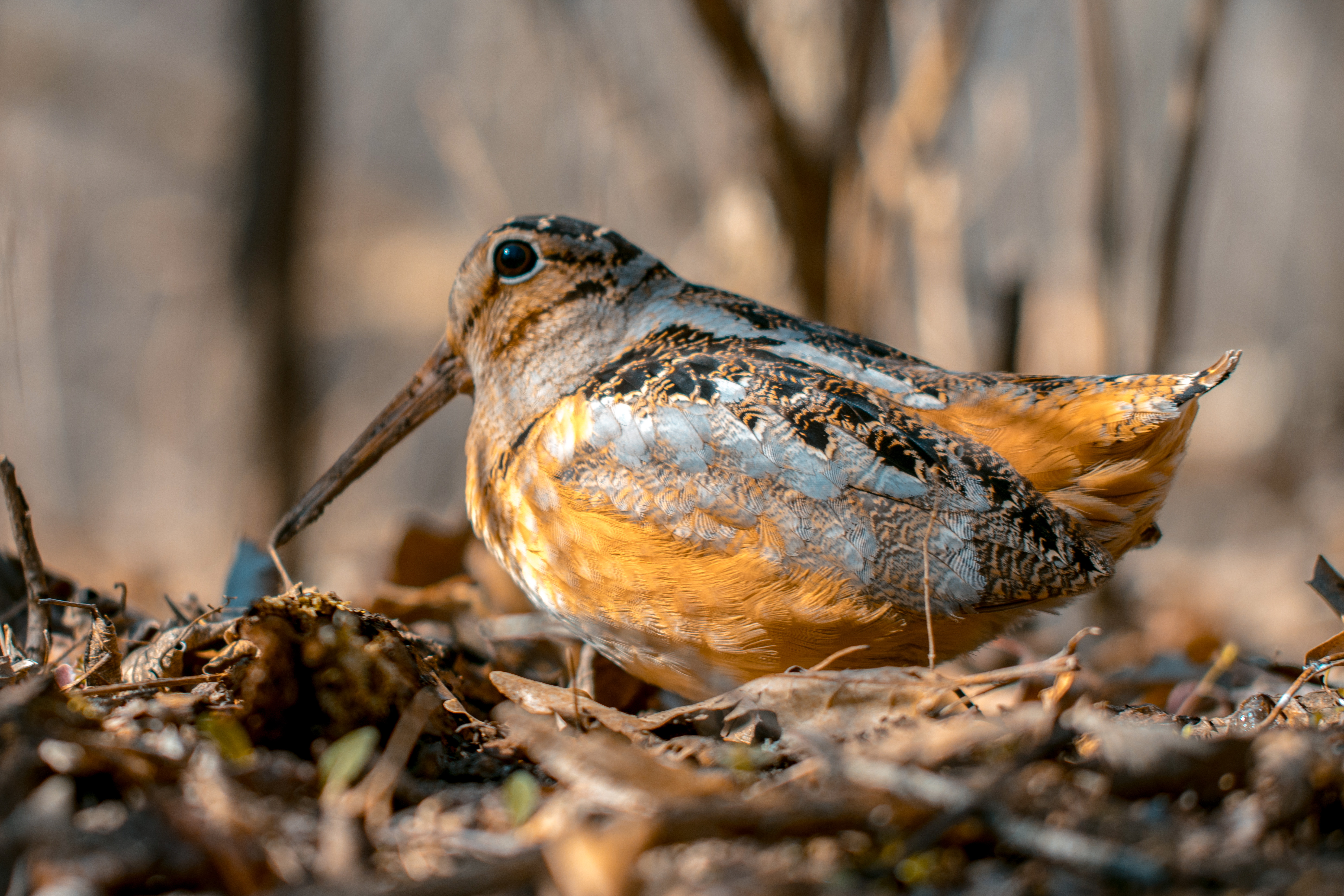
March is the demarcation of spring. This new season is brewing now as snowmelt percolates through the thick mats of leaves on the forest floor into swollen creeks. Sap is rising in the sugar maples (Acer saccharum), with its promise of sweetness after a harsh winter. The purple, mottled crowns of skunk cabbage (Symplocarpus foetidus) peek out of the thawing mud, surging toward the sun. And the quiet of winter is replaced with the cacophony of western chorus frogs (Pseudacris triseriata) accompanied by the “peent” and “whir” of American woodcocks (Scolopax minor) in the Lake County Forest Preserves in northern Illinois.
The American woodcock (Scolopax minor) is a curious species to study. Stock photo.Continue reading →
Fall bird migration is happening now at the Lake County Forest Preserves in northern Illinois, and each day (and night) brings tens of thousands of newly arrived birds. Yet finding fall migrants can be challenging. Their subdued palettes of brown, tan, and olive feathers hide in sharp contrast to their resplendent springtime colors.
Unlike spring migration, most birds travel quietly in the fall, barely whispering a note to indicate their presence. In Lake County, fall migration starts in July, when our forests and prairies are green and full of blooming flowers. It’s a five-month-long period involving more than 200 species that rest and feed in our nearly 31,000 acres of preserves.
Spotting a bird can be difficult when vegetation conceals fleeting glimpses, making observations tricky and identification nearly impossible. Besides, who’s thinking of fall migration in July’s summer vacation mindset?
Either way, here are some of my favorite fall birding observations by month, over my past five decades of birdwatching.
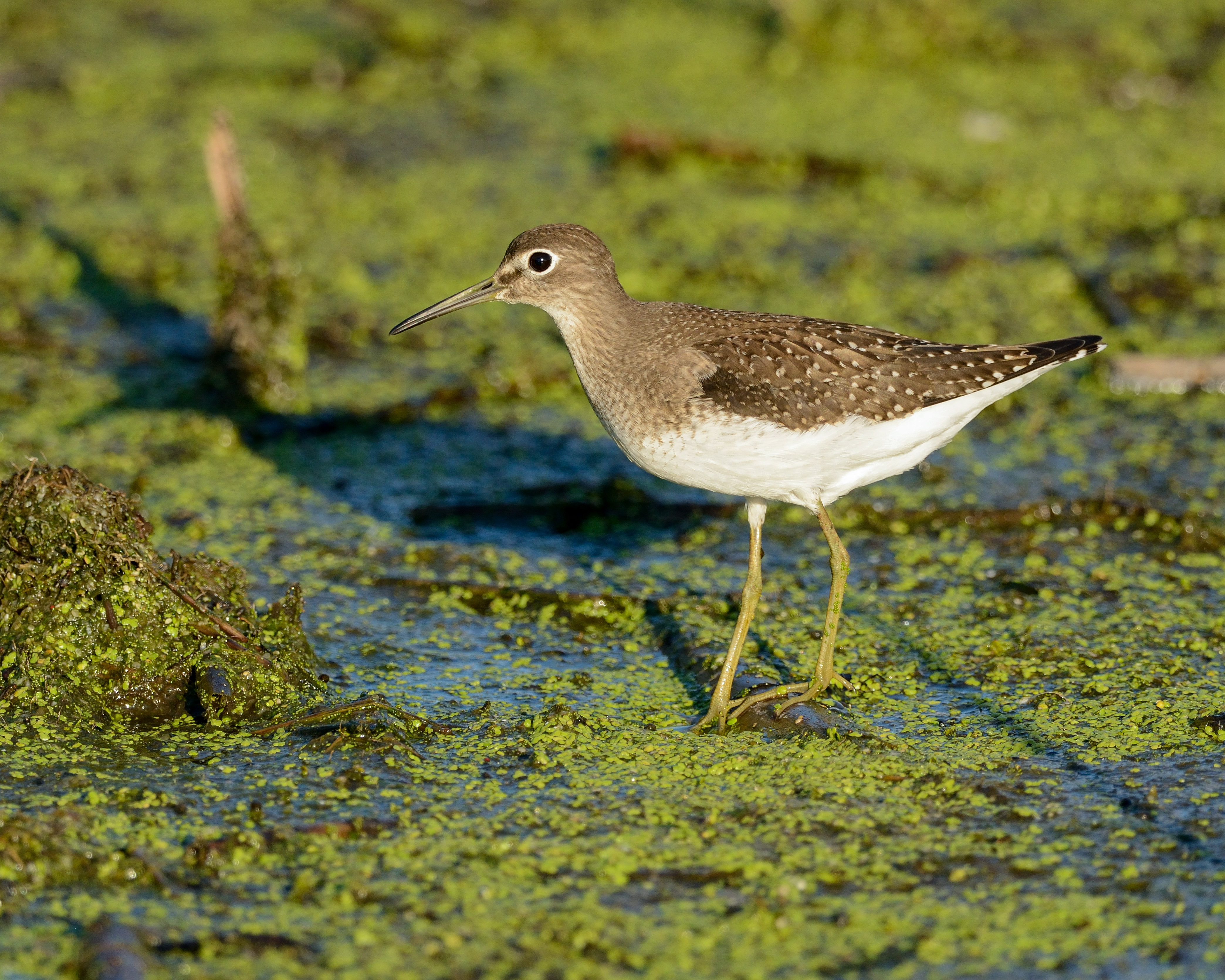
July brings our first fall migrants: shorebirds. A visit to the Lake Michigan shoreline at Fort Sheridan in Lake Forest finds sanderlings (Calidris alba), sandpipers (Scolopacidae family), and yellowlegs (Tringa spp.) avoiding people and surf while searching for food. Many migrating shorebirds have just finished raising young in the tundra’s perpetual daylight and have embarked on a 6,000-mile round trip journey.
I found a feather today and it stopped me in my tracks. There it was, tucked into the dewy grass—a single, beautiful feather just lying next to my sidewalk.
It’s not uncommon to come across feathers in my work at the Lake County Forest Preserves in northern Illinois. My naturalist brain immediately started to assess the discovery, analyzing it on a few key points.
There’s solace to be found in the fact that the rhythms of nature march on. This spring, the sun still rises. The wild leek (Allium tricoccum) still pulses its verdant green arms through the pulpy leaf litter of the forest floor. The birds still surge through the skies as they migrate to and through the Lake County Forest Preserves in northern Illinois. Like us, some of these birds are inclined to congregate in large communities. Over the years, the colonies of a particular species, the purple martin (Progne subis), have become largely reliant on people to provide shelter for their nesting flocks.
Come late November, most of us have turkeys on the brain. But a different type of turkey is taking to the skies at this time of year on its annual migration south: the turkey vulture (Cathartes aura). You can spot them in the sky or on the ground in the Lake County Forest Preserves in northern Illinois.





 Lake County Nature