
Night shift: Lake County’s nocturnal neighbors

Post by Brett Peto

This article appears in the fall 2025 issue of Horizons, the award-winning quarterly magazine of the Lake County Forest Preserves in northern Illinois.
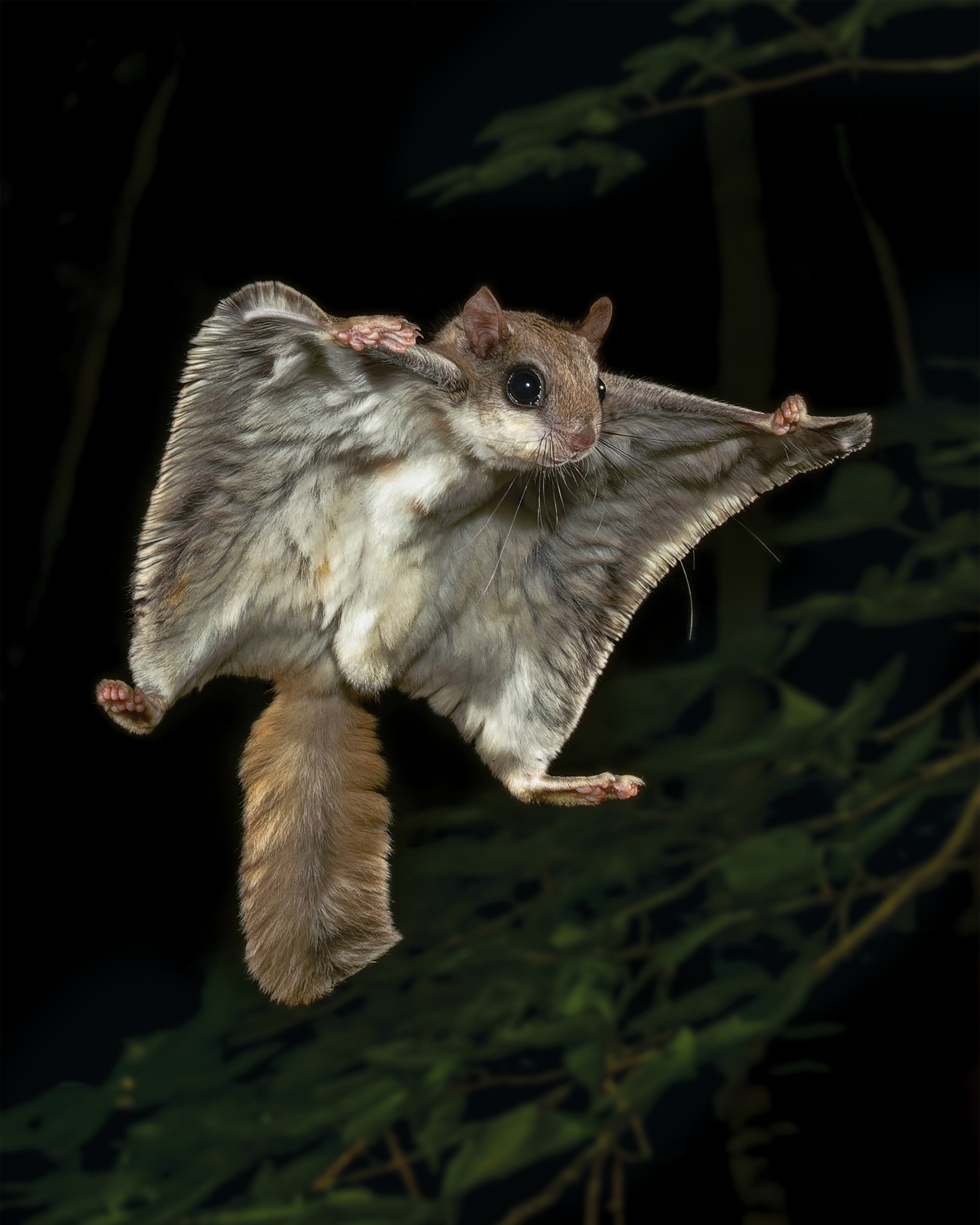

A southern flying squirrel (Glaucomys volans) glides gracefully across the nighttime sky. Weighing only 1–3 ounces, this small, nocturnal mammal uses loose skin like a wing-suit to stay aloft. The species is native to North America—including Lake County—and Central America.

When you settle into bed for the evening, another world awakens. Flying squirrels launch between trees, bats emerge from roosts and owls begin their silent hunts.

Your forest preserves provide the food, water, shelter and darkness these animals need during their night shifts. Despite their abundance and proximity, our nocturnal neighbors can seem mysterious. The dark obscures their unique activities.

Let’s peek behind the curtain.

Continue reading

How animals survive the winter

Guest post by April Vaos

Living in Illinois, we’re lucky enough to enjoy a change of seasons. Though I often find it difficult to switch from the crunch of fall leaves to the crunch of snow, it can be a peaceful time to head outdoors. Recently, I went walking in Independence Grove in Libertyville, part of the Lake County Forest Preserves in northern Illinois. As I looked around in the quiet, contemplative landscape, I thought about the life that teemed all around me, and how it was now hidden from view or departed on a migration.

While leading winter walks, I’m often asked, “Where are all the animals?” It depends on the animal. Each employs different survival strategies that help it adapt and even thrive in winter. What, exactly, do animals do to make it through the challenges of cold temperatures and a lack of food? Well, I like to say they have MAD strategies: migrate, active and dormant.

When cool temperatures arrive in northern Illinois, so do dark-eyed juncos (Junco hyemalis). Not only do they visit Illinois, they migrate into all of the lower 48 states to spend a milder winter than where they’re from: Canada. Stock photo.
Continue reading

Virtual camouflage hike

Leaves throughout the forest glowed gold against a backdrop of graying sky as I left Ryerson Conservation Area yesterday afternoon. This morning—as I entered the same preserve along the same road—the dark, skeletal branches were completely visible, stripped of their vibrant leaves that now lay in muddied piles on the forest floor.

These days of November mark a change from crisp colors to muted tones, which offer the perfect backdrop for animals to hide using camouflage. Lake County Forest Preserve educators often teach the concept of camouflage during environmental programs, where students hike in search of animal hides and mounts that have been hidden along the trail. Teachers and scout leaders, peruse our variety of school and scout programs to find a great fit for your group this year. Following is a virtual version of our camouflage hike. Continue reading

Year of the Bat

Post by Allison

Amazing. Fascinating. Adorable. Essential. These are the first words that come to mind when I think about bats. Would you use the same descriptors? 

Bats are highly beneficial and play a vital role in maintaining the balance of nature. They help control insect pests and are vital pollinators and seed-dispersers for countless plants worldwide. Yet the world’s only flying mammal is still among the most feared and misunderstood of animal groups. Continue reading