Step into serenity with forest bathing

Guest post by Kim Mikus

This article appears in the summer 2025 issue of Horizons, the award-winning quarterly magazine of the Lake County Forest Preserves in northern Illinois.
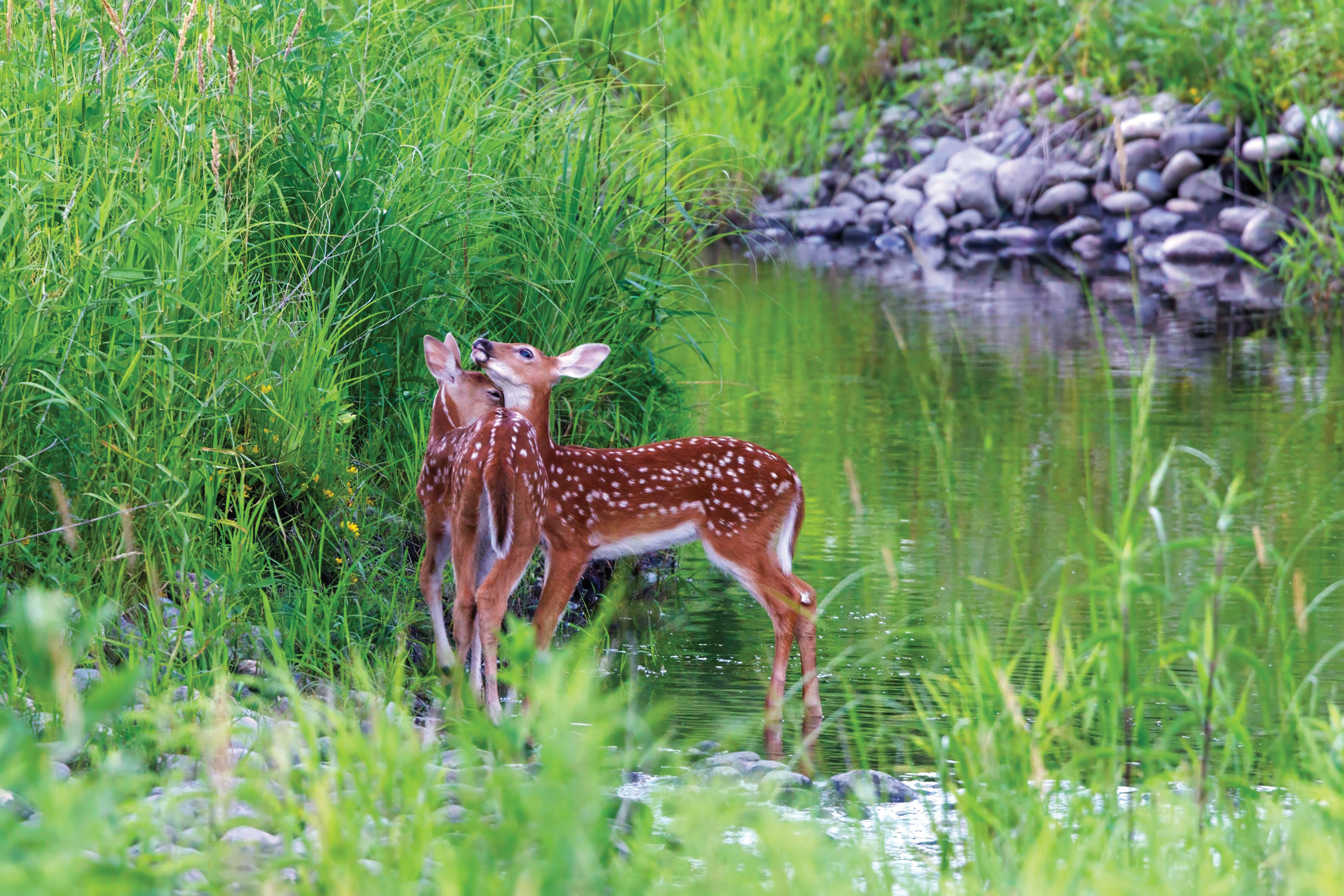

Photographer Dahai Zang snapped a fairytale scene at Buffalo Creek in Long Grove. These two white-tailed deer (Odocoileus virginianus) fawns sport hundreds of white spots on their rusty-brown coats. The markings help them blend into sun-dappled forests and meadows.

Imagine stepping into the woods, leaving behind the noise and stress of daily life. As you pause and breathe, a sense of calm takes over. There’s no rush or destination, only the soothing quiet of the woodland. Welcome to forest bathing, a practice that invites you to reconnect with yourself and nature.

Forest bathing, also called shinrin-yoku or forest therapy, involves immersing yourself in the outdoors—not through exercise or hiking, but by simply being present in the natural world. Its roots stretch back to a 1980s-era effort launched by Japan’s Ministry of Agriculture to help the country’s population reduce stress and improve health.

Forest bathing doesn't require equipment. Just a picnic blanket will do.
Forest bathing doesn’t require equipment. Just a picnic blanket will do.
Continue reading

Unraveling the science of habitat restoration

Guest post by Kim Mikus

This article appears in the summer 2024 issue of Horizons, the award-winning quarterly magazine of the Lake County Forest Preserves in northern Illinois.


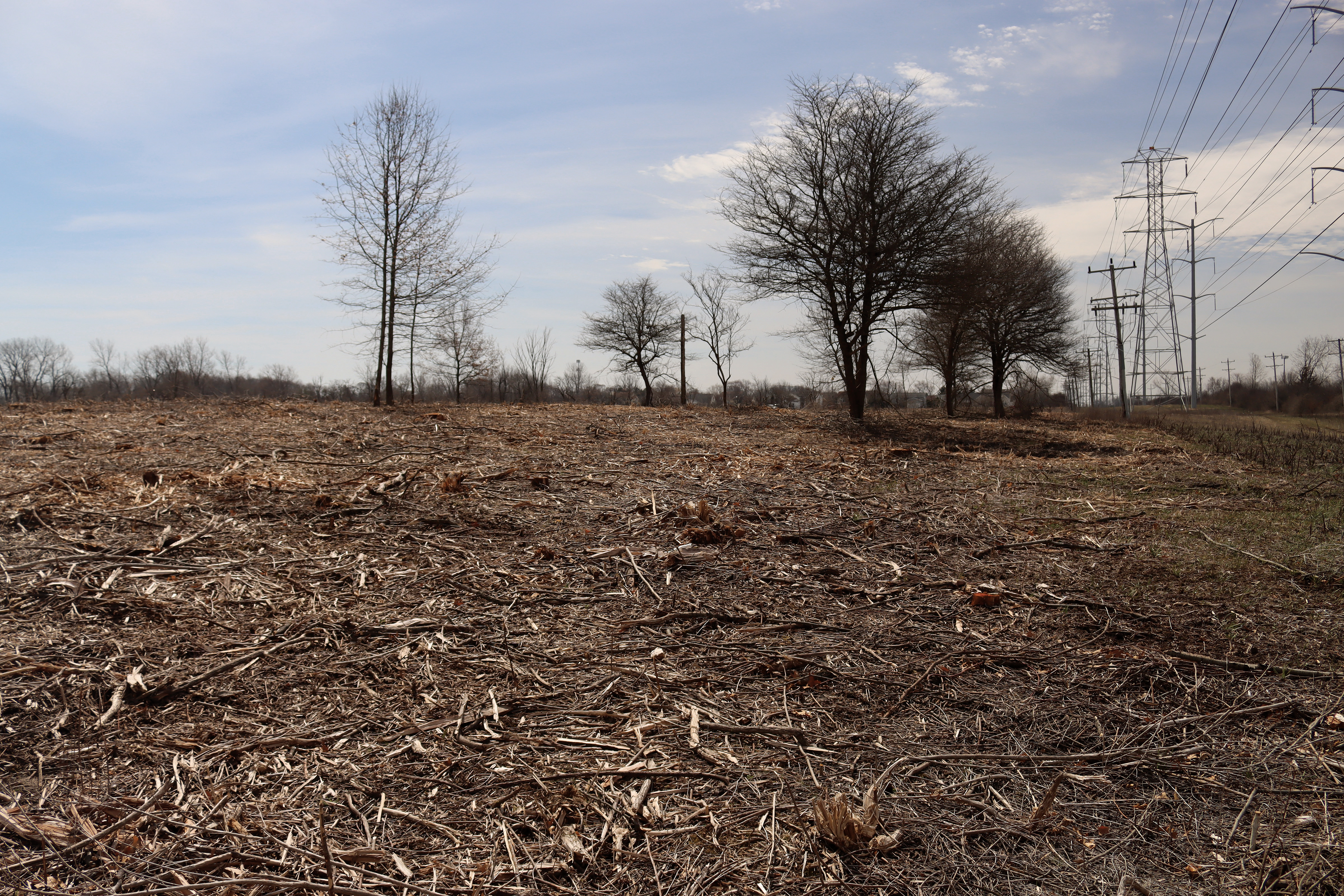
From a young age, we’re often taught that planting trees is good for the environment. So, why do we see large areas of trees sometimes removed from your forest preserves, leaving the land temporarily ragged and brown?

The answer is habitat restoration, a sequence of land management activities that improve the health, ecological function and diversity of species at a particular site, according to ecologists at the Lake County Forest Preserves. Sometimes that process involves removing non-native, invasive trees and other species.

During restoration efforts, you may see dramatic visual differences.

Two images showing a 40-acre area at Greenbelt Forest Preserve (North Chicago) during and after restoration.
Continue reading

Monitoring for the future

Post by Jen Berlinghof

It was a bone-chilling winter’s day at Captain Daniel Wright Woods in Mettawa—part of the Lake County Forest Preserves in northern Illinois—when a group of five gathered to monitor for the future. Our crew consisted of Restoration Ecologists Ken Klick and Dan Sandacz, Environmental Educator Eileen Davis, Environmental Communications Specialist Brett Peto and myself.

It’s all hands on deck for an ambitious new tree monitoring program with the lofty goal of sampling every woodland, upland forest and flatwoods habitat within the Forest Preserves every 10–15 years. Ken and Dan are spearheading this project.

In the field, the pair are like bookends. Ken has served 25 years at the agency, while Dan is fresh to the Forest Preserves, starting his tenure this past fall. The two have opted to take a collaborative approach, inviting volunteers from our Natural Resources and Education Departments to help with this significant undertaking.

A leisurely stream flows through Wright Woods in Mettawa. Photo © Lake County Forest Preserves.
Continue reading

Planting for pollinators

Guest post by Eileen Davis

It’s a sunny July afternoon at a Lake County Forest Preserve in northern Illinois. The humidity is low and the breeze is just right. I’m poised over a patch of wild bergamot (Monarda fistulosa), furiously clicking away with my camera, hoping to get at least one image that will be clear enough for me to identify the native bumble bee feeding on the flower. If there’s a better way to spend a Saturday afternoon, I haven’t found it.

A two-spotted bumble bee (Bombus bimaculatus) feeds on wild bergamot. Photo © Eileen Davis.
Continue reading

Finding the right angle

This gallery contains 10 photos.

Post by Brett Peto

I keep thinking about angles. Not the kind you measure with a protractor, but those you measure with your mind. The angle of a story, a conversation, or a project. Photography, of course, uses physical angles—where’s the camera pointed? is the sun directly overhead or is it the sweet time of golden hour?—but the best photos make you want to see even more. They make you want to break open the frame and soak in every bit of the Lake County Forest Preserves in northern Illinois.

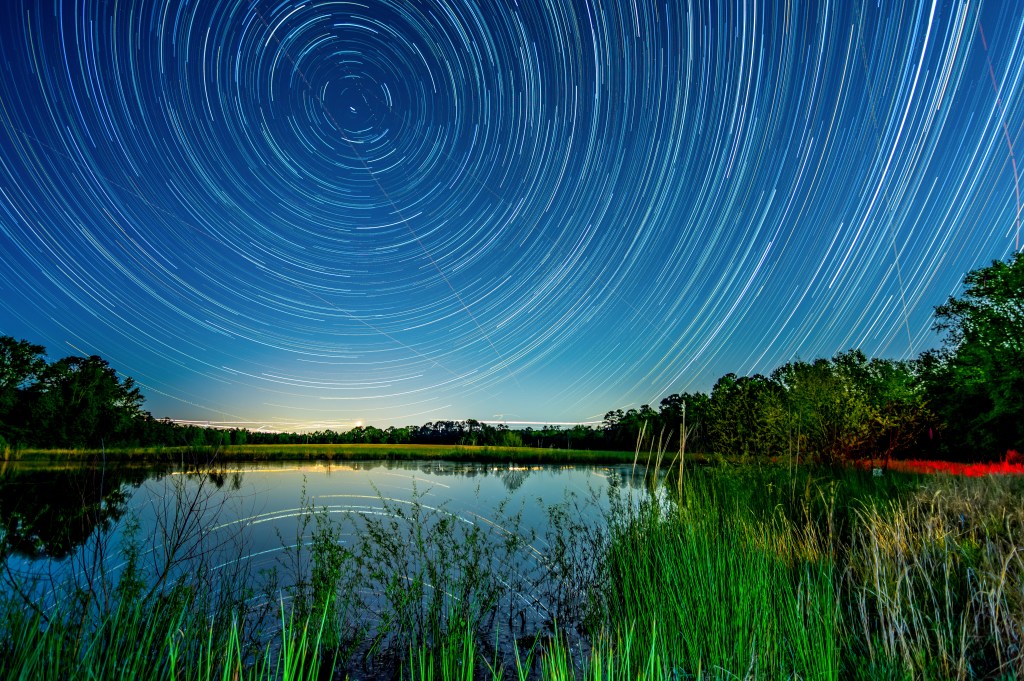
Since it’s nearly the end of 2019, I thought I’d turn 180 degrees and peruse the photos uploaded to our group Flickr pool since January 1. Suffice to say: we’re spoiled. Spoiled with the beauty of Lake County’s flora, fauna, and natural areas, and the talent of the photographers who capture it for everyone to see. Trees and shrubs in their bright fall wardrobes on either side of a trail draining into a vanishing point. A sandhill crane (Grus canadensis) with both wings up like a paper airplane as it dashes to take off. A whirlpool of stars spun around a rich blue sky over a tranquil wetland.

I’ve gathered these moments plus seven more below, but that’s only a small taste. I encourage you to browse the rest of the visual buffet as we make the turn out of the 2010s into the 2020s. And, hey! You might become inclined to upload that shot living on your phone, camera, or computer.

"Night Moves." Photo © reddog1975.
Continue reading

A different kind of autumn apple

Post by Jen Berlinghof

Fall is the time of harvest here in the Midwest. Golden stacks of hay bales, farmer’s markets teeming with end-of-season produce, and above all, apples. But step away from the orchard and into an oak woodland and you’ll find a different kind of autumn apple: an oak apple gall. What looks like a small, lime-green, spotted apple dangling from an oak leaf is not a fruit at all, but rather a secret abode for a tiny wasp.

There are more than 50 species of oak apple gall wasps in North America. Each one creates a unique fruit-like structure that protects and feeds its eggs and larvae as they develop. Lately, I’ve been finding many dried, spent brown husks created by the larger empty oak apple wasp (Amphibolips quercusinanis) around the Lake County Forest Preserves in northern Illinois.

The larger empty oak apple wasp (Amphibolips quercusinanis) is one of 50-plus species of oak apple gall wasps. Photo © Charley Eiseman.

Continue reading

Monitoring in the morning

Post by Brett Peto

Good things start at seven in the morning. That’s when our group of four hiked 15 minutes off-trail into the heart of Middlefork Savanna in Lake Forest, part of the Lake County Forest Preserves in northern Illinois.

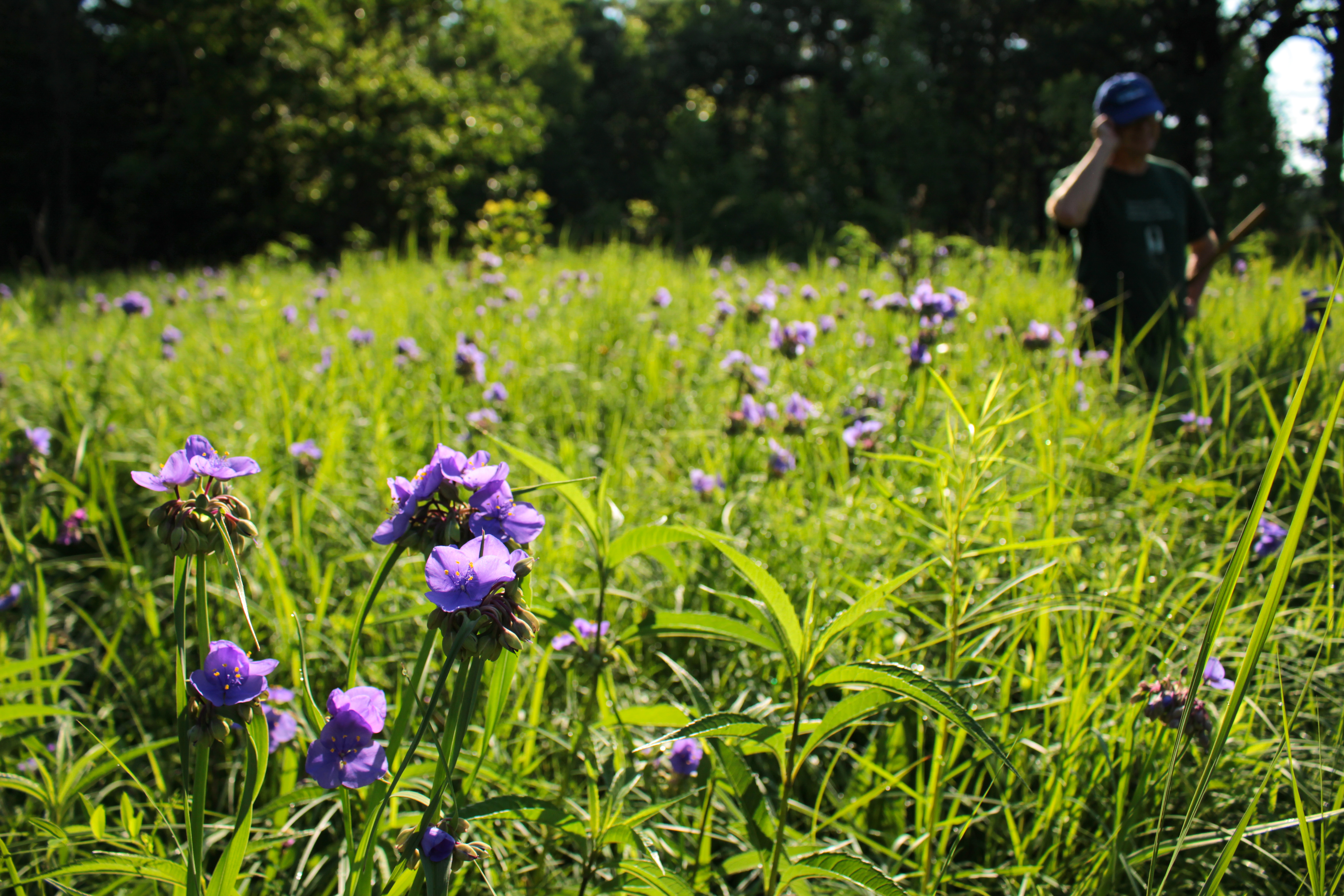
The air was warm, the sunshine spread everywhere. Spiderwort blooms were freshly open, a waist-high meadow of bluish-purple fireworks. We found the steel T-post marking the start of the day’s first transect and the red flag for the first plot.

Then we gathered our tools. A one-meter-square collapsible wooden quadrat, retractable tape measure, clipboard, data sheets, and each other’s knowledge of plants.

Well, my own knowledge, not so much. I was there to take photos and observe the three experts onsite: Pati Vitt, Manager of Ecological Restoration; Ken Klick, Restoration Ecologist II; and Pete Jackson, who authored a 2009 study on this preserve’s plant communities that served as his thesis for a master’s degree program. In my head, I called them the Plant Team.

Ken stands in a field of spiderwort. Photo © Lake County Forest Preserves.

Continue reading

A walk through winter

Post by Brett Peto

I started my position with the Lake County Forest Preserves in northern Illinois in 2017. By the end of 2018, I had visited 45 of our 65 locations. Each time I returned from a new spot, I circled it on a map at my desk. Their names were just as diverse as the habitats within. Old School, Lakewood, Middlefork Savanna, Singing Hills, Cuba Marsh. Oak woodlands and savannas, prairies, sedge meadows, marshes, wetlands.

In mid-January, it felt like a good time to circle another name: Heron Creek in Lake Zurich, Illinois. It surprised me that I’d never walked its trails. A 242-acre preserve home to rolling woodlands, fields, the Indian Creek basin, and more than 116 species of birds, Heron Creek is closer to our General Offices than several sites I had been to. It was even roughly on my route to and from work. So toward the end of January, I took myself, some winter weather gear, and a few cameras there to explore.

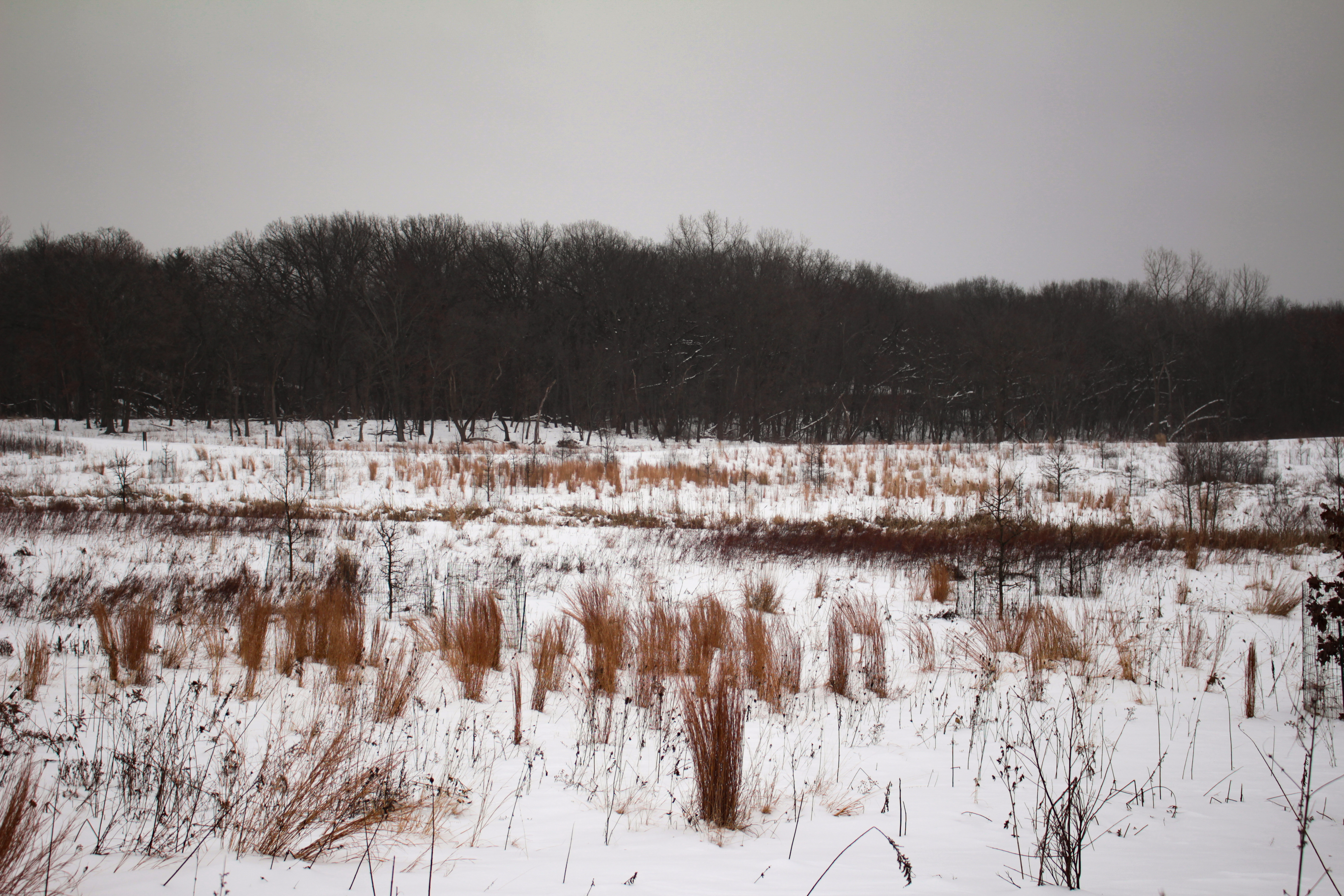
A snow-swept field at Heron Creek on January 22, 2019. Photo © Lake County Forest Preserves.

Continue reading

Time to make a moment

This gallery contains 18 photos.

Post by Brett Peto

Time can never be stopped, sped up, or slowed down. It started long before now and will continue far after. But with photographs, we can pause time, pin it in front of us, and study reality. It’s like kneeling at a riverbank and scooping a handful of water. The current stops in your palm, but just a foot beneath it carries on. Photos take time to make a moment.

With nearly 31,000 acres to explore, many moments are possible in the Lake County Forest Preserves in northern Illinois. An eastern bluebird (Sialia sialis) landing with one foot, wings at sharp angles. A cluster of milkweed seeds hanging on to their pod by threads of floss. Sunflowers and sunbeams, two shades of honey mixing in the air. I’ve collected these special moments and more in a gallery below.

All photos featured were taken by the truly skillful photographers in our group Flickr pool. Each of these images, these presses of the pause button and scoops out of the river, were captured in 2018. Our sincere thanks go to every photographer who shares their time and talent documenting the flora, fauna, and natural areas of Lake County.

Continue reading

Final songs of summer

Post by Jen B

As summer winds down, a telltale hum that signals the changing seasons begins to ramp up in the fields and forests. These trills and chirps are the mating calls of tree crickets (Oecanthinae)—a group of fascinating insects that are often heard but seldom known or seen. Their small size and mint green color helps camouflage them amidst the verdant grasses, shrubs and trees of late summer.

OLYMPUS DIGITAL CAMERA

Continue reading