Ghost of the prairie

Post by Jen B

Many years ago, while hiking through a prairie at dusk, I saw a stalk of delicate white flowers. They seemed to rise and hover above the surrounding plants like a group of little dancing ghosts. This was the first and last time I ever saw an eastern prairie fringed orchid (Platanthera leucophaea). Due to its dwindling numbers and hidden habitats, this rare plant has reached almost mythical status—a holy grail of sorts in the Midwest. We’re thrilled that this endangered native orchid seems to be gaining a foothold in the Lake County Forest Preserves, which are home to some of the largest remaining populations. Just this month, one of our restoration ecologists discovered an orchid in bloom (photo below). It was found at one of the preserves known to provide habitat for this species but is the first documentation of a population at the site.

PWF_orchid_lcfpdpic

Continue reading →

Restoring our woodland habitats

Post by Allison

The wooded habitats along the Des Plaines River in southern Lake County, Illinois are changing. Last winter, the Lake County Forest Preserves completed 194 acres of canopy and understory thinning in woodland communities at MacArthur Woods and Grainger Woods Forest Preserves. This winter, woodland habitat restoration has begun at Captain Daniel Wright Woods and Ryerson Conservation Area, in addition to continuing at MacArthur Woods.

MAWO-WHRP-20130124-075

The restoration and species monitoring that will continue within these natural areas for the next 20 years will help ensure the sustainability of oak woodlands and the wildlife they support for many generations to come.

Winter visitors to these preserves, or vehicular passersby, will notice the use of heavy equipment, burning piles of brush, and an already visible difference in the openness of the woodland landscape. A number of canopy trees are being removed to increase the amount of sunlight reaching the ground. Visit these areas again when the leaves return, and early results of the Woodland Habitat Restoration Project will be obvious. Continue reading →

Goldenrod galls

September in Lake County, Illinois is a month of big sky punctuated by tips of tall prairie plants in an array of autumnal colors. Before the trees really get going with their own colorful show, sparks of bright yellow from the many varieties of goldenrod (Solidago spp.) dominate the open spaces. Most of the summer these plants go unnoticed, adding merely another green hue to the lush surroundings, but September is their time to shine. What may also go unnoticed, even now as goldenrod demands our attention, is the hidden world inside each plant in the form of a gall.

Continue reading →

Heron highrise

This past weekend I had the pleasure of hearing Kenn Kaufman, a naturalist and bird expert, speak at the Smith Nature Symposium. He is somewhat of a “rock star” in the birding world. His novel, Kingbird Highway, chronicles a personal adventure hitchhiking around the country at the age of 16 on a quest to find birds—a story that has reached the status of folklore. Many years later, and surely a much longer “life list,” his keynote address at Ryerson Conservation Area focused on warbler migration: the phenomenon of these teeny tiny birds in every hue of the rainbow that travel thousands of miles across entire continents each spring and fall. He presented complicated doppler maps and in-depth scientific research on these migratory dynamos, but by the end of the discussion the focus had shifted to something more simple: the children from his young birders club.

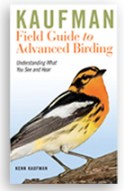
guide-bookLate that evening, as I settled down with one of his many guide books, Field Guide to Advanced Birding, I was struck by this same theme of simplicity. Kaufman urges folks to slow down and focus not on looking for the birds, but instead to spend time looking at the birds. He stresses getting to know the common birds of an area very well. By doing so, we are well on our way to knowing when a rare bird may enter the scene. This concept brought to mind one of the best places to take a long look at one common bird of Lake County, Illinois: a great blue heron rookery.

Continue reading →

Drought and maple syrup

With the recent snow and cold weather, last summer’s dry heat seems like a distant memory. Yet, it was only this past week that the National Weather Service officially changed its “moderate drought” designation to “abnormally dry” for most of Lake County, Illinois (although, a small northwest portion of the county is still considered to be in a “moderate drought”). While every drop of rain and flake of snow is helping to slowly ease our way out of the past eight months of drought, the damage already done will decide the sweetness of this spring.

Each spring for the past three decades, the naturalists at Ryerson Conservation Area have tapped sugar maple trees to harvest the sap and turn it into pure maple syrup.

Continue reading →

Fast-forward fall

Even though Illinois recently received a break from this summer’s heat and drought, the precipitation deficit that remains statewide has kicked off autumn with atypical natural events. Thus far, the year 2012 has been the fourth driest on Illinois record. However, it has been raining acorns and fall colors have been peeking through the greenery since late August—three weeks earlier than usual. This fast-forward to fall is a tree’s way of protecting itself when water is in short supply. The vibrant color displays of autumn, which seem so lively, are actually a sign that a tree is entering dormancy.

These flashes of fall colors are a result of changes in pigments. The dominant green pigment in leaves is chlorophyll. The leaves in a tree are like little factories, mixing together a recipe of specific ingredients (sunlight, carbon dioxide and water) to make food for the tree’s growth. Chlorophyll acts as the “chef” in this process, called photosynthesis; its presence is necessary in bringing everything together.

Typically, autumn’s cool nights and shortening days trigger photosynthesis to slow down. The scarcity of one key ingredient, water, is triggering this earlier-than-average dormancy. As the work of the leaves comes to an end for the year, chlorophyll breaks down and reveals yellow and orange pigments that have hidden behind its green cloak all summer. Leaves that contain the pigments xanthophyll and carotene—as do hickories, cottonwoods, elms and some maples—will change to vivid shades of yellow and orange as the green fades. Continue reading →

Camouflage revealed

Early fall finds most naturalists outside in fields of waist-high wildflowers. This was the case recently when a few Lake County Forest Preserves Environmental Educators stumbled across a miniscule critter with mighty camouflage capabilities. So small and inconspicuous, it was almost dismissed entirely as merely a part of the black-eyed susan flower (Rudbeckia hirta)—until it started to move.

Continue reading →

Red admirals at attention

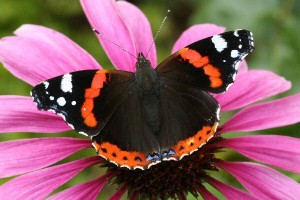
Last week while visiting Lyons Woods, I noticed that a large patch of garlic mustard was quivering. When I got closer, I found that it was not the breeze making the plants sway, but rather a huge group of red admiral butterflies (Vanessa atalanta) flitting from flower to flower. In many areas, all you have to do is walk out your front door to witness the population explosion of these ubiquitous butterflies that is sweeping the northeastern United States this spring.

Continue reading →

Ground’s abuzz

During a training hike for volunteer nature guides last week, a fellow naturalist pointed out a series of pea-sized holes in the ground. I walk along this same trail regularly and had never noticed them. As our group stooped around these holes, shivering on this cold but sunny spring morning, a tiny head crept slowly out of the one of the holes. It was the head of a mining bee! Continue reading →

Spring stinks

Don’t get me wrong, I love spring, but the first signs of green to shoot out of the leaf litter stink! While this spring seems to be on fast-forward, with many woodland wildflowers appearing almost to six weeks early, the first plants to sprout in Lake County were still the stinky duo of skunk cabbage (Symplocarpus foetidus), and Chicago‘s supposed namesake, wild leek (Allium tricoccum). The Native American tribes of this region called the plant in question “shikaakwa” or “chicagoua”.

Continue reading →