Unknown's avatar

About lakecountynature

Jen Berlinghof is a graduate of Loyola University Chicago and The National Outdoor Leadership School, as well as a Certified Interpretive Guide through The National Association of Interpretation. Her work as an outdoor guide and naturalist has taken her from the canyonlands of Utah to the shores of Lake Superior. Since 2003, she has been rediscovering nature near her hometown and working as an Environmental Educator for the Lake County Forest Preserves in northern Illinois.

Unraveling the science of habitat restoration

Guest post by Kim Mikus

This article appears in the summer 2024 issue of Horizons, the award-winning quarterly magazine of the Lake County Forest Preserves in northern Illinois.


From a young age, we’re often taught that planting trees is good for the environment. So, why do we see large areas of trees sometimes removed from your forest preserves, leaving the land temporarily ragged and brown?

The answer is habitat restoration, a sequence of land management activities that improve the health, ecological function and diversity of species at a particular site, according to ecologists at the Lake County Forest Preserves. Sometimes that process involves removing non-native, invasive trees and other species.

During restoration efforts, you may see dramatic visual differences.
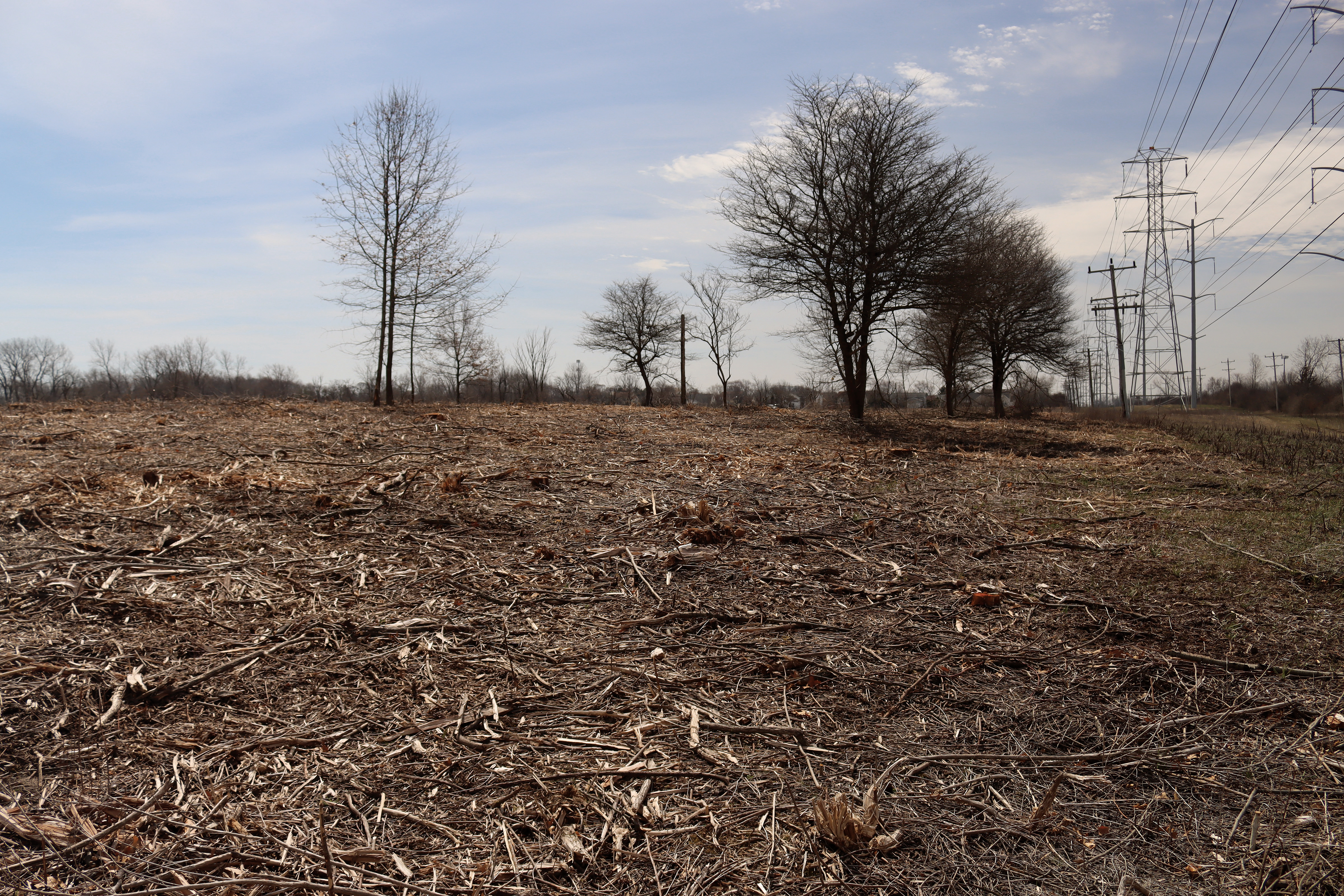
Two images showing a 40-acre area at Greenbelt Forest Preserve (North Chicago) during and after restoration.
Continue reading

Monitoring for the future

Post by Jen Berlinghof

It was a bone-chilling winter’s day at Captain Daniel Wright Woods in Mettawa—part of the Lake County Forest Preserves in northern Illinois—when a group of five gathered to monitor for the future. Our crew consisted of Restoration Ecologists Ken Klick and Dan Sandacz, Environmental Educator Eileen Davis, Environmental Communications Specialist Brett Peto and myself.

It’s all hands on deck for an ambitious new tree monitoring program with the lofty goal of sampling every woodland, upland forest and flatwoods habitat within the Forest Preserves every 10–15 years. Ken and Dan are spearheading this project.

In the field, the pair are like bookends. Ken has served 25 years at the agency, while Dan is fresh to the Forest Preserves, starting his tenure this past fall. The two have opted to take a collaborative approach, inviting volunteers from our Natural Resources and Education Departments to help with this significant undertaking.

A leisurely stream flows through Wright Woods in Mettawa. Photo © Lake County Forest Preserves.
Continue reading

Motus captures migration in motion

Post by Jen Berlinghof

The back-to-school season in early fall brings restlessness and routine to my house. I’m struck by how it parallels the flurry of fall migration across the natural world: a return to the patterns of movement ingrained over generations.

At Ryerson Conservation Area in Riverwoods—part of the Lake County Forest Preserves in northern Illinois—I observe ruby-throated hummingbirds (Archilochus colubris) tucking their heads quickly in and out of crimson cardinal flower (Lobelia cardinalis) blooms, fueling up for long flights across the Gulf of Mexico.

Green darner (Anax junius) dragonflies skim the skies by the dozens along the lakefront at Fort Sheridan in Lake Forest, their wings glittering. Fields of bee balm (Monarda didyma) along the 31.4-mile Des Plaines River Trail quiver with monarch butterflies (Danaus plexippus) nectaring to gear up for their epic journey. And, sporting less vibrant feathers than in the spring, migratory birds take flight in muted autumnal tones, heading south. As the sun sets in September and the harvest moon rises, this silent surge of fall migration commences.

A female ruby-throated hummingbird (Archilochus colubris) rests on a twig. This species migrates south to wintering grounds in Mexico, Central America and along the Gulf Coast. Photo © Phil Hauck.
Continue reading

Enjoy the hooting season

Post by Jen Berlinghof

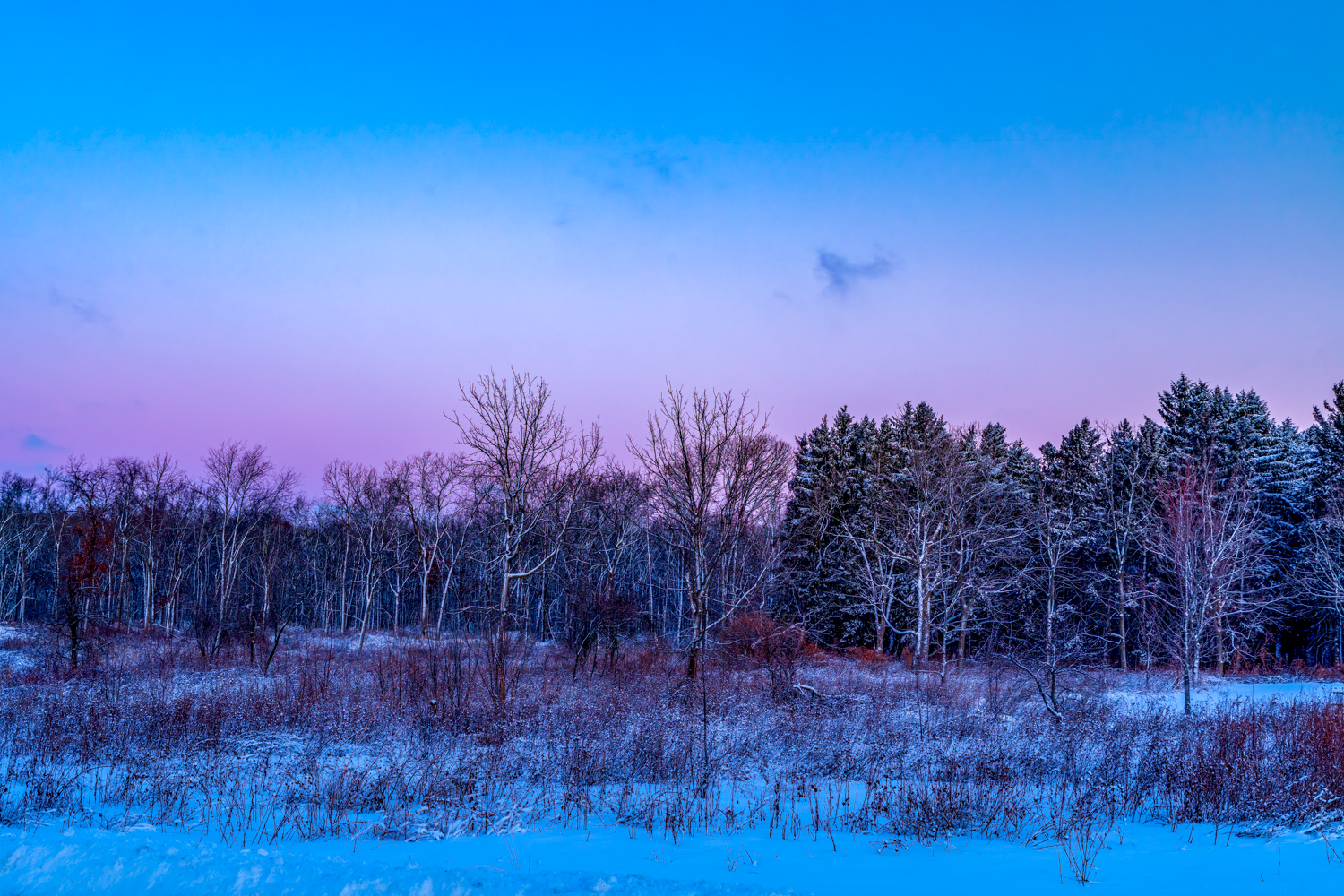
In February, sensational sunrises and sunsets break up the stark days and cold, dark nights of a waning winter. Dawn and dusk not only bring the thrill of color to a monochrome landscape, but also the best chance of hearing and seeing nocturnal raptors. As the mercury drops, owl courtship heats up. While many other birds head south for winter, owls pair up and hunker down. At night, the soundtrack of our resident species’ hoots and hollers fills the Lake County Forest Preserves in northern Illinois, offering us a glimpse into an otherwise hidden world.

Winter is a time of snow, beautiful sunsets—and mating season for local owls. Photo © John D. Kavc.
Winter is a time of snow, beautiful sunrises and sunsets—and mating season for local owls. Photo © John D. Kavc.
Continue reading

Winter reveals hidden homes

Post by Jen Berlinghof

The winter landscape, stripped of its lush layers of leaves and fields of flowers, reveals hidden homes. This season of stillness offers a glimpse into animal lives that were carried on clandestinely throughout spring, summer and fall around the Lake County Forest Preserves in northern Illinois. It’s surprising to see how many critters have been busy raising families right under our noses, or sometimes, right above our heads, without us always noticing.

A soothing winter scene at Lyons Woods in Waukegan. Photo © John D. Kavc.
Continue reading

How animals survive the winter

Guest post by April Vaos

Living in Illinois, we’re lucky enough to enjoy a change of seasons. Though I often find it difficult to switch from the crunch of fall leaves to the crunch of snow, it can be a peaceful time to head outdoors. Recently, I went walking in Independence Grove in Libertyville, part of the Lake County Forest Preserves in northern Illinois. As I looked around in the quiet, contemplative landscape, I thought about the life that teemed all around me, and how it was now hidden from view or departed on a migration.

While leading winter walks, I’m often asked, “Where are all the animals?” It depends on the animal. Each employs different survival strategies that help it adapt and even thrive in winter. What, exactly, do animals do to make it through the challenges of cold temperatures and a lack of food? Well, I like to say they have MAD strategies: migrate, active and dormant.

When cool temperatures arrive in northern Illinois, so do dark-eyed juncos (Junco hyemalis). Not only do they visit Illinois, they migrate into all of the lower 48 states to spend a milder winter than where they’re from: Canada. Stock photo.
Continue reading

A foray into fall fungi

Post by Brett Peto

Until recently, I haven’t given mushroom (much room) in my head to the Fungi kingdom. It’s been an admitted blindspot in my nature knowledge for too long. I’m taking some steps to correct this, though. Reading books such as Entangled Life by Merlin Sheldrake. Looking for fungi in the Lake County Forest Preserves in northern Illinois and other natural areas. Taking photos of the ones I find and doing my best to identify them.

There’s still much I don’t know—apologies for any errors in advance—but I can claim to know a bit more now than I did at the start of 2021. With fall being possibly the best time to spot some fungi, I thought I’d write about some common species you might discover in the preserves.

Some slugs feasting on fungi. Photo © Helena Keller.
Continue reading

Bringing back the buzz

Post by Jen Berlinghof

All summer long, swaths of wild bergamot (Monarda fistulosa) quake in the presence of thousands of native bumble bee wings beating away. These pollination dynamos use a technique called buzz pollination, vibrating their bodies to trigger nearby flowers to release pollen. At the Lake County Forest Preserves in northern Illinois, a similar buzz of excitement arrived in summer 2020 when staff spotted the federally endangered rusty patched bumble bee (Bombus affinis) at Greenbelt in North Chicago.

Fast forward to summer 2021. The hum continues to reverberate after multiple sightings of this keystone species were documented across the county from Flint Creek to Wadsworth Savanna in Wadsworth. While summer’s the height of hive activity, the shoulder seasons—usually defined as May, June, September and October—might be key to the success of the rusty patched bumble bee. This is partly due to the timing, or phenology, of the species’ lifecycle. It’s one of the first bees to emerge in spring and the last to enter hibernation in fall.

A worker, or male, rusty patched bumble bee (Bombus affinis) sits atop mountain mint. Photo © Dan Mullen.
A rusty patched bumble bee (Bombus affinis) sits atop mountain mint. Photo © Dan Mullen.
Continue reading

A thousand-mile journey on two-inch wings

Post by Jen Berlinghof

I’ve spent many days this summer living the “lake life,” from the sandy dunes of the Great Lakes to the cattail-studded coves of inland waters. The waterways found within the Lake County Forest Preserves in northern Illinois have been especially rewarding. Each shoreline has provided unique glimpses of wildlife, including an osprey (Pandion haliaetus) diving full throttle to catch a fish at dawn, and a red fox (Vulpes vulpes) pouncing on prey hidden among the beach grass at dusk.

Also present at every waterway this summer has been the jewel-hued, common green darner dragonfly (Anax junius). These ubiquitous insects effortlessly nab multitudes of mosquitoes on the wing. While the monarch butterfly (Danaus plexippus) reigns in our minds when it comes to insect migrations, recent research reveals the green darner takes a multi-generational, miles-long journey of its own each year.

Common green darner dragonflies (Anax junius) are found in the forest preserves. Stock photo.
Continue reading

Become a community scientist

Post by Jen Berlinghof

While the past year and a half has kept many of us mostly at home, nature in our backyards and beyond has provided a balm for these trying times. General use of the Lake County Forest Preserves in northern Illinois is trending 30% higher in 2021 than a typical pre-pandemic year. And in 2020, there was an astounding 70% surge in visitation. The number of folks delving into home gardening and backyard birding has skyrocketed as well, making headlines by leaving store shelves bare of birdseed and bird feeders. The COVID-19 pandemic has amplified our desire to connect to nature closer to home, and it has created space and time for local, daily observations. All of this translates to an environment ripe for community science, also called citizen science.

Community scientists flip over a cover board during a BioBlitz event held at Middlefork Savanna in Lake Forest in 2008. Photo © Carol Freeman.
Continue reading