
Night shift: Lake County’s nocturnal neighbors

Post by Brett Peto

This article appears in the fall 2025 issue of Horizons, the award-winning quarterly magazine of the Lake County Forest Preserves in northern Illinois.
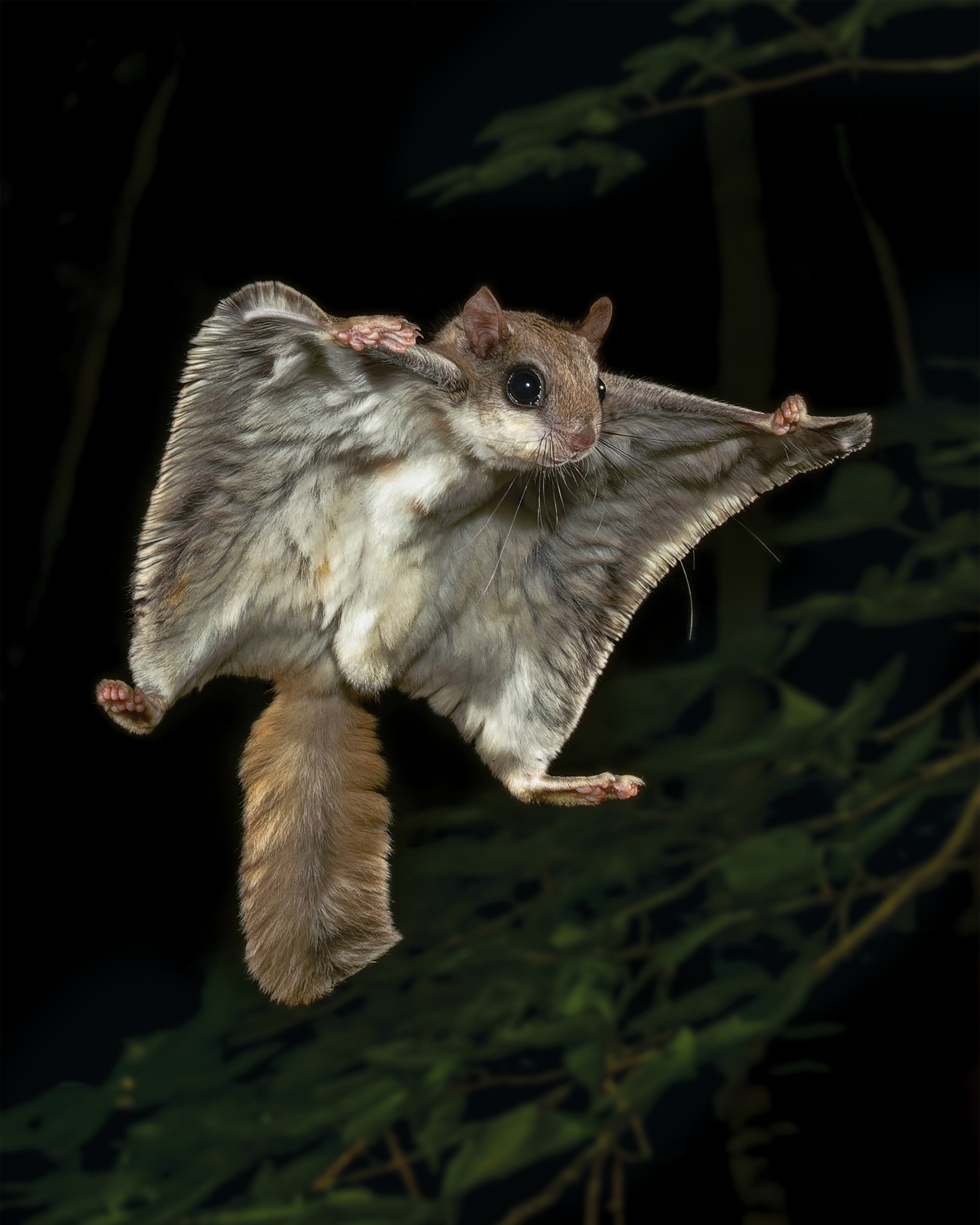

A southern flying squirrel (Glaucomys volans) glides gracefully across the nighttime sky. Weighing only 1–3 ounces, this small, nocturnal mammal uses loose skin like a wing-suit to stay aloft. The species is native to North America—including Lake County—and Central America.

When you settle into bed for the evening, another world awakens. Flying squirrels launch between trees, bats emerge from roosts and owls begin their silent hunts.

Your forest preserves provide the food, water, shelter and darkness these animals need during their night shifts. Despite their abundance and proximity, our nocturnal neighbors can seem mysterious. The dark obscures their unique activities.

Let’s peek behind the curtain.

Continue reading
Behind the bandit mask

Post by Brett Peto

You know them as raccoons (Procyon lotor). Though maybe trash pandas is more your style, a phrase that’s taken off since it first appeared on Reddit in 2014. (I can’t help but note the Rocket City Trash Pandas, a Minor League Baseball team, plays ball in Madison, Alabama). Or you could even know them as washing-bears, an old Germanic nickname bestowed on the species “because they have a habit of rinsing and softening their food in water before they eat it.” This moniker actually has a connection to the legendary naturalist Carolus Linnaeus, who created the Latin-based binomial nomenclature system and originally labeled the raccoon as Ursus lotor (“washer bear”). Whatever you call them, raccoons are commonly found in the Lake County Forest Preserves in northern Illinois.

It’s easy to spot one, of course, by its bandit mask: the patches of black fur bending below each of its eyes. This mask is nothing short of iconic, but it’s likely an icon with a purpose: “one hypothesis for the dark fur is that it may help reduce glare and enhance the nocturnal animal’s night vision.” There’s more to know, though, about these medium-sized mammals beyond face value—or just one feature of their faces.

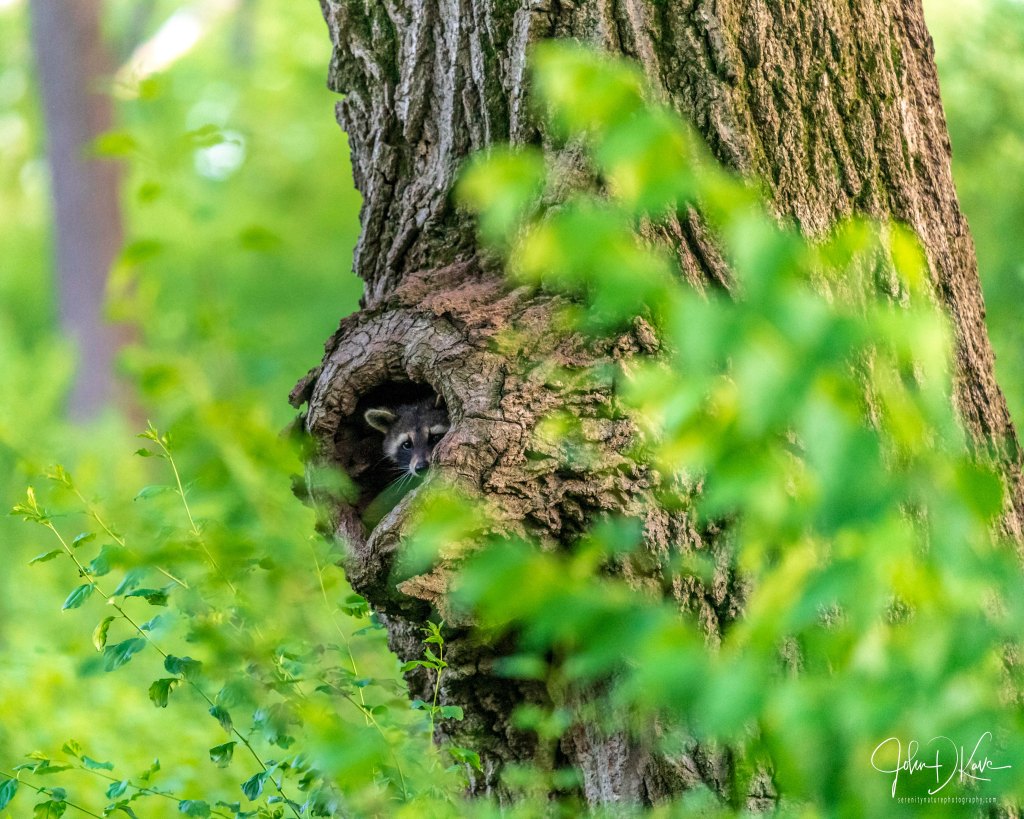
A raccoon (Procyon lotor) peeks out of its tree den. Photo © John D. Kavc.
Continue reading