About

Thank you for reading. For many people, Nature starts with a capital N. When they think of meaningful experiences in the outdoors, their minds may turn toward grand vistas in national parks and long road trips to faraway destinations. But what might be most beneficial for our health and environment is finding nature, with a lowercase n, closer to home—such as the 31,000-plus acres that make up the Lake County Forest Preserves in northern Illinois.

This blog is an effort to keep readers informed of current natural events and offer suggestions for exploring nature in Lake County, Illinois.


About the author  Jen Berlinghof is a graduate of Loyola University and The National Outdoor Leadership School, as well as a Certified Interpretive Guide through The National Association of Interpretation. Her work as an outdoor guide and naturalist has taken her from the canyon lands of Utah to the shores of Lake Superior. Since 2003, she has been discovering nature near her hometown and working as an Environmental Educator for the Lake County Forest Preserves in northern Illinois.
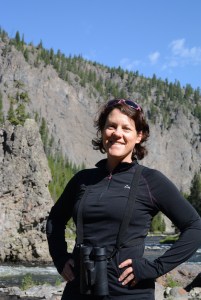
Jen birding yellowstone

About the editor  Brett Peto has served as Environmental Communications Specialist for the Lake County Forest Preserves in northern Illinois since 2017. A graduate of Elmhurst College in 2015, Peto edits copy, selects and retouches photos, and ponders the Latin roots of species names in his spare time. Ever since his first science column in the college newspaper, Peto has found fun in the broad accessibility and deep understanding of complex subjects that effective science writing requires.
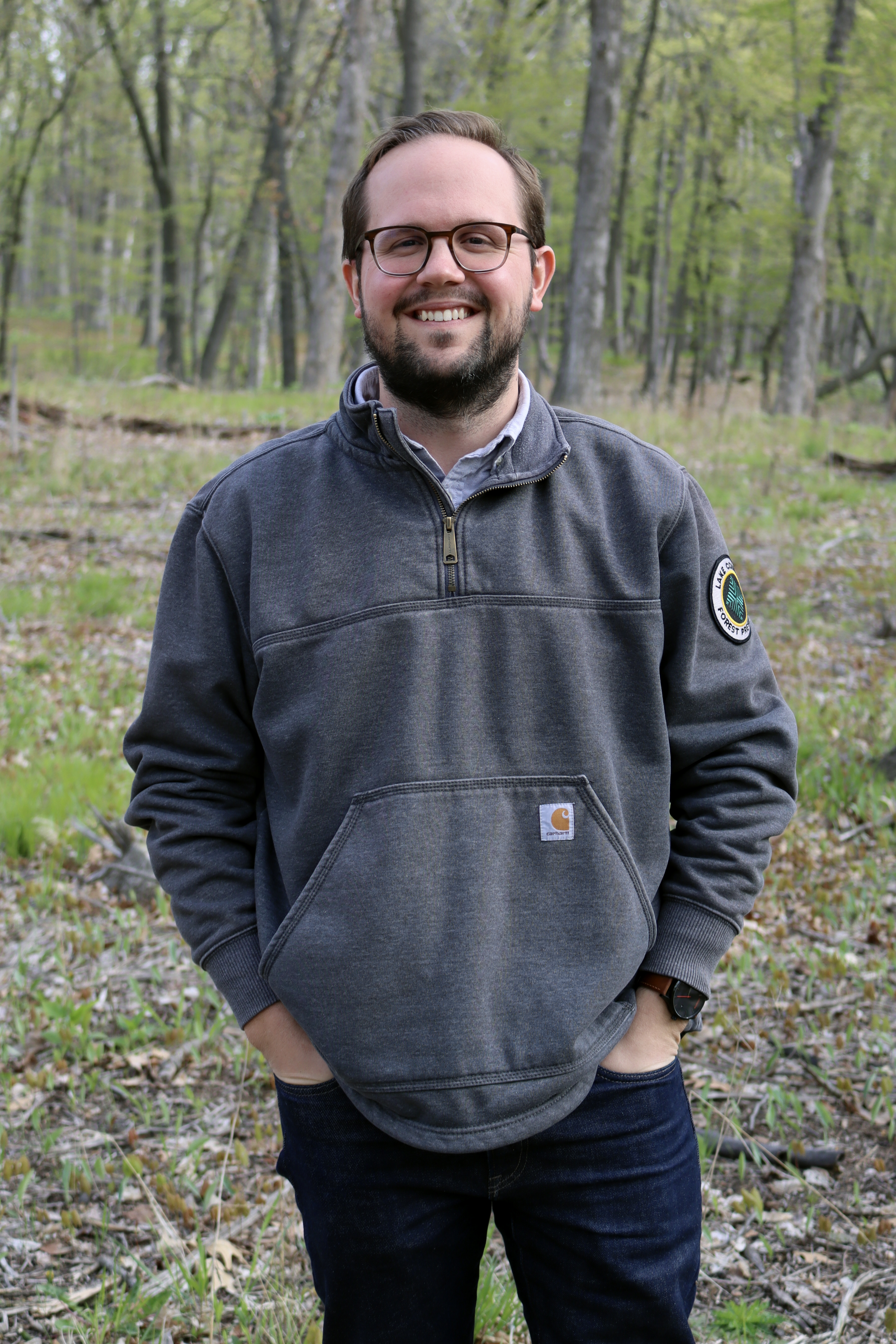

Guest author Alyssa Firkus joined the Education Department of the Lake County Forest Preserves as an Education Manager in October 2018. She became Director of Education in 2023. Alyssa holds a Bachelor’s Degree in Biology from Humboldt State University and a Master’s Degree in Environmental Education from Western Washington University. Her work in environmental education has taken her around the world, from Australia to Alaska. She now enjoys going on local adventures with her family.

Guest author Pati Vitt joined the Natural Resources Department of the Lake County Forest Preserves in late 2018. She holds a Ph.D. in Botany from the University of Connecticut, an M.S. in Botany & Plant Pathology from the University of Maine, and a B.A. from College of the Atlantic in Bar Harbor, Maine. Having grown up botanically in Maine, she considers plants that are found in boreal forests as old friends, and is happy when she finds them and other new friends in Lake County. Prior to joining the Forest Preserves, Pati worked for nearly 20 years as a Conservation Scientist at the Chicago Botanic Garden.
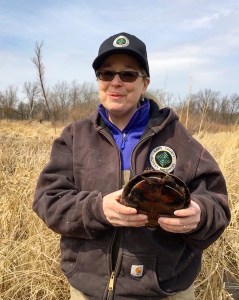

Guest author Eileen Davis, Environmental Educator, has variously served the Lake County Forest Preserves as an intern, volunteer and staff member since 1997. She earned her B.S. in Zoology and Environmental Biology from Eastern Illinois University, and an M.S. in Environmental Education and Interpretation from University of Wisconsin–Stevens Point. Eileen teaches people of all ages about Lake County’s diverse ecosystems, and the plants and animals that call them home. In her free time, she enjoys tending her home garden and traveling in search of new nature adventures.


Guest author April Vaos has been an Environmental Educator with the Lake County Forest Preserves since 2004. She holds a degree in Environmental Studies from Gustavus Adolphus College and focuses on scout, school and boating programs. Since childhood, April has lived in many places—from the rural areas of Minnesota to the city—and loves finding nature all around her, from the prairies of Illinois to a patch of grass on the road.
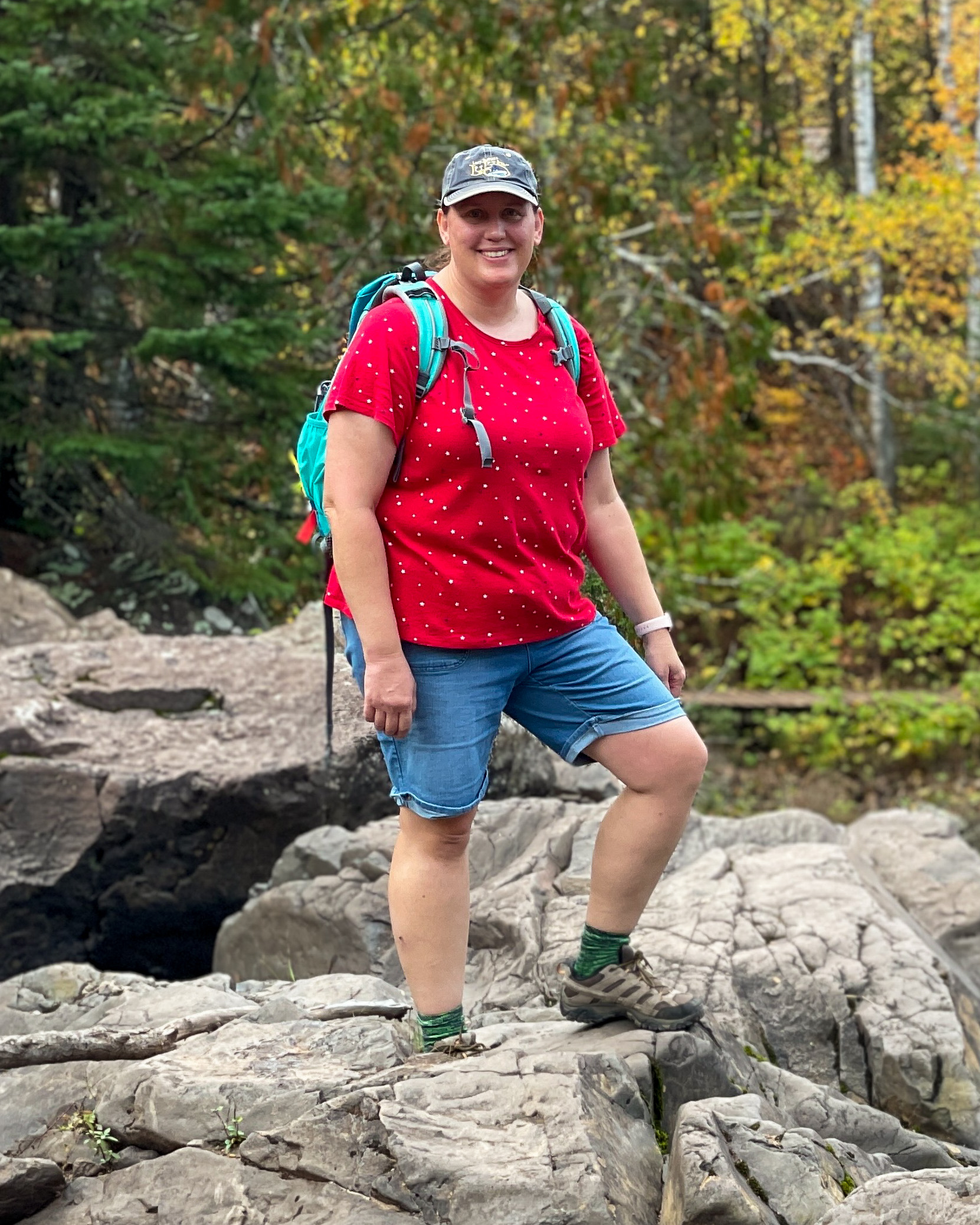

Guest author Kim Mikus has been the Media & Community Relations Specialist at the Lake County Forest Preserves since 2018. Prior to that, she spent 20 years as an award-winning journalist and editor at the Daily Herald newspaper. Her passion for writing began at a young age, sparked by penning letters to her grandparents in Canada. During Kim’s school years, she contributed to Libertyville High School’s newspaper, Drops of Ink, and Eastern Illinois University’s paper, The Daily Eastern News, where she also earned her journalism degree. Today, Kim enjoys exploring the forest preserves in Lake County and sharing insights about the area’s hidden treasures with readers.
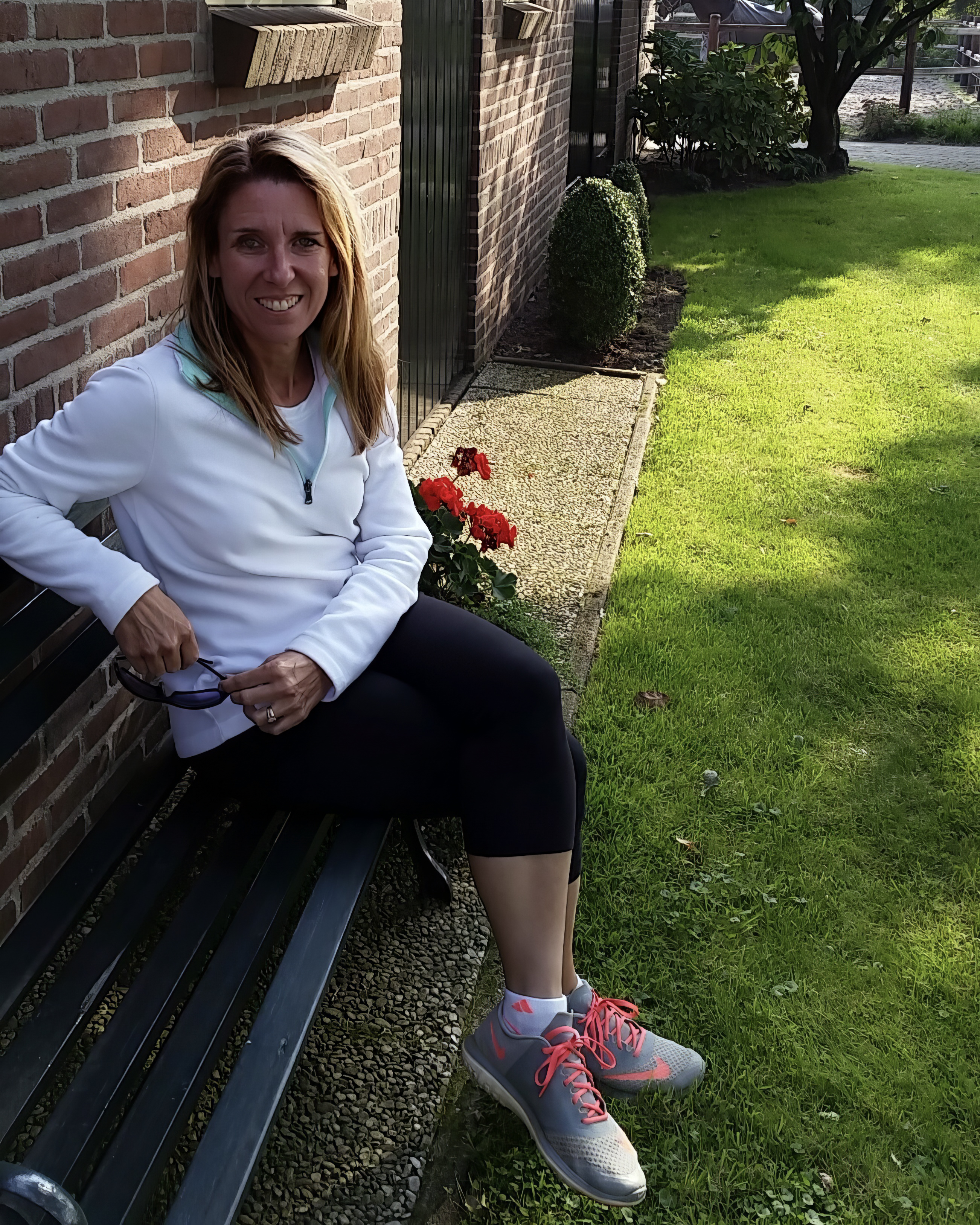

Guest author Nicole Stocker has worked as a Museum Educator with the Lake County Forest Preserves and Dunn Museum since 2008. She received a B.A. in History, a B.A. in Anthropology and a Secondary Teaching Certification from the University of Michigan. Nicole also received her M.A. in Public History from Loyola University Chicago in 2017. In her role, she researches and teaches about a variety of local history topics and helps lead interpretation at some of the Forest Preserves’ historic sites. Passionate about history education, Nicole loves traveling to visit museums and local coffee shops, and to check more National Parks off her list.
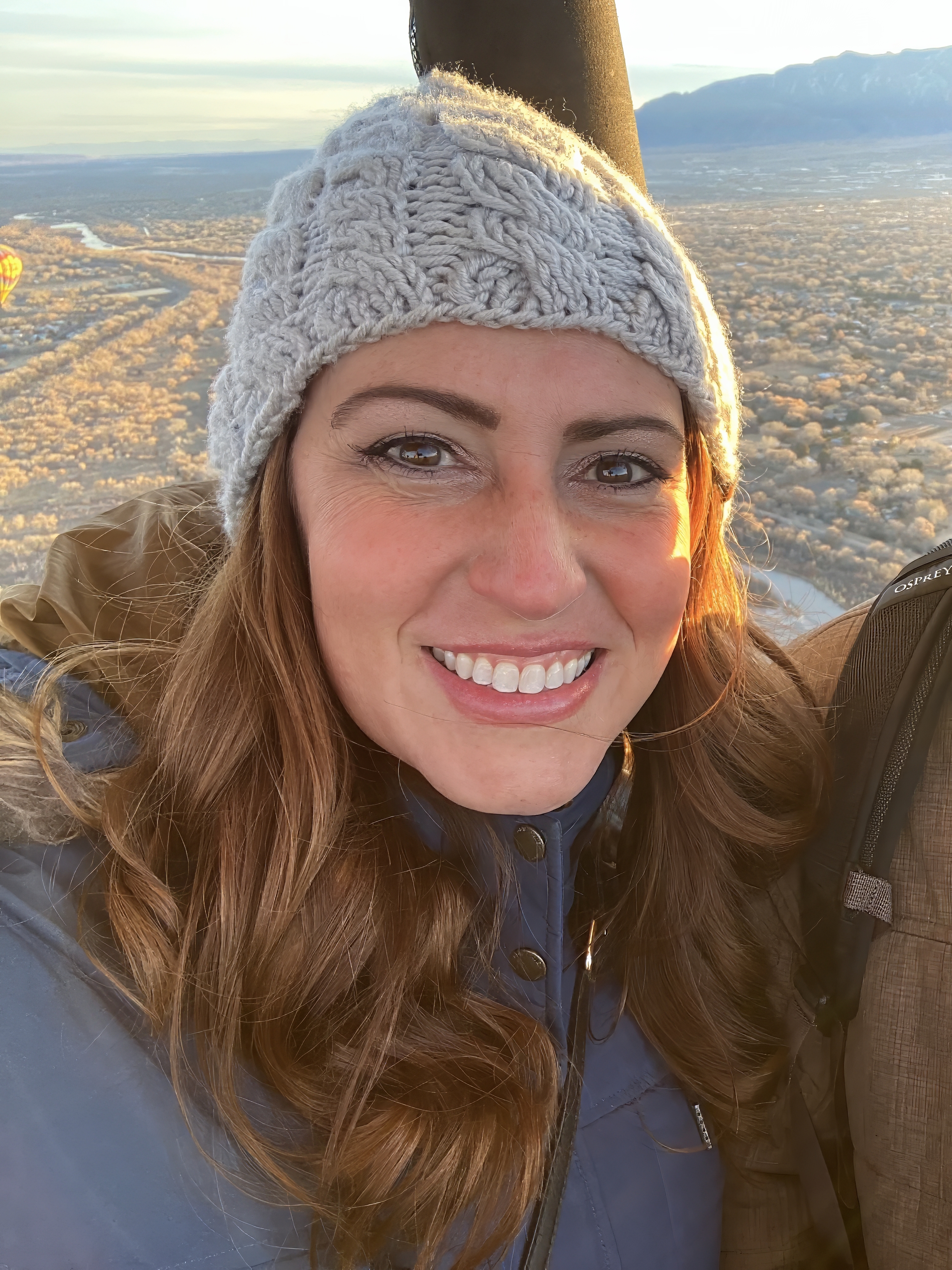

Guest author Heather Johnson has worked at the Dunn Museum for over 15 years. In her current role as a curator, she cares for collections, assists researchers and connects the public to history by helping develop many of the Museum’s exhibits. With an interest in archives and museums, she graduated from Western Michigan University with a degree in Public History. One of Heather’s favorite parts of her job is learning new things—whether from someone asking a question, from a research request or when something in the collections catches her interest.

Other guest authors include former Public Affairs Manager Allison Frederick, former Wildlife Ecologist Andrew Rutter, former Environmental Educator Jenny Sazama, former Director of Education Nan Buckardt and former Restoration Ecologist Ken Klick.

You may contact us at jberlinghof@LCFPD.org and bpeto@LCFPD.org.
Recent Posts

Telling the whole story: sharing Native voices

Post by Heather Johnson, Nicole Stocker and Brett Peto

This article appears in the winter 2025 issue of Horizons, the award-winning quarterly magazine of the Lake County Forest Preserves in northern Illinois.


Your forest preserves span 31,600 acres, including the traditional homelands of Native peoples. Indigenous cultures existed here starting at least 12,000 years ago, and the community maintains vibrant connections to the land today.

The Forest Preserves and its Dunn Museum in Libertyville partner with American Indian groups to guide us as we share the story of this area.

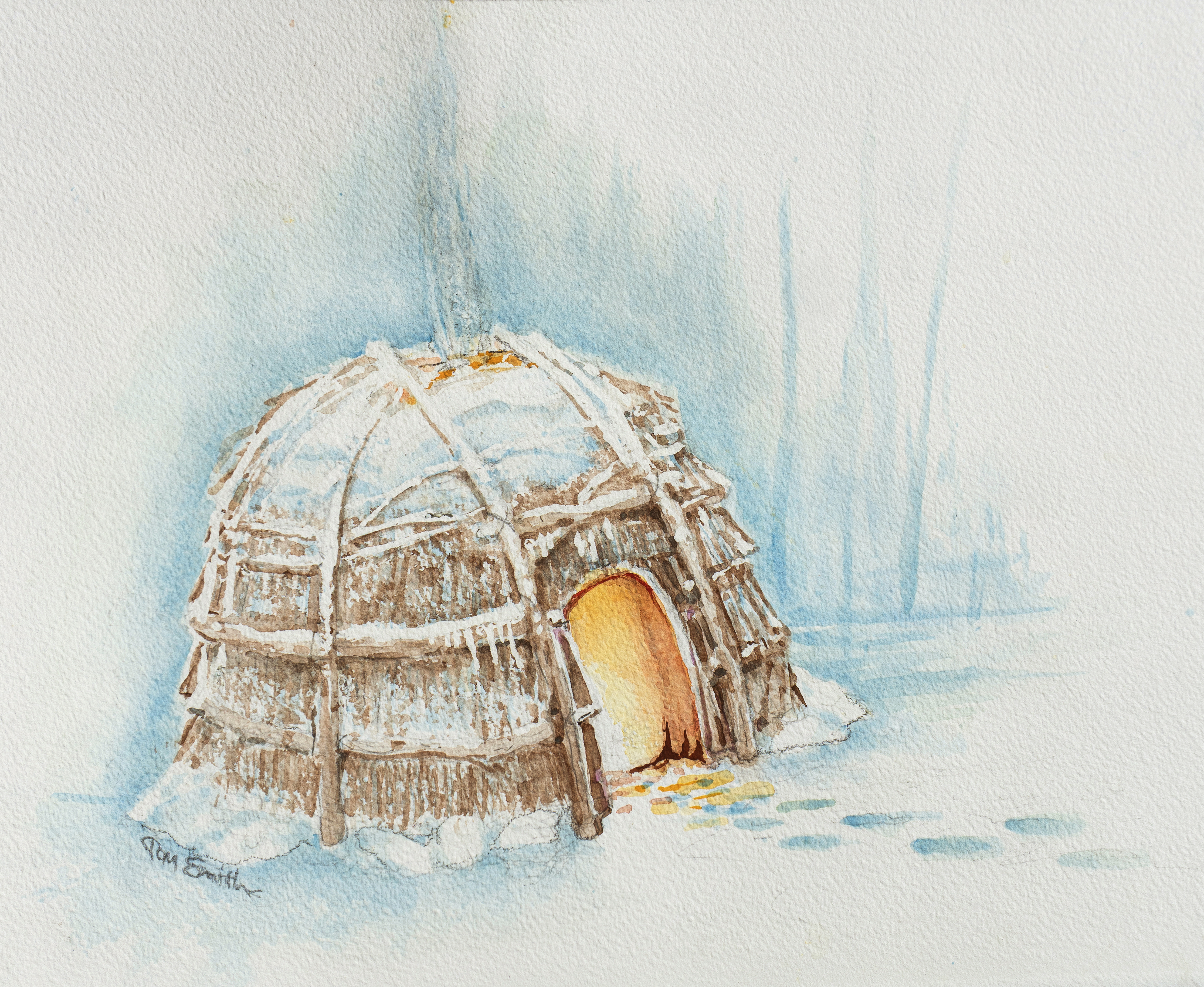
Home: A wigwam is a single-family home of the Potawatomi, built upon strong poles made from bent tree saplings and covered with sheets of bark. Layering the walls with woven mats and dried grasses helped keep winter weather out. Watercolor by Tom Smith.

“There are two sides to every story,” according to Kim Sigafus. “The one who’s telling the story and the one who is in the story.”

An award-winning Ojibwa author and speaker, Sigafus is a member of the Museum’s Native Peoples Advisory Group, formed in 2025.

Tom Smith, an elected official of the Brothertown Indian Nation in Wisconsin and a retired Forest Preserves stewardship ecologist, is also a member.

The group’s viewpoints help ensure Native voices shape our teaching. “Working with like-minded others helps gather the information and views from every perspective,” Sigafus said. “That’s the importance of the advisory group. We may not always agree, but we each have a perspective that is uniquely ours, and we are willing to share it with others.”

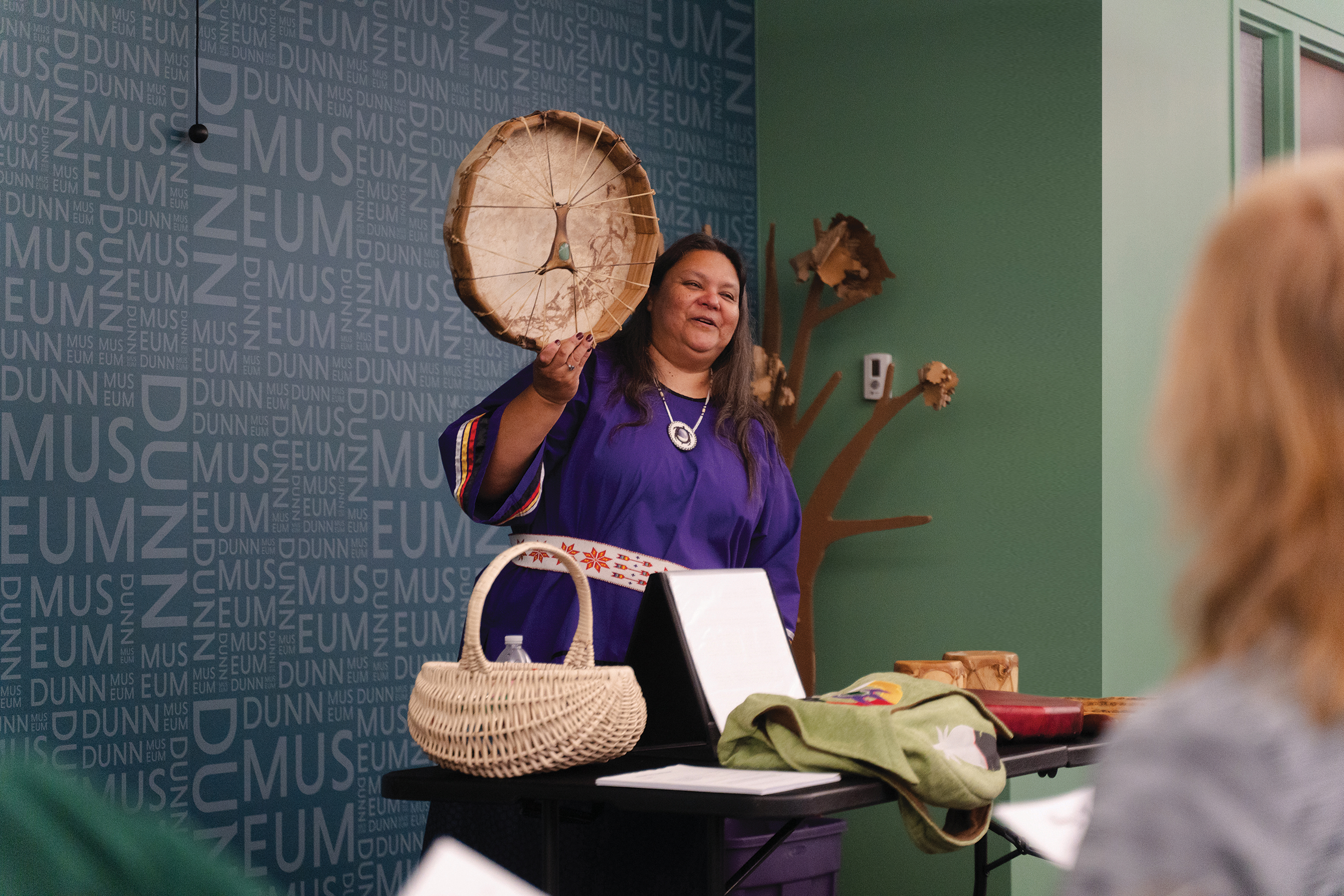
In August, she presented a program on Native harvest and traditional foods, explored through song, drumming and discussion. Sessions featuring Indigenous speakers and topics are among our most well-attended education programs.

“The telling of our story is important. We need to tell it in our own voice. It should come from us and not be told from a second person repeating what we said. It’s authentic and raw that way.”

Sigafus shared Native harvest traditions during a Museum program.

History isn’t stuck in the past. It’s a dynamic science studying the historical record: documents, artifacts, oral histories, photographs, music and more. Combined, they help describe people’s lives at a certain time and place.

Museum staff continue to uncover new sources and use modern technologies to expand the stories we share, including the voices of underrepresented groups.

We invite the Native Peoples Advisory Group and other American Indian partners into the creative process from the start. Our educators put their advice into practice, updating programs and teaching methods for today’s learning standards.

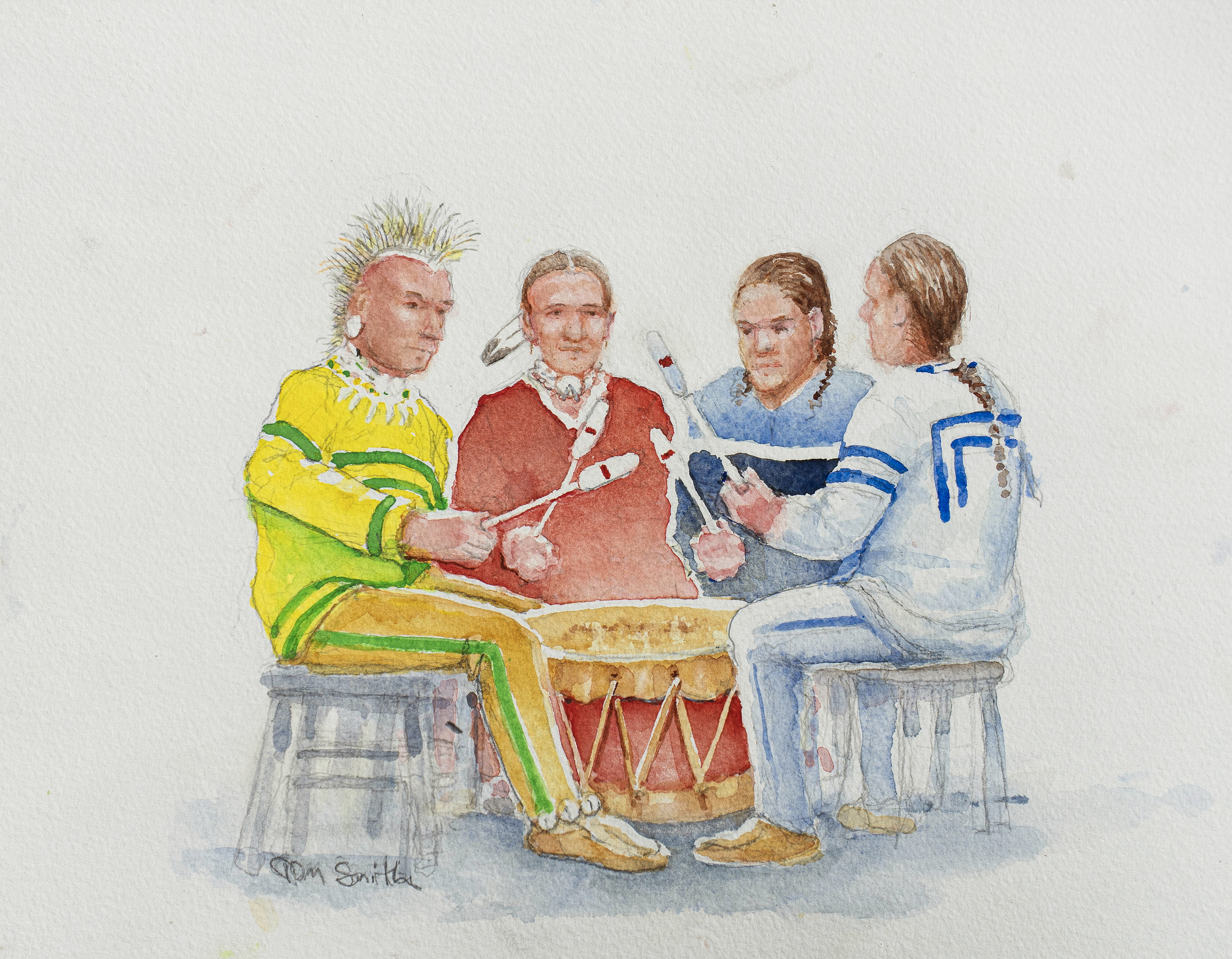
Rhythms of Life: The songs and rhythms of the drum circle are passed down through generations. Today, drummers of all backgrounds gather around the large Pow Wow drum—the heartbeat of Mother Earth—singing and drumming in community. Watercolor by Tom Smith.

Starting in 2023, state law requires Illinois schools to teach Native American history to students in grades 6–12. Lessons on tribal sovereignty and treaties, as well as genocide and discrimination against Native Americans, are required.

The Museum is a local leader in providing appropriate programs.

“Our role is to create space where Native voices are central and respected,” said Director of Education Alyssa Firkus. “By collaborating directly with Native partners, we ensure students and visitors connect with authentic perspectives, not secondhand interpretations.”

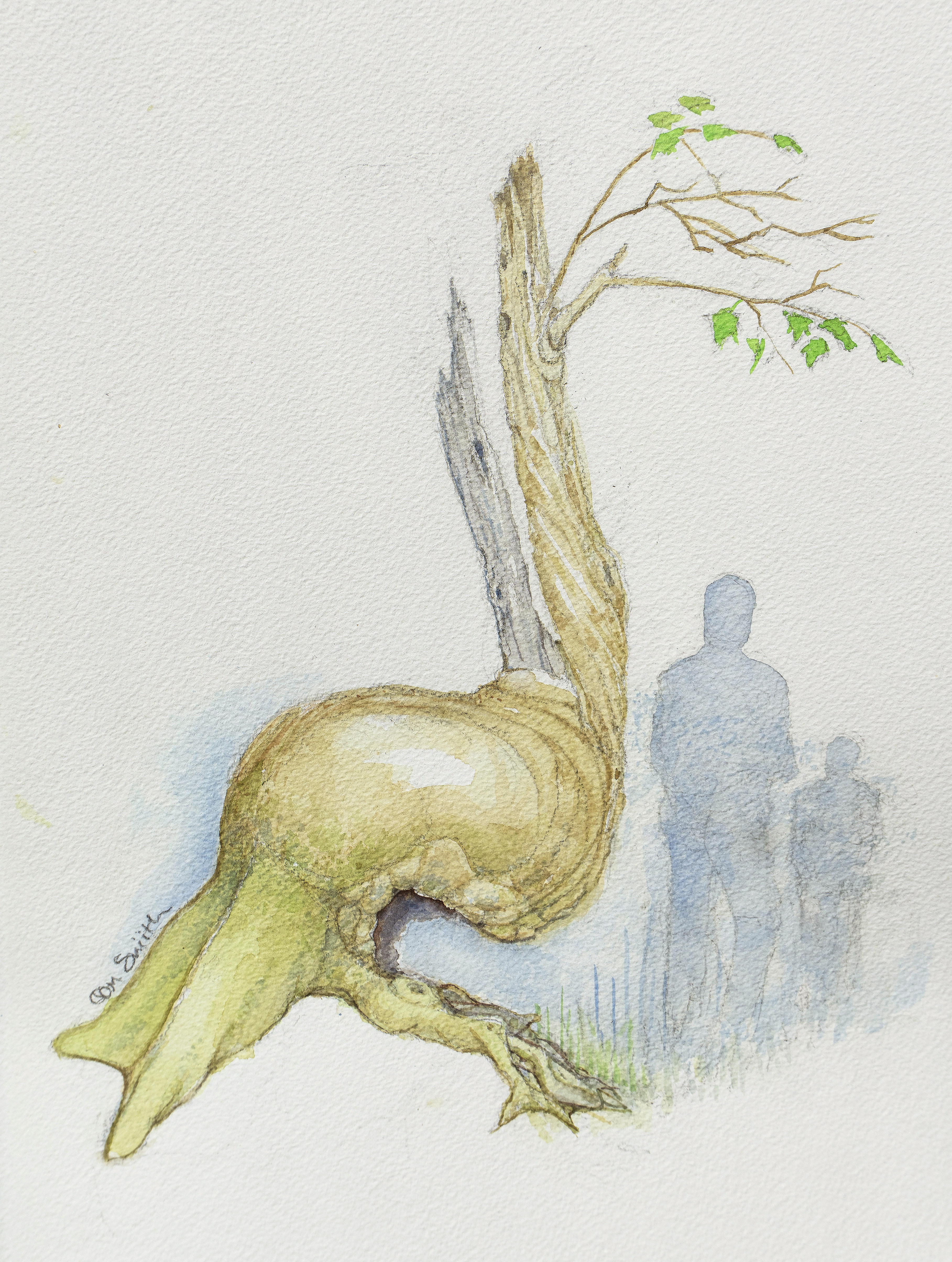
Trail Marker Tree: These trees once dotted Lake County. Native peoples bent saplings to point the way to trails, food or water. Most have disappeared today. Watercolor by Tom Smith.

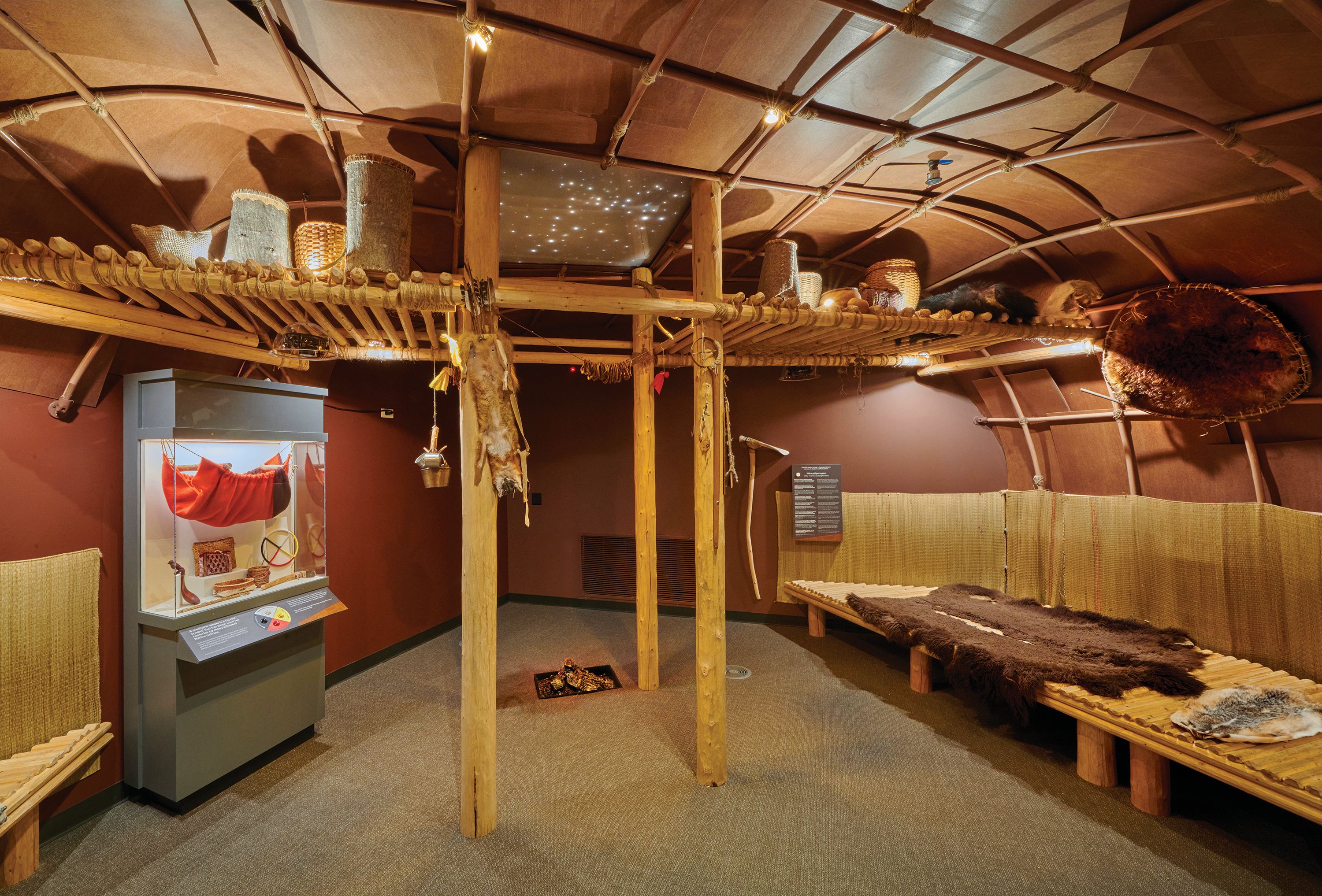
Soon after entering the Museum, visitors turn a corner into the First Peoples gallery. There, a replica wigwam stands for them to enter.

Wigwams are dome-shaped, single-family homes built by the Potawatomi from bent tree saplings and sheets of bark.

We mimicked natural materials using durable, synthetic ones to avoid introducing pests. The wigwam hosts school and public programs where guests interact with replica Native American artifacts.

The Museum’s replica wigwam is made from durable, synthetic materials.

Highlighting the stories of Indigenous peoples in present-day Lake County and southern Wisconsin, the gallery reflects the guidance of George “Skip” Twardosz (1946–2023). He partnered with our Museum team as they designed new galleries ahead of the institution’s 2018 move to Libertyville.

Of Potawatomi descent and historian of Woodland culture, Twardosz served as Storyteller, Fire Keeper and Elder for Native gatherings in Wisconsin, Illinois and Indiana. For many years, he also brought stories to life at the Museum with Gary Adamson, All Nations Tribe, through presentations with the Seven Springs All Nation Drum Circle.

“Staff really valued Twardosz’s warmth, wonderful education skills and generosity with his time and knowledge,” said Museum Education Manager Nicole Stocker.

After Twardosz’s passing in 2023, we worked with his family to create a plaque in the gallery remembering his priceless friendship.

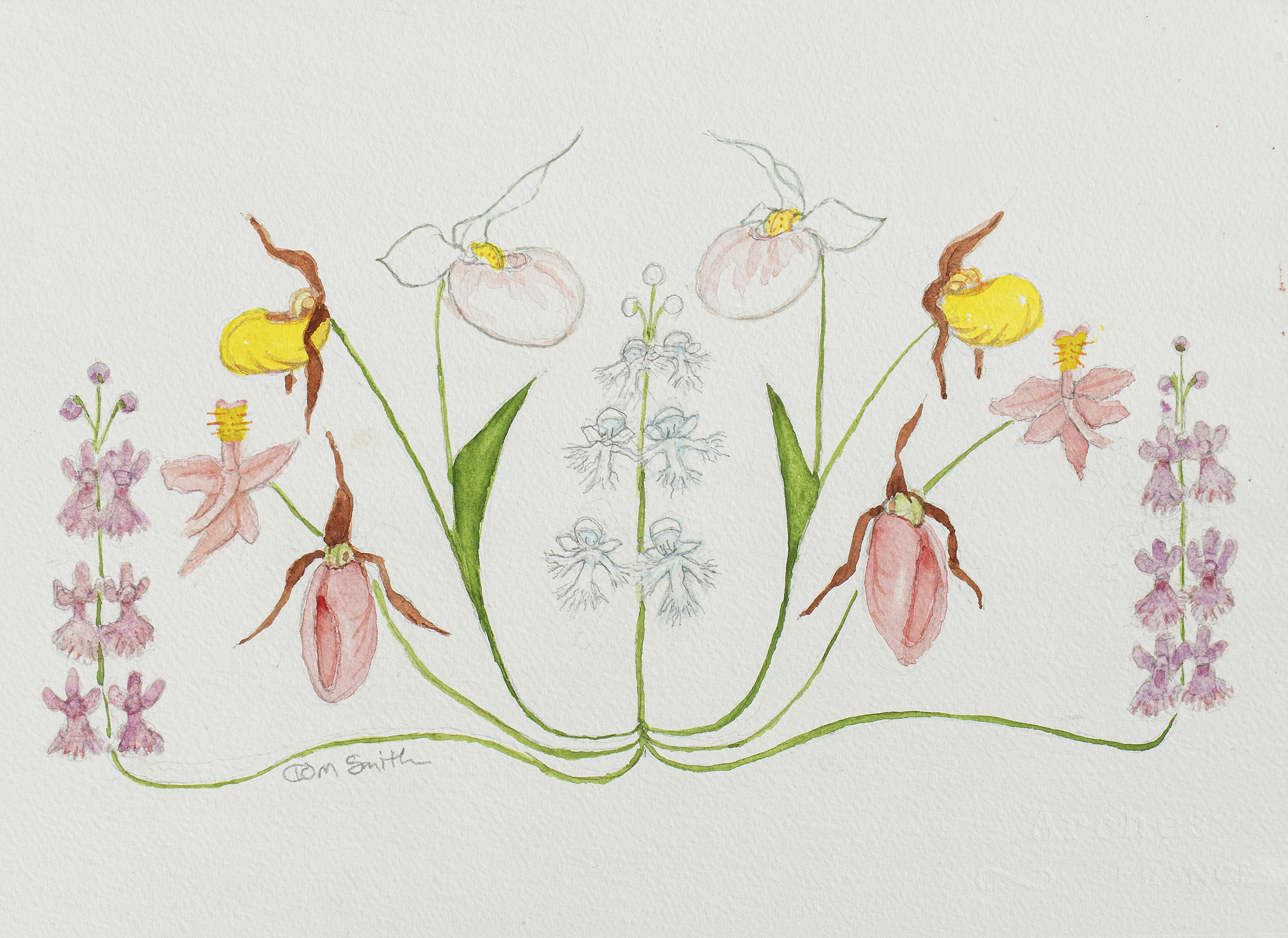
Orchids of Illinois: Combining traditional Woodland designs and local native plants, this motif features orchid species found in northern Illinois. Watercolor by Tom Smith.

All our public events and programs taking place in a preserve or the Museum start the same way: by recognizing relationships between Native peoples and their traditional territories.

Starting in 2022, we collaborated with Twardosz, representatives from Trickster Cultural Center in Schaumburg and others to craft our first-ever land acknowledgment statement. They gave context for word choice, naming nations and understanding American Indian identity.

In 2024, our board of commissioners approved the statement. More than words, the statement is a teaching tool. It shares a bigger picture of human history in Lake County.


The Lake County Forest Preserve District acknowledges Native people as the original caretakers of the land it now owns. We recognize the role we have as a land management organization, dedicated to preserving the land and history of northeastern Illinois and we desire to honor the first people.

District lands are the traditional homelands of the Ojibwe, Odawa and Potawatomi nations. Many other nations have lived on, traveled through and welcomed others to this area.

American Indian groups still exist today despite the historical and cultural efforts of forced removal. They maintain cultural traditions and call Lake County home today.

The Forest Preserve District strives to build respectful relationships with Native American communities by seeking knowledge from Native peoples and providing programming about Native cultures and opportunities to connect to the land.


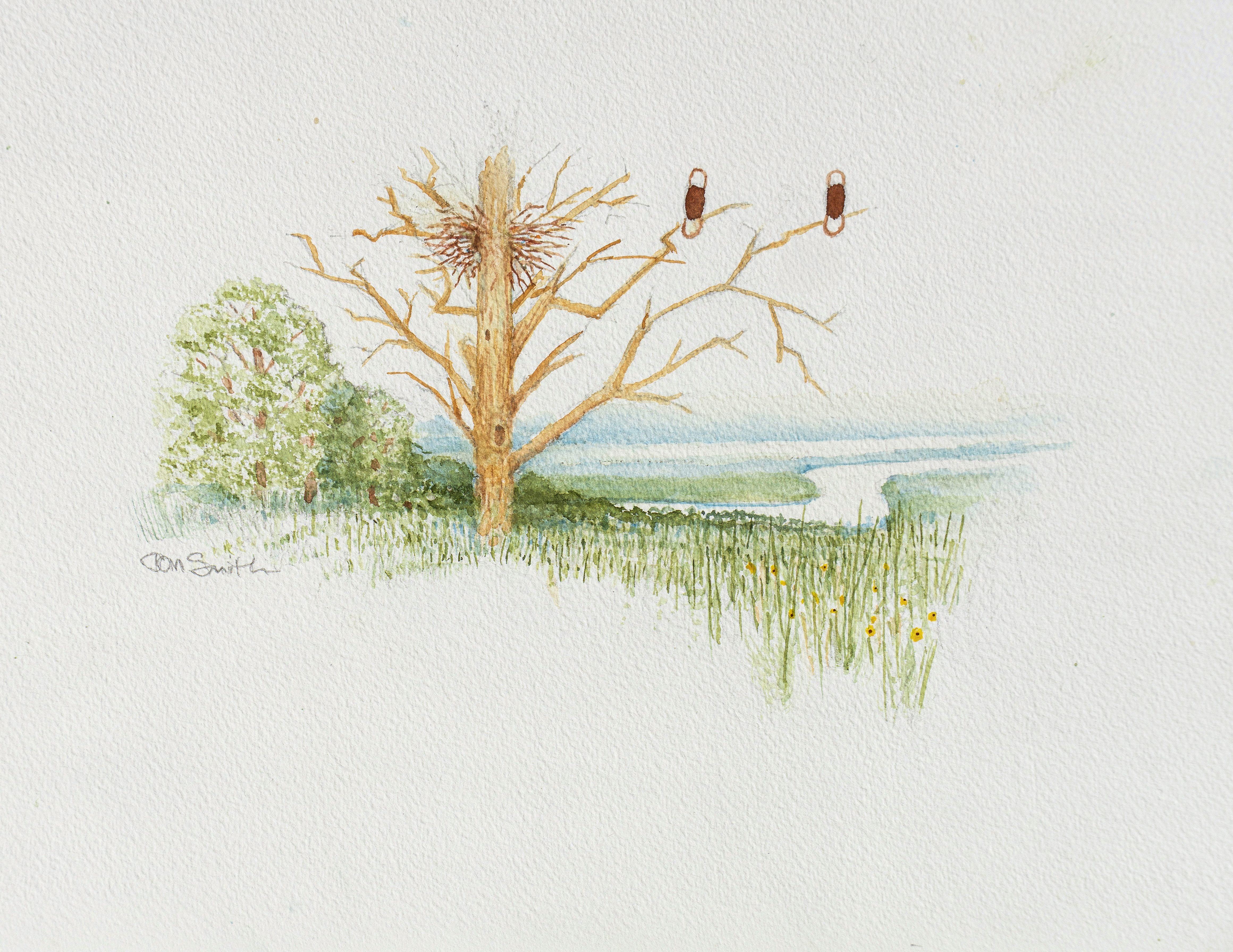
View from Gander Mountain: From the top of Gander Mountain in Antioch—Lake County’s highest natural elevation—two bald eagles survey the Fox River region, an area rich in Indigenous history. Watercolor by Tom Smith.

What goes into preserving museum collections? You might picture secure, climate-controlled storage. That’s important, to be sure. So is cultural care—understanding the meaning objects hold for people who created or used them.

Many items came into the Museum’s care decades ago. In 1965, Lake County purchased the collections of the privately owned Lake County Museum of History in Wadsworth. These contained Native pieces acquired by the proprietors.

We invited Bill Brown, founder of the Potawatomi Trails Pow Wow, to consult on our collections care in the 1980s. The Pokagon Band of Potawatomi, the Sault Sainte Marie Tribe of Chippewa Indians, the Ho-Chunk Nation and Darrell Curlee Youpee (1951–2021) of the Fort Peck Tribes in Montana also contributed.

Village Life: In a village overlooking the Fox River, a Native family tends their garden planted with the “Three Sisters”—staple crops of corn, beans and squash. Watercolor by Tom Smith.

In 1990, Congress passed the Native American Graves Protection and Repatriation Act (NAGPRA) to strengthen protections for American Indian burial sites, human remains and cultural items.

It also outlined a legal process for Indigenous peoples to reclaim ancestors and sacred objects from any organization receiving federal funds. Dunn Museum staff at the time thoroughly inventoried Native collections, published notices and asked tribal nations to visit.

By 2018, we had returned all human remains and funerary items to the appropriate descendants.

If you find artifacts or other traces of Native peoples’ history in the preserves, follow these steps.

  • Leave the object in place.
  • Take a photo of the object in its surroundings. Record the location.
  • Report it at LCFPD.org/contact.

Trained staff and Native partners will investigate the artifact.

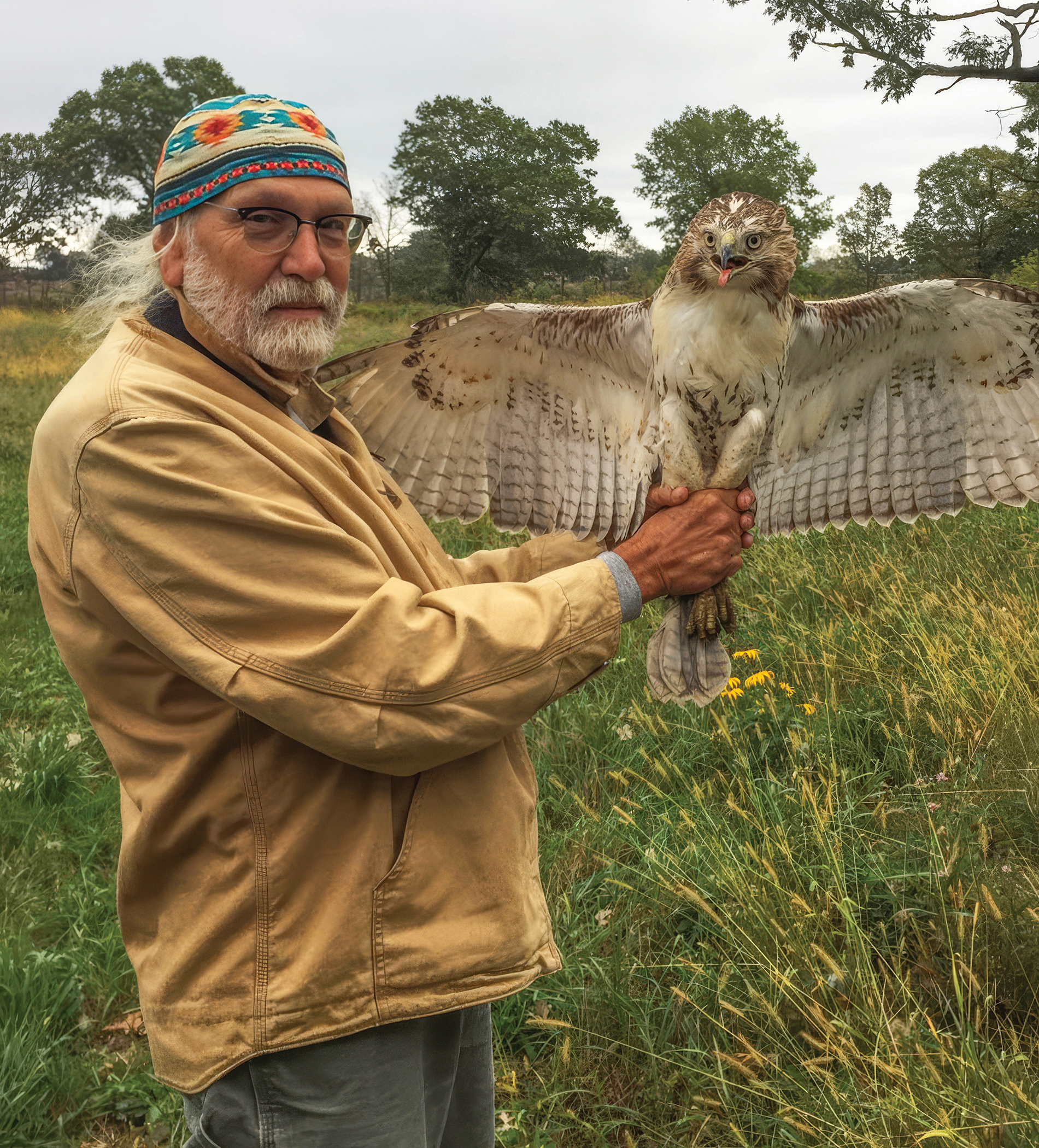
Smith holds a red-tailed hawk for a raptor banding research project in Wisconsin.
Smith holds a red-tailed hawk (Buteo jamaicensis) for a raptor banding research project in Wisconsin.

Born and raised in Lake County, Native artist Tom Smith worked with us for 34 years as a stewardship ecologist.

Painting watercolors is another of Smith’s talents. He studied the artform under Irving Shapiro (1927–1994) at the American Academy of Art in Chicago and credits Phil Austin (1910–2004), a Lake County watercolor artist, as an important influence.

Smith found inspiration in nature while painting backdrops for dioramas at the Adler Planetarium and the Chicago Academy of Sciences. His work has been shown in nature centers and museums.

Encouraged by our welcoming of Native voices and acknowledgment of traditional lands, Smith crafted several watercolors for this story. He created a luminous effect using transparent watercolor techniques.


Many tribes have lived in and traveled through Lake County, including:

  • Ho-Chunk (ho-chunk)
  • Illinois (il-ə-NOY)
  • Kickapoo (KI-kuh-poo)
  • Menominee (me-NOH-muh-nee)
  • Meskawki (mess-KWAH-kee)
  • Miami (my-AM-ee)
  • Odawa (ow-DAA-wuh)
  • Ojibwe (ow-JEEB-way)
  • Peoria (pea-OR-ee-uh)
  • Potawatomi (pow-tuh-WAA-tuh-mee)
  • Sauk (SAWK) and Fox (FOKS)
  • Winnebago (wi-nuh-BAY-gow)
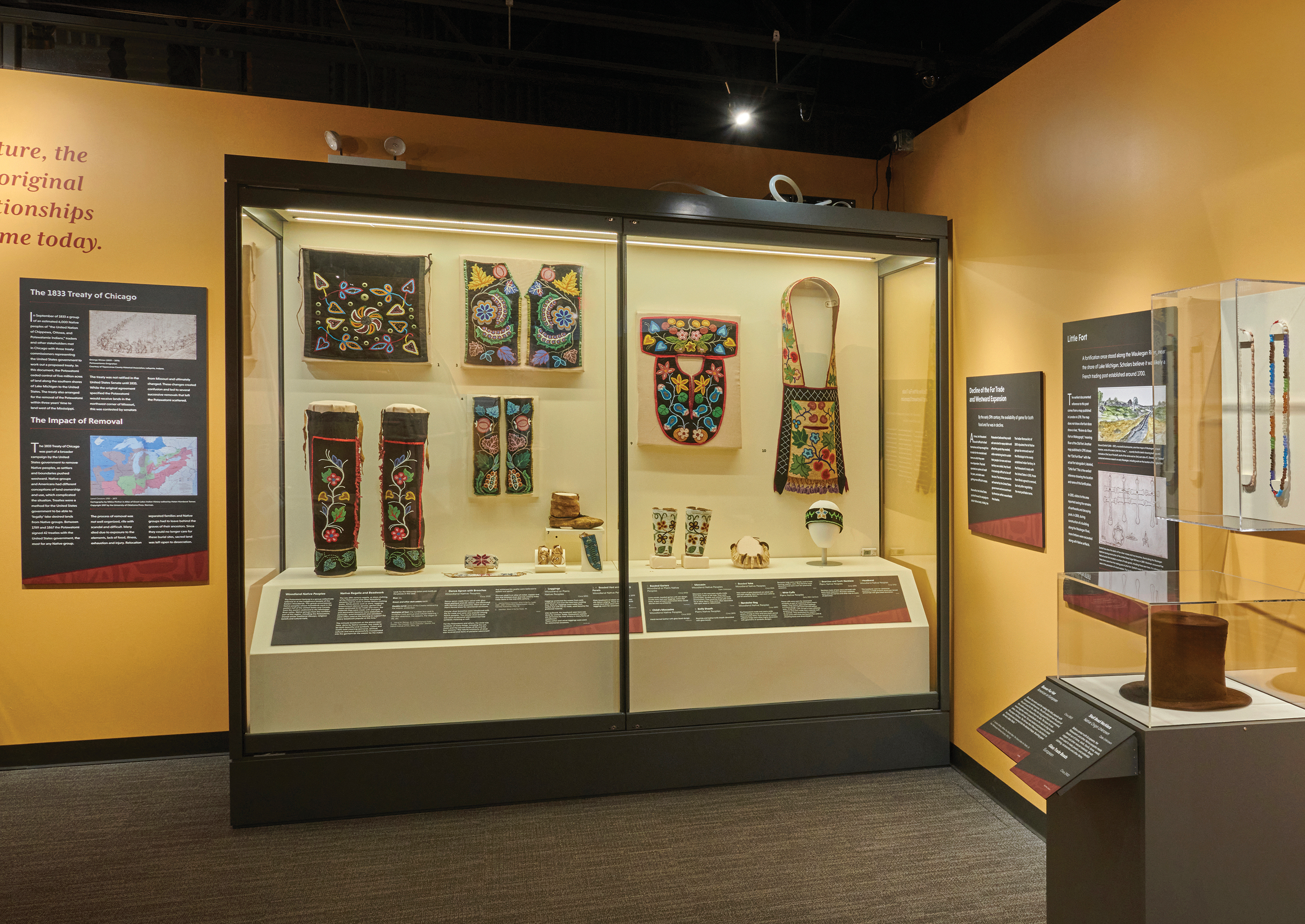
The First Peoples gallery spans generations of American Indian history in present-day northern Illinois and southern Wisconsin.

Even 35 years after becoming federal law, NAGPRA still shapes practices nationwide. A final rule introduced in 2024 set new standards on the duty of care for Native American artifacts. Organizations must consult with “lineal descendants or a culturally affiliated tribe” before exhibiting or making Native images or objects available. This prevents physical or spiritual harm.

We carefully reviewed the First Peoples gallery and updated our collections policy in the wake of this rule. Now, we accept Native items only if they’re offered by—or in consultation with—their creators, descendants or affiliated tribes.

So, the stories of Lake County’s Indigenous peoples continue. They forge ahead in time, in depth, in respect. New chapters are coming.

For the Forest Preserves, the Native Peoples Advisory Group is an essential author.

“Our responsibility is to listen and collaborate, so we reflect the voices that have always been here,” said Firkus.


Images © Tom Smith, John Weinstein.

  1. Night shift: Lake County’s nocturnal neighbors Leave a reply
  2. Step into serenity with forest bathing 5 Replies
  3. Every acre strong: The Community Campaign for Lake County Forest Preserves Leave a reply
  4. Gifts from the glaciers: Lake County’s legacy and future of ice Leave a reply
  5. Charged up for change: our transition to net-zero energy Leave a reply
  6. Unraveling the science of habitat restoration Leave a reply
  7. 17 years, 64 degrees, 100 decibels 4 Replies
  8. Monitoring for the future Leave a reply
  9. Motus captures migration in motion Leave a reply